Telangana Must Get Its Urban Planning Right

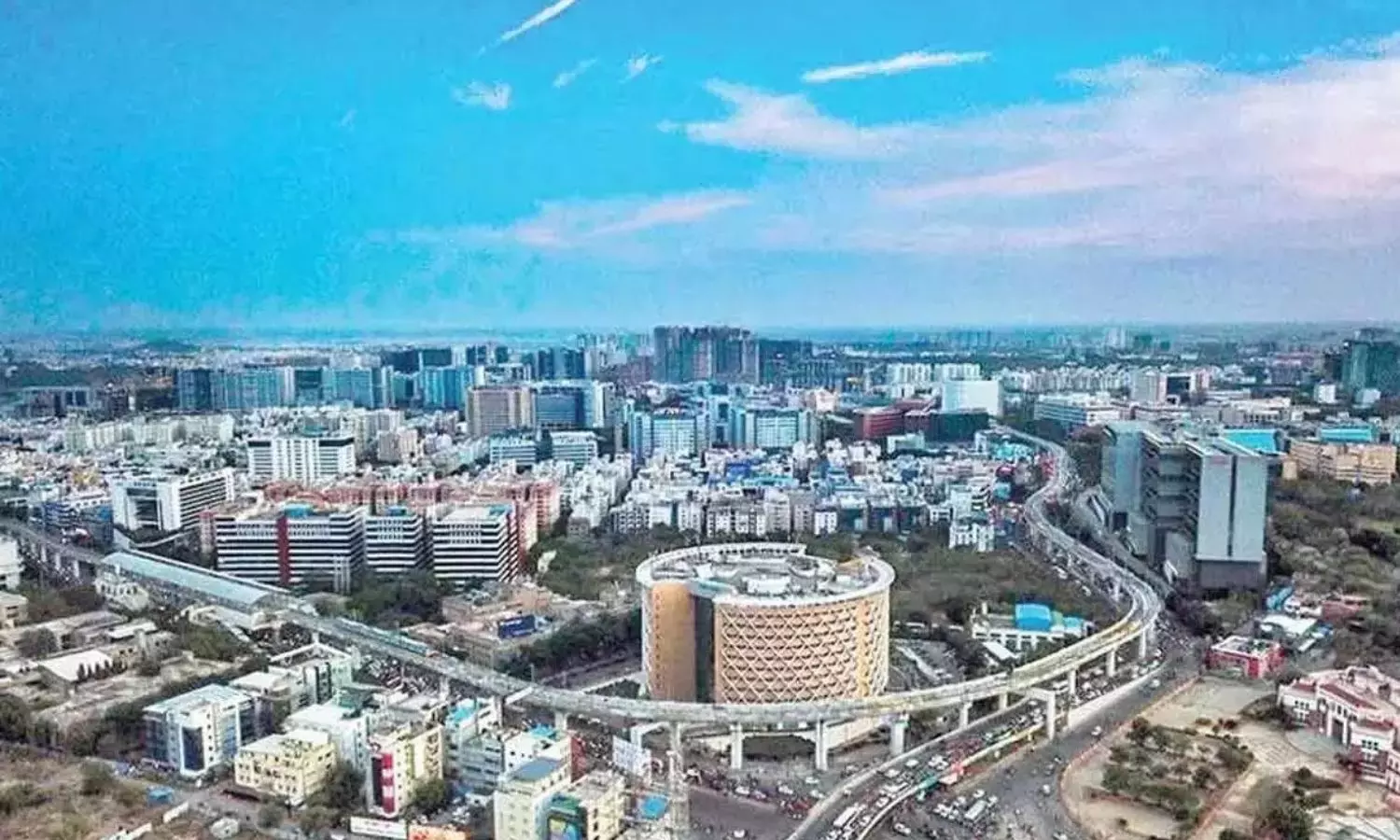
Cities around the world have struggled with the consequences of rapid urban growth. What separates successful cities from struggling ones is not the pace of growth but the quality of planning. Hyderabad holds the potential to present a mirror to what may be ‘India’s tomorrow’. If Telangana gets urban planning right today, Hyderabad can become more than a successful city. It can become a model for urban India
Urbanisation may be India’s future. But, it is Telangana’s present. Telangana is urbanising at a pace few Indian states do. While 36 per cent of India’s population lives in urban areas, Telangana has already crossed the 50 per cent mark, placing it alongside Gujarat (50.2 per cent) and ahead of Maharashtra (49.4 per cent). By 2036, nearly 58 per cent of Telangana’s population is expected to reside in urban centres.
Cities around the world have struggled with the consequences of rapid urban growth. What separates successful cities from struggling ones is not the pace of growth but the quality of planning. Hyderabad holds the potential to present a mirror to what may be ‘India’s tomorrow’. If Telangana gets urban planning right today, Hyderabad can become more than a successful city. It can become a model for urban India.
Unlike other metropolitan regions such as Delhi, Mumbai or Kolkata, Hyderabad still has considerable room for strategic planning. Much of its future growth will occur through expanding suburban centres. This provides a rare opportunity to plan ahead and build infrastructure before congestion becomes irreversible.
Telangana should focus on four priorities. First, planning must adopt a metropolitan approach that integrates Hyderabad with surrounding districts. Planning must also move from a mere spatial, two-dimensional master plan to a coordinated comprehensive master plan involving all aspects such as transport, water, sewage, waste-management and the spread of social facilities like schools, hospital etc. Singapore and Seoul present a ready reference model.
Second, transport and land-use planning should be linked through transit-oriented development so that future growth follows public transport corridors rather than unchecked sprawl. The Hyderabad Unified Metropolitan Transport Authority must be operationalised.
Third, climate resilience must become a core planning principle. Extreme heat-induced shortages and outages must be planned for as carefully as heavy rain deluges, with requisite stormwater, drinking water and electricity infrastructure provided.
Finally, Telangana should strengthen the high-speed connectivity to all tertiary and secondary cities such as Warangal, Karimnagar, Nizamabad and Khammam to ensure that economic opportunity is easily accessible without having to shift to overburdened urban cities.
Hyderabad’s real opportunity to outshine other cities and attract global opportunities, therefore, lies not in roadshows or summits but in proper urban planning and effective implementation.