Telangana High Court seeks ECI response on voter notices

Opposition parties appear to be widening business ties amid political uncertainty
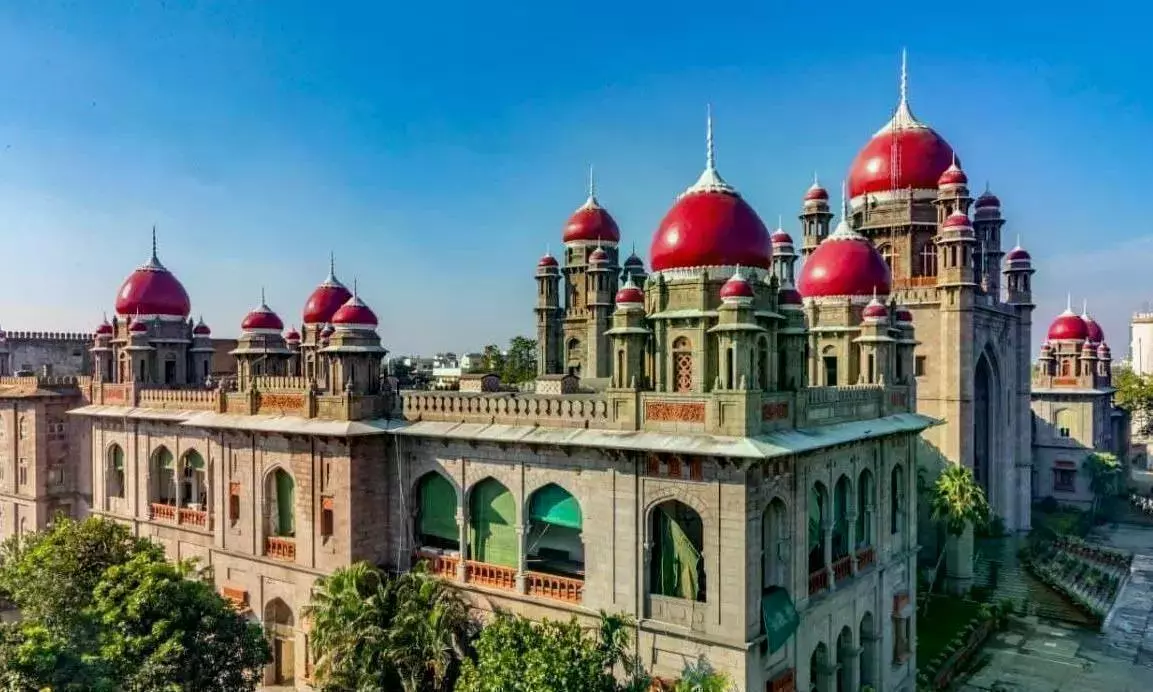
Hyderabad: The Telangana High Court on Monday directed the Election Commission of India (ECI) to respond to a petition challenging the methodology adopted in issuing notices to electors based on an automated data‑matching platform, stated to be ECINet/ERONET. The notices were issued to initiate proceedings against voters over alleged discrepancies in the recent SIR enumeration forms submitted by electors. The court also inquired about the alleged deletion of electors’ names on the ground of insufficient documents provided after notices were served upon the petitioners.
A division bench comprising Justices P. Sam Koshy and Narsing Rao Nandikonda directed counsel for the Election Commission to obtain instructions and inform the court about the contention of ECI and others, while hearing a writ petition filed by S.Q. Masood. The petitioner alleged that the functioning of the ECINet/ERONET platform had not been adequately disclosed in the public domain.
Senior Counsel appearing on behalf of advocate on record Absar Ahmed contended that their challenge was not confined to individual notices but extended to the methodology followed during the SIR, including automated data matching through ECINet/ERONET. He argued that the process was being undertaken without adequate verification of physical records, proper application of mind by Electoral Registration Officers and transparency regarding the functioning of the platform.
The counsel also referred to observations made by Supreme Court Justice Ujjal Bhuyan at an event at NALSAR on Sunday concerning the right to vote and the possibility of mass disenfranchisement. He further contended that votes were being deleted without issuing notices to the concerned electors.
The ECI counsel submitted that a notice had been issued to the petitioner following a mismatch in his father’s name between the current and previous electoral rolls. The bench sought to know what action had been taken after the petitioner appeared for a hearing on September 15 and submitted documents in response to the notice.
The petitioners also raised concerns over the absence of transparency after an elector responds to a notice, submitting that documents of a petitioner were collected during the hearing but there was no clear mechanism for placing further explanations before the authorities.
HC questions GHMC over meat shops’ closure
The Telangana High Court on Monday sought an explanation from Greater Hyderabad Municipal Corporation (GHMC) commissioner R. V. Karnan on allegations that the civic body acted in breach of a previous court direction while ordering the closure of slaughterhouses and meat shops on October 2.
Justice N. V. Shravan Kumar issued the notice while hearing a contempt petition challenging the orders of the GHMC commissioner, which directed all the slaughterhouses and retail outlets of meat and beef, to close on October 2. The petitioner had earlier questioned the GHMC’s action concerning cattle slaughterhouses and retail beef shops. His counsel, Vijay Gopal, submitted that while disposing of the earlier writ petition, the High Court had directed the authorities to act strictly in accordance with the provisions of the GHMC Act, 1955.
According to the petitioner, despite the direction, the GHMC issued a press release on September 30 announcing the closure of sheep and goat slaughterhouses, cattle slaughterhouses and retail meat and beef shops across the city on October 2, on the occasion of Mahatma Gandhi Jayanthi.
The petitioner contended that the closure directive was not backed by any regulation validly framed under the GHMC Act. He further claimed that the relevant regulation had not been gazetted as required.
No green flag to illegal encroachments on public roads; questions non-action over removal of encroachments in Khammam
The Telangana High Court on Monday made it clear that it would not give a “green flag” to illegal encroachments on public roads, observing that permitting such occupation in one town could encourage similar encroachments across the state.
Justice Anil Kumar was hearing a contempt petition filed in 2013 by the Srinivasanagar Timber Market Industrial Area Welfare Association over non-implementation of earlier court directions for removal of encroachments on the Srinivasanagar Industrial Area Road in Khammam district.
The court expressed surprise that a road shown as 80-foot-wide in the master plan had been reduced to about 40 feet due to encroachments and questioned how the authorities had allowed the situation to continue for three to four decades.
The court also questioned the state authorities over the grant of pattas and provision of electricity connections and other amenities to persons occupying the public road.
Referring to the submission that around 680 families, comprising nearly 2,000 people, were residing in the encroached area, the court questioned how the state machinery, which was expected to know the law, could have permitted such occupation for decades.
“If such acts are given a green flag, the same would spread like a contagious disease in other towns of the state,” the court observed, making it clear that illegal occupation of public roads could not be permitted merely because it had continued for several years.
The court directed the authorities to take steps for removal of the encroachments. If apprehensions of a law-and-order problem arose, the authorities could consult the Khammam DIG and seek necessary police protection, it said. The court also referred to the Supreme Court’s guidelines in the bulldozer case concerning encroachments on public roads, water bodies and other public places.
Advocate Samala Ravinder sought permission to implead the persons who had constructed houses on the road and he argued that the master plan was never approved. The court declined the request and stated that allowing an implead request in the contempt petition would not be appropriate. The matter was adjourned by two weeks after the counsel sought time to place necessary evidence before the court.
