Telangana High Court Refuses to Intervene in Delimitation Exercise

While hearing the petitions, the judge opined that information of wards could have been placed in the public domain.
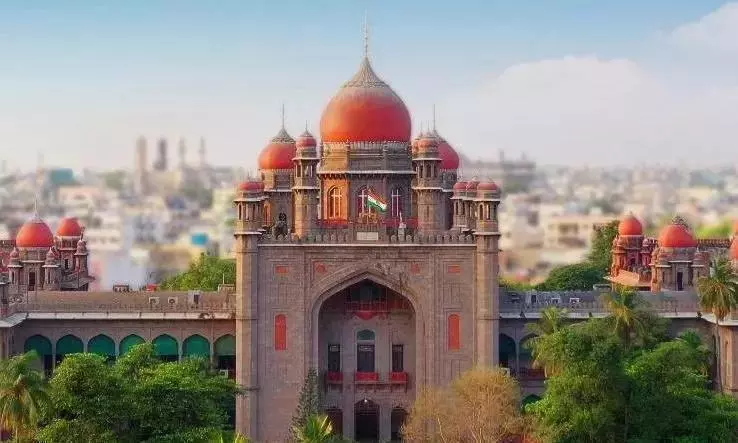
Hyderabad:The Telangana High Court on Monday was not inclined to intervene in the ongoing process of delimitation of wards in the GHMC . Justice B. Vijaysen Reddy was dealing with a batch of about 80 petitions, moved before the High Court on Monday citing urgency, objecting to certain proposals and for not publishing details of the delimitation proposals.
While hearing the petitions, the judge opined that information of wards could have been placed in the public domain.
Justice Vijaysen Reddy was not inclined to pass orders on the ground that the seven-day period to raise objections had expired, and taking into consideration the GHMC’s submission that it had received 5,935 applications and had considered all of them.
The judge said that when the process mentioned in Forms 1 to 5 had been completed, and the proposal had been sent to the government, the court could not intervene in the process.
Four days ago, in a separate batch of four petitions, Justice Reddy had directed the state to place in the public domain the ward-wise population data and maps within 24 hours. He granted liberty to the writ petitioners to file their additional objections, if any, within two days thereon.
The GHMC challenged this before a division bench of the High Court which last week modified the general order and restricted it to two wards.
Against this backdrop, on Monday, Advocate-General A. Sudershan Reddy raised a preliminary objection on the maintainability of the 80 writ petitions moved by way of a lunch motion. He cited the embargo contemplated under Article 243ZG of the Constitution which prohibited intervention by courts in electoral matters.
A-G Sudershan Reddy argued that it was not a fundamental right and said that lakhs of objections would be filed if the court granted an extension of date.
Senior counsel L. Ravichander, appearing for the petitioners and leading the batch, argued that the preliminary objection raised by the Advocate-General could not be sustained in the view of recent apex court rulings which permitted judicial review even in cases of delimitation. Ravichander argued that placing such a bar would leave the citizens with no forum to question arbitrary actions.
Senior counsel J. Prabhakar argued that the state had preferred appeal only in two writ petitions, and the order in similar writ petitions was still in operation.
The Advocate General pointed out that there were more than 5,000 objections which were considered in accordance with the rules. He pointed out that the entire process from Rule 1-10 (5) had been followed and the report was submitted to the government for approval. He argued that entertaining any writ petition at this juncture would open the floodgates for other writ petitions.
Ravichander, while referring to Rule 8, which contemplated a seven-day timeline for objections, argued that the same was not mandatory and was merely directional in nature. The writ petitions have been kept pending for consideration.
