Telangana HC to Hear PIL on Delayed Scholarships, Withholding of Certificates

The panel was hearing a PIL filed jointly by ASEEM — Association for Socio Economic Empowerment of the Marginalised Persons — and the Students Islamic Organisation (SI), Telangana.
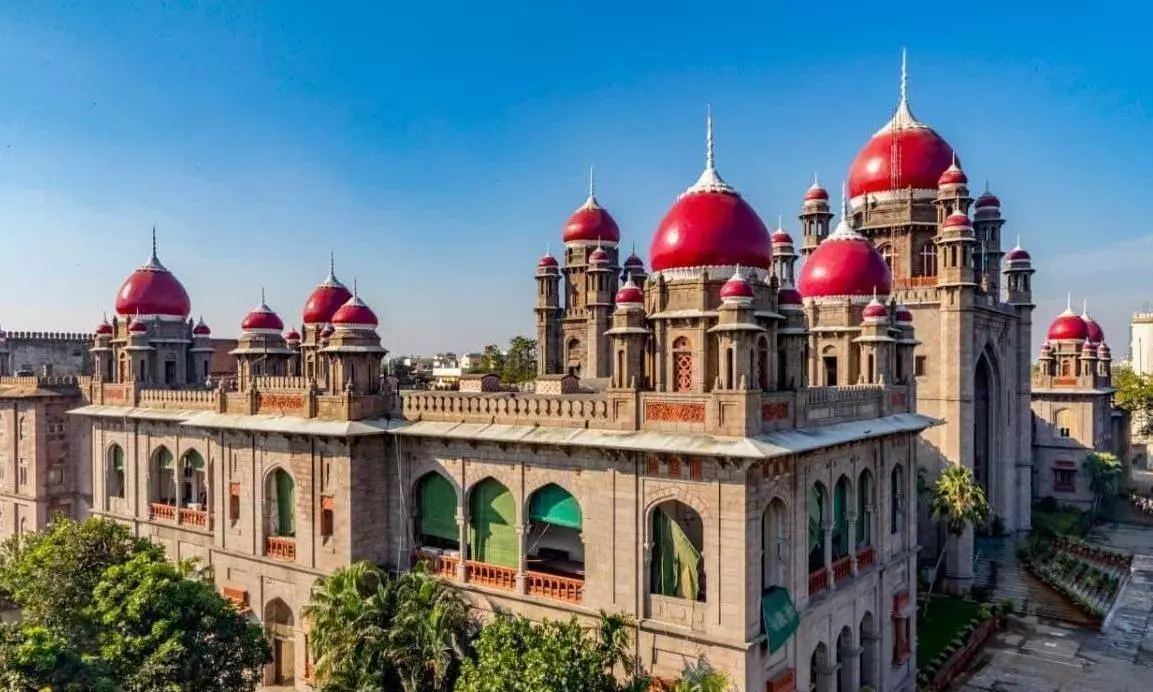
Hyderabad: A two-judge panel of the Telangana High Court comprising Chief Justice Aparesh Kumar Singh and Justice G.M. Mohiuddin took on file a public interest litigation (PIL) regarding the non-disbursal of scholarships and withholding of students’ original certificates by educational institutions.
The panel was hearing a PIL filed jointly by ASEEM — Association for Socio Economic Empowerment of the Marginalised Persons — and the Students Islamic Organisation (SI), Telangana. The grievance in the PIL was that eligible students had not received pending scholarships and tuition fee reimbursement, and that several educational institutions were allegedly withholding students’ original certificates on the pretext of non-receipt of scholarship amounts. The panel noted that two separate organisations had come together to file the PIL and sought clarity on their mandate, role and field-level functioning.
Counsel for the petitioners contended that a robust grievance redressal mechanism was required for students and educational institutions to address issues such as delays, discrepancies and wrongful retention of certificates. He argued that retaining original educational certificates amounted to coercive action violative of students’ rights. It was submitted that a direction be issued for pro-active, suo motu disclosure of scholarship-related data, including sanctioned beneficiaries, funds released and pending claims, in compliance with Section 4(1)(b) of the Right to Information Act, 2005. After hearing the submissions, the panel adjourned the matter to December 9, granting time to the petitioner organisations to file the affidavits establishing their credentials and operational modalities.
GHMC house sealing order held in abeyance
Telangana High Court kept in abeyance a sealing order issued by the GHMC against a residential building in Bhagyanagar Co-operative Society, Hydernagar.
Justice B. Vijaysen Reddy was hearing a writ petition filed by Kantamshetti Satyanarayana challenging the notices issued by the GHMC directing demolition and sealing without granting a personal hearing. It was the petitioner’s case that the impugned proceedings were arbitrary, illegal, and violative of natural justice, and that the construction ought to be considered for regularisation. Opposing the plea, the government pleader submitted that permission had originally been granted only for cellar, stilt and five floors, but the petitioner constructed an additional sixth floor and penthouse admeasuring approximately 1,100–1,200 sq. yards without approval or payment of requisite fees. It was submitted that a showcause notice was issued and, after considering the explanation, a sealing notice was passed.
The judge observed that setting aside the speaking order would be an empty formality, particularly when the petitioner admitted that the sixth floor was unauthorised. Noting that all six floors were occupied, the judge passed an interim direction keeping the sealing order in abeyance for two months. The judge permitted petitioner to submit a revised building plan or apply for regularisation of the unauthorised portions.
Institute challenges rejection of 12 students
Justice Surepalli Nanda of the Telangana High Court heard inconclusively a writ petition challenging the action of the Telangana Council of Higher Education (TGCHE) in rejecting the ratification of 12 students admitted to Balaji Institute of Pharmaceutical Sciences, Warangal, for the academic year 2025–26.
The judge is dealing with a writ petition filed by institute, and others. The petitioners contended that the students were admitted to the BPharmacy and Pharm-D courses under the leftover vacant seats (spot admissions) category, and that all admissions were made in accordance with the prescribed procedure. Despite this, the convener, Commissioner of Technical Education, and TGEapcet refused to ratify the admissions. Terming the rejection “illegal, arbitrary and unconstitutional,” the petitioners sought to ratify and approve the 12 admissions and treat them as valid for all purposes.
Drug consumer’s quash plea spiked
Justice Nagesh Bheemapaka of the Telangana High Court declined to quash criminal proceedings against an alleged drug consumer, holding that the challenge was premature and contrary to the stringent framework of the NDPS Act. The judge was hearing a criminal petition filed by Hyder Khan, arrayed as Accused No. 8, arising from a March 2024 drug bust near Aza Khana Zehra in Hyderabad. It was the case of the petitioner that no contraband was recovered from him and that his implication rested solely on the confession of the prime accused. He argued that continuation of proceedings amounted to abuse of process.
Opposing the plea, the prosecution submitted that the prime accused was apprehended with two grams of MDMA intended for clandestine sale and that the petitioner was identified as part of a micro-distribution and consumption network, purchasing MDMA sourced at Rs.10,000 per gram and resold at Rs.15,000.
The judge noted that the petitioner was specifically named and that the allegations formed part of a larger “chain of supply and consumption,” which could only be tested at trial. The judge observed that while the Supreme Court has held that confessions to NDPS officers are inadmissible at trial, such rulings did not bar investigation or prosecution, and questions of evidentiary admissibility could not be adjudicated at the pre-trial stage. Holding that no ground existed to invoke inherent jurisdiction, the judge dismissed the petition.
