Telangana HC Expresses Serious Concern Over Police Inaction in Tracing Biological Parents

Court seeks statewide data as police face questions over failure to trace biological parents
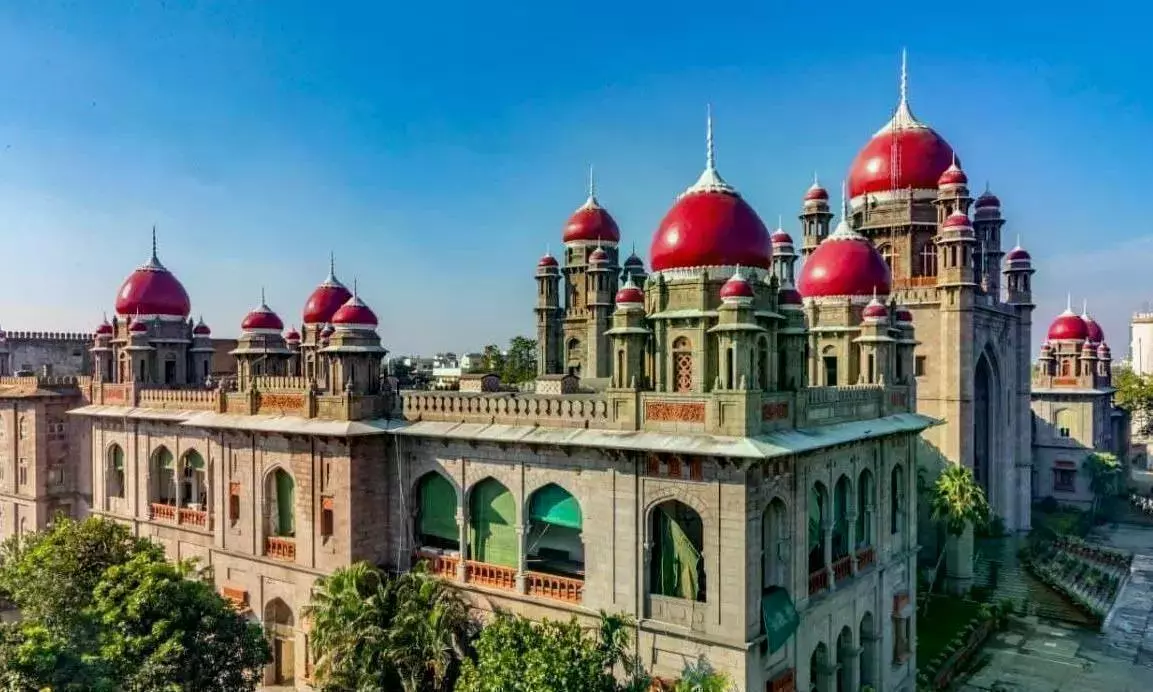
Hyderabad: The Telangana High Court has raised serious concerns over the possibility of a large-scale network trafficking in infants operating across the state, and at the police failing to trace the biological parents of the trafficked babies.
A division bench of the court was hearing an appeal filed by reportedly unauthorised adoptive parents seeking custody of a girl child whom the child welfare committee (CWC) had taken in custody for caregiving. The infant had been rescued by the police that busted a racket mafia involved in purchasing children from poor parents and selling them for illegal adoptions.
The appeal was filed against an order by a single judge, delivered in January, declining to intervene with the custody of a girl child whose care was taken over by the CWC of Nalgonda. The single judge had noted that the adoption claimed by the appellant/writ petitioner was not in accordance with law.
The court was informed that nine children recovered by the police in Suryapet had been produced before the CWC. As the district did not have a protective home, the infants were temporarily shifted to Nalgonda. The bench expressed concern that the police investigating the cases had so far failed to trace the biological parents of any of the children.
Questioning the authorities, the bench observed that the inability to identify or locate the children's families was difficult to understand given the extensive network of anganwadi workers, primary school teachers and other government functionaries operating even in remote villages. The court said such failures raised serious questions about the state's ability to protect vulnerable children.
The bench also questioned the procedure followed by the CWC. It noted that the children's details appeared to have been uploaded on the Central Adoption Resource Authority (CARA) portal before completion of the mandatory social investigation process. The social investigation report, the court was told, was submitted only in June 2026.
The court observed that children should be considered for adoption only after authorities establish that no biological or foster family is available to claim them.
The bench directed the women and child welfare, the social welfare and the home departments to submit detailed statewide data within two weeks. The information must include the number of children taken into protective custody from persons suspected of illegally obtaining them, children currently housed in protective homes, and beneficiaries of government sponsorship and foster-care. The case was adjourned to September 2.
HC Questions Role of MLAs in Distributing Kalyana Lakshmi Cheques
The Telangana High Court on Monday questioned the legal basis for the involvement of MLAs in distributing cheques under the Kalyana Lakshmi and Shaadi Mubarak welfare schemes, observing that public funds must be spent strictly in accordance with law.
Justice N.V. Shravan Kumar made the observations while hearing interlocutory applications filed by AIMIM legislators Ahmed Bin Abdullah Balala and Mohammed Majid Hussain, who sought to be impleaded in proceedings challenging the implementation of the schemes. The MLAs submitted that they were facing difficulties in their constituencies because they were unable to distribute cheques to beneficiaries following the interim orders.
Katika Ravinder Reddy, counsel for the MLAs, submitted that under the relevant government orders (GOs), the beneficiary lists required the counter-signature of the legislator of the respective constituency. Counsel therefore sought that the MLAs be made parties to the proceedings.
The bench questioned whether any provision of law or the Constitution authorised MLAs to participate in the distribution of public funds. “If officials are responsible for scrutinising applications, verifying eligibility and selecting beneficiaries, what is the need for MLAs to distribute the cheques,” the court asked and stressed that there should be no political interference in the distribution of public money.
The court observed that the personal distribution of cheques by elected representatives could create an impression that the schemes were politically motivated rather than being welfare-oriented. It also emphasised that every rupee spent from the public exchequer must have a legal or legislative basis.
The judge clarified that the court was not opposed to welfare schemes or to extending financial assistance to beneficiaries. The implementation of such schemes, including the manner in which public funds were disbursed, must be supported by law, he said.
The proceedings stemmed from a petition filed by advocate Vijay Gopal challenging the implementation of the Kalyana Lakshmi and Shaadi Mubarak schemes without specific legislative approval. The High Court had earlier granted an interim stay concerning payments under the schemes after the government failed to file its counter-affidavit. The government subsequently challenged the interim orders and sought permission to continue providing financial assistance to beneficiaries. The matter is also expected to come up before a division bench.
