Telangana HC Directs Authorities to Clear Encroachments on 14 Acres of Jagathgirigutta Temple Land

Justice Anil Kumar Jukanti directed the authorities to survey the land and remove encroachments and fence the property. The works are to be completed within 12 weeks.
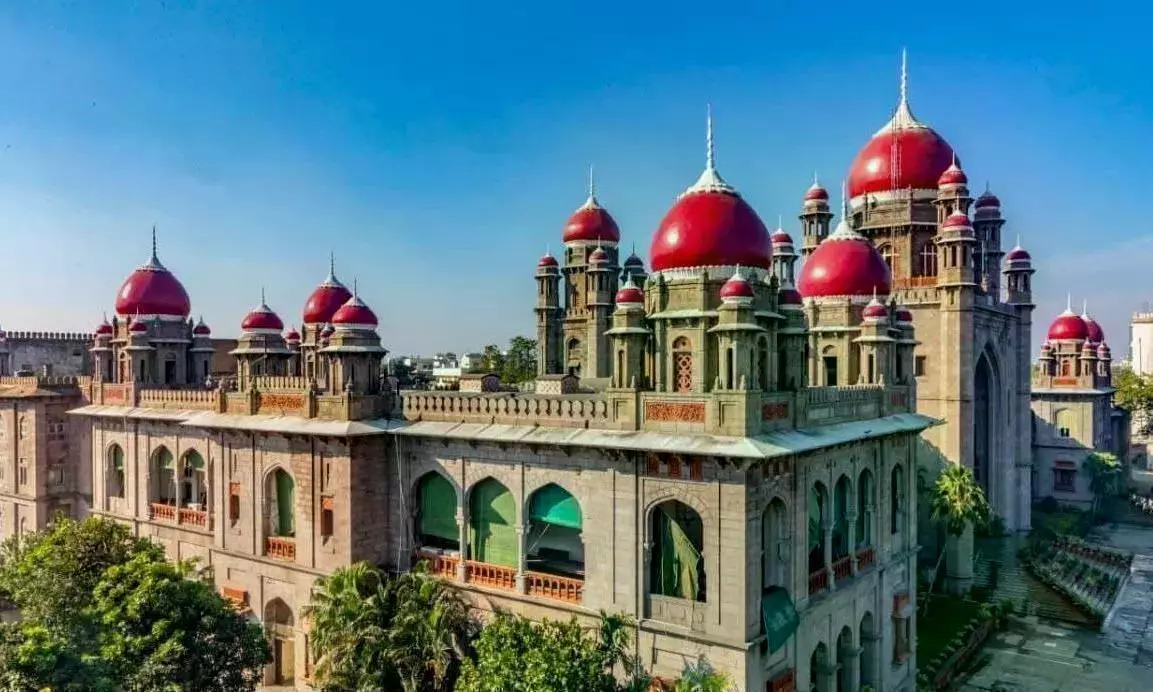
Hyderabad: The Telangana High Court directed the commissioner of endowments and the Medchal- Malkajgiri collector to to take steps to safeguard 14.1 acres of land in in Survey No. 348/1 of Quthbullapur mandal, which belongs to the Sri Laxmi Venkateshwara Swamy Temple in Jagathgirigutta.
Justice Anil Kumar Jukanti directed the authorities to survey the land and remove encroachments and fence the property. The works are to be completed within 12 weeks.
The Judge was dealing with a writ petition filed by the temple, alleging that several persons had encroached upon temple land and raised unauthorised constructions. The committee also complained that despite repeated representations, the authorities failed to initiate eviction proceedings or prevent further alienation or encroachment of the property. There were allegations that some extent of the temple land was alienated to private parties, who had constructed the buildings and fenced the land.
The court clarified that any unauthorised sale or transfer of endowment property without prior sanction of the competent authority like commissioner. endowments, would be “null and void” and would not confer valid title upon purchasers. Even fencing to such property to state the symbolic possession, did not confer the title over the land, the court said. The court also noted that the responsibility to protect endowment lands squarely rested with the authorities under the Telangana Charitable and Hindu Religious Institutions and Endowments Act, 1987.
Referring to Sections 80, 81 and 83 of the Endowments Act, Justice Jukanti observed that the commissioner of endowments was duty-bound to prevent encroachments, stop unauthorised constructions and protect immovable properties belonging to religious institutions.
After examining the material placed on record, including proceedings under Section 43 of the Endowments Act, revenue records and pahanies, the court found prima facie evidence establishing the temple’s ownership over the land. The court noted that the pahanies for the years 1994-95 and 1999-2000 reflected the temple’s name in the relevant ownership columns.
Former Telangana Human Rights Commission Chairman Justice G. Chandraiah Passes Away at 72
Pic with this
Vujjini Vamshidhar
DC Correspondent
Hyderabad, May 16
Retired High Court Judge Justice G. Chandraiah, former chairman of the Telangana Human Rights Commission (THRC), passed away in here on Friday while undergoing treatment for a respiratory-related ailment. He was 72. He is survived by his wife Saraswati, son Prashant, and daughter Lavanya, an advocate. The family resides at Nandi Hills, Jubilee Hills, Hyderabad. The final rites will be performed at 11 am on Sunday at at Mahaprasthanam, Jubilee Hills.
Justice Chandraiah was regarded as a strong voice for social justice and worked closely with eminent personalities. Widely respected for his commitment to social justice and human rights, he hailed from Timmapur in Jannaram mandal of Mancherial district.
Over four decades, Justice Chandraiah rendered distinguished services to the legal fraternity as an advocate, judge, and chairman of the human rights commission. He had served as standing counsel for several government departments, member of the High Court Legal Services Committee, and government pleader before being elevated as a judge of the High Court of undivided Andhra Pradesh.
Expressing profound grief over his demise, Chief Minister A. Revanth Reddy said Justice Chandraiah’s death was an irreparable loss to the judiciary and legal fraternity. The Chief Minister noted that the former judge delivered several landmark verdicts and dedicated his life to upholding constitutional values and human rights.
Telangana HC Directs HYDRAA, GHMC to Clear Encroachments in Baghlingampally Housing Board Colony
Vujjini Vamshidhar I DC
Hyderabad, May 16
Justice N.V. Shravan Kumar of the Telangana High Court directed the HYDRAA and the GHMC to initiate immediate action against illegal occupations at blocks developed by the Housing Board in Baghlingampally. The judge said the direction applied to encroached parks, open spaces, roads, and pavements in the locality. The authorities shall initiate strict action without delay and take appropriate action in accordance with law and submit a compliance report in the High Court Registry within a month.
The court directed the GHMC commissioner and the principal secretary, municipal administration, to initiate action against the erring officers whose continued inaction and dereliction of duty had permitted the encroachments to persist over the years. and against officials responsible for prolonged inaction. The compliance report must be also be submitted before the court.
Justice Shravan Kumar was dealing with a writ petition filed by residents and flat owners of Block No. 16, HIG-II, Baghlingampally, along with their association, complaining that public roads had been occupied by encroachers, making access difficult for residents and commuters. The petitioners contended that despite submitting representations to the authorities, no effective action was taken.
According to the petitioners, the then AP Housing Board had developed the Baghlingampally venture with approved layouts, leaving designated spaces for roads, parks and civic amenities before allotting flats to residents under LIG, MIG and HIG categories. They stated that the northern and western side roads adjoining Block No.16 were intended for public access and connectivity to Chikkadpally, but had become unusable due to encroachments and temporary structures.
The residents alleged that some encroachers had converted portions of the public road into bathing and washing areas, causing unhygienic conditions, foul smell and continuous discharge of wastewater near the apartment compound wall. The petitioners also complained that attempts were being made to raise permanent structures on the encroached portions.
After examining photographs placed on record, the court noted visible encroachments and temporary constructions on roads. The court observed that the authorities ought to have responded immediately to the grievances of residents instead of permitting the illegal occupations to continue for years.
In strong remarks, Justice Shravan Kumar observed that Baghlingampally had become a “glaring example” of how a well-planned residential colony could deteriorate into a “slum-like locality” because of continued inaction and neglect by municipal authorities. The Court further warned that unchecked encroachments and failure of civic administration could eventually turn the areas into blighted areas.
The court emphasised that HYDRAA, constituted specifically for protection and restoration of public roads, parks and open spaces, must take urgent steps to restore the locality in accordance with approved layout conditions. It also directed the GHMC to issue notices to persons concerned under the GHMC Act, 1955, and examine unauthorised constructions, structural alterations and road encroachments strictly in accordance with law. The court also gave a chance to the alleged dwellers on the roads, stating that aggrieved may avail remedy of filing application for the modification of this order, in accordance with law.
HC Orders Medchal Collector and Endowments Dept to Safeguard Encroached Temple Land
Vujjini Vamshidhar I DC
Hyderabad, May 16
The Telangana High Court directed the commissioner of endowments and the Medchal- Malkajgiri collector to to take steps to safeguard 14.1 acres of land in in Survey No. 348/1 of Quthbullapur mandal, which belongs to the Sri Laxmi Venkateshwara Swamy Temple in Jagathgirigutta.
Justice Anil Kumar Jukanti directed the authorities to survey the land and remove encroachments and fence the property. The works are to be completed within 12 weeks.
The Judge was dealing with a writ petition filed by the temple, alleging that several persons had encroached upon temple land and raised unauthorised constructions. The committee also complained that despite repeated representations, the authorities failed to initiate eviction proceedings or prevent further alienation or encroachment of the property. There were allegations that some extent of the temple land was alienated to private parties, who had constructed the buildings and fenced the land.
The court clarified that any unauthorised sale or transfer of endowment property without prior sanction of the competent authority like commissioner. endowments, would be “null and void” and would not confer valid title upon purchasers. Even fencing to such property to state the symbolic possession, did not confer the title over the land, the court said. The court also noted that the responsibility to protect endowment lands squarely rested with the authorities under the Telangana Charitable and Hindu Religious Institutions and Endowments Act, 1987.
Referring to Sections 80, 81 and 83 of the Endowments Act, Justice Jukanti observed that the commissioner of endowments was duty-bound to prevent encroachments, stop unauthorised constructions and protect immovable properties belonging to religious institutions.
After examining the material placed on record, including proceedings under Section 43 of the Endowments Act, revenue records and pahanies, the court found prima facie evidence establishing the temple’s ownership over the land. The court noted that the pahanies for the years 1994-95 and 1999-2000 reflected the temple’s name in the relevant ownership columns.
