Telangana HC Declines To Intervene in Voter Deletion Plea, Cites SIR Process

The court says SIR offers a statutory remedy for voter inclusion and electoral roll corrections
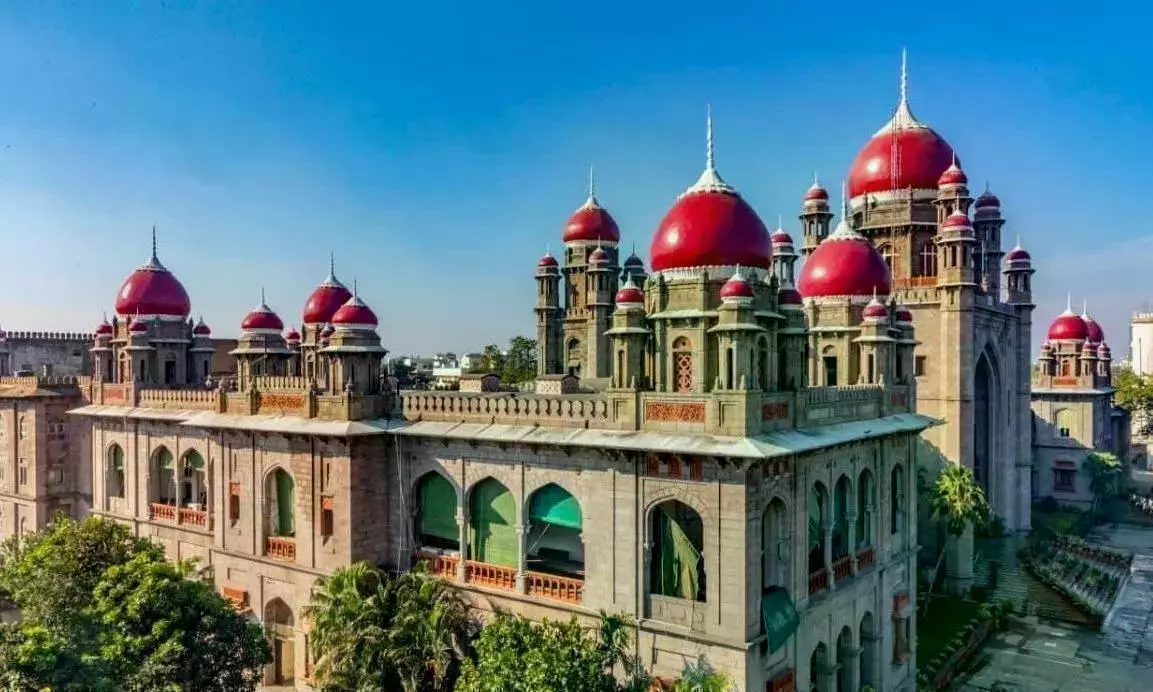
Hyderabad: The Telangana High Court on Tuesday declined to intervene in a plea challenging the deletion of a Hyderabad family's names from the electoral roll, holding that the ongoing special intensive revision (SIR) provided a complete statutory mechanism for inclusion and correction of electoral roll, making writ intervention unwarranted at this stage.
A division bench comprising Chief Justice Aparesh Kumar Singh and Justice G.M. Mohiuddin disposed of the writ petition filed by Hyderabad resident Syed Qutubuddin Masood, who alleged that his vote along with that of his family’s were deleted from the electoral roll, due to which they could not exercise their franchise in the 2024 general elections.
According to him, he made several representations in 2025, but his name was not restored on the electoral roll. He requested the court to direct the Election Commission of India (ECI) to devise and implement a specific form, procedure, redressal grievance system for adjudicating the application forms complaining about the wrongful or negligent deletion of voters list. The family, originally registered as voters in the Bahadurpura/Charminar Assembly constituency, claimed to have remained enrolled continuously.
The petitioner said that without immediate restoration of their names in the roll, it would be impossible for him and his family members to properly identify and map their records during the 2026 revision.
ECI counsel submitted to the court that the SIR provided options for inclusion of voters whose names have been missing from the electoral roll. Since the petitioner and his family had been mapped in the last SIR conducted in 2002, they could submit their enumeration forms to the respective BLOs and enroll themselves. The ECI submitted that eligible persons can submit enumeration forms for inclusion in the draft electoral roll, scheduled to be published on July 31.
Recording these submissions, the court observed that the SIR process itself provided a statutory procedure for inclusion and correction of electoral rolls. In view of the availability of an effective alternative remedy, the court held that it was not inclined to intervene in the electoral revision process by exercising its extraordinary writ jurisdiction.
The court accordingly directed the petitioner and his family members to submit the prescribed forms during the ongoing revision exercise. It clarified that if their names are still not included in the electoral roll after completion of the revision process, they would be at liberty to avail of the appellate remedies available under the election laws before the competent authorities and, thereafter, seek appropriate legal recourse in accordance with law.
Telangana High Court Extends Stay on GO Prohibiting Colleges From Collecting Admission Fees
The Telangana High Court on Tuesday extended its interim stay on the effect or enforcement of four provisions of GO Ms. No. 9 relating to fee collection and fee reimbursement. According to several educational institutions, Paragraphs 5.2(e), 10.2, 10.4 and 12.1(a) of the GO issued on June 6 prohibited them from insisting on or collecting tuition fees from eligible students at the time of admission.
The institutions said that the provisions of the GO compelled them to await payment of fee only after the students received the scholarship amount credited to their respective bank accounts through the direct benefit transfer (DBT) mechanism. They contended that these provisions were arbitrary and unworkable, in their challenge filed before the High Court.
Hearing the batch of petitions, Justice Juvvadi Sridevi of the High Court on June 25, had restrained the authorities from giving effect to the four paragraphs until June 30. On Tuesday, the court extended the operation of the interim order until the matter was taken up again on July 6.
During Tuesday’s hearing, special government pleader Rahul Reddy informed the court that the government's counter-affidavit would be filed the same day but requested time until July 6 to serve copies on all the parties.
Senior counsels appearing for the colleges opposed any further delay, pointing out that the government had already taken considerable time to file its response. They submitted that the principal issue in the batch of petitions was whether colleges should collect fees directly from students or wait for the government to reimburse the amounts within a stipulated timeframe.
Some senior counsels also raised issues concerning fee fixation. The court observed that the petitions relating to fee fixation would also be taken up along with the present batch on the next date of hearing.
CAT Bench dismissed AP state IPS officer PV Sunil Kumar plea seeking his reinstatement
The Central Administrative Tribunal (CAT) Hyderabad bench on Tuesday dismissed a plea filed by senior IPS officer P.V. Sunil Kumar, refusing to intervene with the Andhra Pradesh government's decision to continue his suspension pending criminal investigations and departmental proceedings.
The CAT`s order, pronounced on Tuesday, came on the day Sunil Kumar retired from service. The order comes as a significant setback as Kumar had sought reinstatement by challenging the legality of the government's decision to extend his suspension beyond one year.
Sunil Kumar was placed under suspension in March 2025 after the AP government initiated disciplinary proceedings against him on allegations of undertaking multiple foreign visits without obtaining permission from the competent authority.
During the course of subsequent reviews, the AP government also referred to allegations that the officer had travelled to Dubai and that his sons had allegedly established real estate and hospitality business interests there using funds purportedly linked to irregularities in the Agrigold investigation and other matters handled during his tenure as additional director general of police and CID chief.
Apart from departmental proceedings, Sunil Kumar was also facing criminal prosecution in the high-profile custodial torture case relating to AP Deputy Speaker K. Raghu Rama Krishna Raju, then a member of Parliament. The AP Government in February 2026 further extended his suspension until the completion of the proceedings or till his retirement, whichever was earlier.
Before the CAT bench, Sunil Kumar challenged the continuation of his suspension as illegal and violative of the All India Services (AIS) (Discipline and Appeal) Rules, 1969, He contended that while he was initially suspended on the allegation of undertaking foreign visits without government permission, the state subsequently relied upon several additional allegations while periodically reviewing the suspension.
According to him, the authorities had no legal power to introduce fresh grounds at the stage of review of the suspension order and justify its continuation on allegations that did not form the basis of the original suspension.
He argued that although a charge memorandum had been issued in April 2025, there had been no progress in the departmental inquiry thereafter despite his submitting an explanation and request for relevant documents. He contended that Rule 3(1B) of the Rules 1969 did not permit continuation of suspension beyond one year in cases that do not involve corruption charges. He maintained that the AP government's order extending his suspension was contrary to the statutory scheme governing suspension of AIS officers.
He alleged that the continued suspension was politically motivated and amounted to arbitrary exercise of power. Seeking reinstatement, he requested the CAT bench to set aside the suspension orders and direct restoration of all consequential service benefits.
Opposing the plea, the AP government, represented by Advocate-General Dammalapati Srinivasa Rao and government pleader G.V.L. Murthy argued that the continuation of suspension was fully justified considering the gravity of the allegations and the stage of the investigations.
The government informed the tribunal that several serious allegations had surfaced against the IPS officer, including alleged misuse of Agrigold relief funds, extortion from beneficiaries and purchasers of Agrigold properties, unauthorised foreign visits, alleged business interests established by his family members in Dubai, and alleged financial irregularities relating to procurement of electronic evidence recording devices during his tenure in CID.
The AP government submitted that a departmental inquiry was progressing, in which 24 witnesses had been examined and 113 documents collected, while further evidence was still being gathered before submission of the final report.
With regard to the criminal proceedings, the government pointed out that Sunil Kumar was one of the principal accused in crime registered in connection with the alleged custodial torture of Raghu Rama Krishna Raju. It informed the tribunal that notices had been issued requiring the officer's appearance during investigation and that the investigating officer had reported Sunil Kumar gave evasive replies during questioning.
The government argued that the allegations involve abuse of official position, custodial torture, misuse of public funds, unauthorized foreign travel and other serious misconduct directly connected with the officer's discharge of official duties. Reinstating him during the pendency of investigation and departmental inquiry, it submitted, could adversely affect both proceedings.
The state also relied upon the Supreme Court's judgment in ‘DG & IG of Police v. K. Ratnagiri’ (1990), contending that suspension did not automatically lapse after expiry of a specified period where the applicable service rules contemplate periodic review. Since the competent authority had regularly reviewed the suspension and recorded reasons for its continuation, the orders could not be termed arbitrary or illegal, the government argued.