Liquor application fee hike to Rs 3 L per shop

The government has earmarked reservations in the allotment process, with 15% of shops reserved for Gouds, 10% for Scheduled Castes, and 5% for Scheduled Tribes.
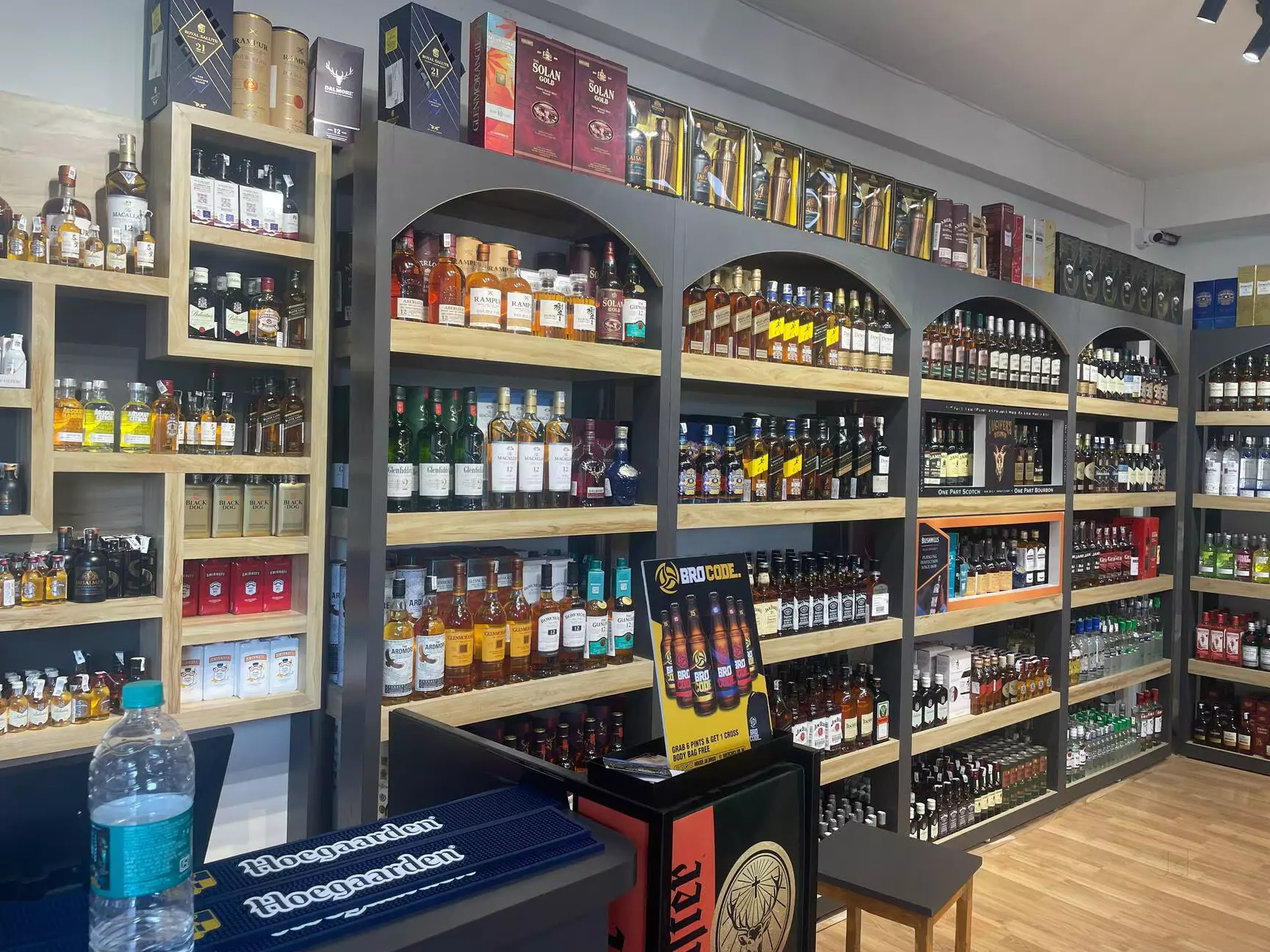
Hyderabad: The state government on Wednesday issued a notification for allotment of retail liquor (A4) shops across the state, with a two-year licence beginning on December 1, 2025, and ending November 30, 2027. The order fixed the total number of shops at 2,620, the same as in the current cycle, and retained the licence duration at two years.
A major change in the new notification is the steep hike in the non-refundable application fee. Applicants will now have to pay Rs 3 lakh per shop as against Rs 2 lakh earlier, marking a 50 per cent rise. The government expects to generate close to Rs 6,500 crore through licence and application fees. During the previous allotment in 2023, it had collected over Rs 1,350 crore from applications and another Rs 3,500 crore through licences.
The notification clarified that allotment will be carried out through a draw of lots supervised by district collectors. Dates for the draw will be announced separately by the excise commissioner. Multiple applications will be permitted, provided the requisite fee is paid for each entry. Individuals, partnership firms, and companies are all eligible to apply.
Reservations have been introduced for specific communities. Of the total outlets, 15 per cent will be allotted to members of the Goud community, 10 per cent to Scheduled Castes, and 5 per cent to Scheduled Tribes. Applicants must belong to the respective categories to apply under these reserved slots.
The Retail Shop Excise Tax (RSET) has been categorised into six slabs depending on population size. The levy begins at Rs 50 lakh annually for villages with fewer than 5,000 people and rises to Rs 1.1 crore in cities with populations above 20 lakh. Other slabs include Rs 55 lakh for areas with 5,000-50,000 people, Rs 60 lakh for 50,000-1 lakh, Rs 65 lakh for 1–5 lakh, and Rs 85 lakh for 5–20 lakh. In addition, each shop will pay a Special Retail Excise Tax of `5 lakh per annum. Licensees are permitted to pay their dues in six instalments and must furnish a bank guarantee equivalent to 25 per cent of the annual RSET.
Based on the minimum slab of `50 lakh per outlet, the government expects to earn nearly `1,400 crore as RSET alone, apart from `78.6 crore from application fees. Officials said actual revenue would be far higher since bidding competition in urban areas often pushes shop licence values well above the fixed slabs.
The notification continued the provision for walk-in stores introduced earlier. Licensees can convert their outlets into walk-in facilities by paying an additional ₹5 lakh annually. Such stores will be allowed to sell liquor-related accessories like glasses, corkscrews, ice buckets, and trays.
The government also retained rules for shop timings — 10 am to 11 pm in GHMC areas and 10 am to 10 pm elsewhere — and reiterated that liquor must be sold strictly at printed retail prices. Margins have been fixed at 27 per cent for ordinary IMFL, 20 per cent for premium IMFL and foreign liquor, and 20 per cent for beer.
To ensure compliance, all shops must install CCTV cameras linked to the Excise Department’s central control room. They must also provide hygienic conditions and adequate parking for customers.
If any notified outlet remains undisposed of after the lottery process, the excise department or Telangana Beverages Corporation will be empowered to establish shops directly or re-notify them.
