Telangana Govt Centralises Food Supplies to Gurukuls

Gurukuls' procurement centralised to ensure quality
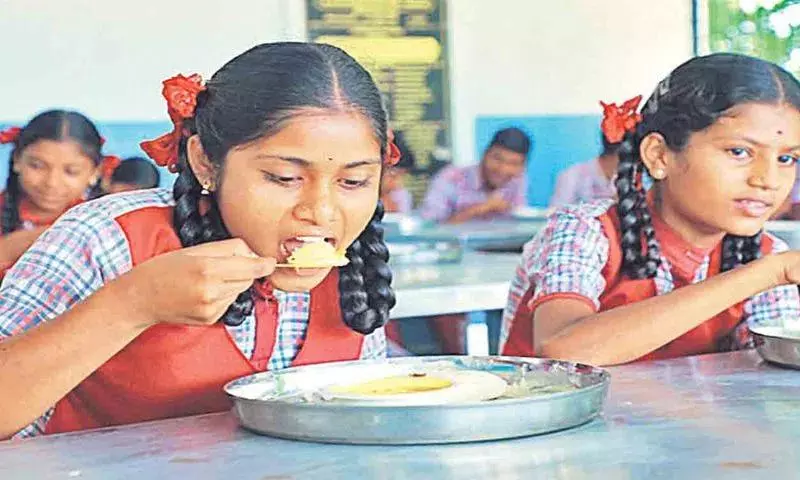
Hyderabad: In a bid to ensure uniform food quality and prevent food poisoning across all gurukul institutions, the government is set to roll out a centralised, nutrient-rich and hygienically prepared meal programme from September 5.
The government has constituted a project monitoring unit for procurement of dietary items for welfare residential institutions, and standard guidelines have been issued. Initially, 1,023 institutions will come under the programme, which will be directly overseen by Chief Minister A. Revanth Reddy and social welfare minister Adluri Laxman. It is being implemented under the chairmanship of Dr V.S. Alagu Varsini, secretary, TGSWREIS, and chairperson, common procurement for residential education project monitoring unit (CMU).
Speaking to Deccan Chronicle, Dr Varsini said, “The programme is based on three principles — quality, quantity and timeliness. This is not just a food supply contract; it is an investment in our students’ health, learning and dignity. We are introducing systems that ensure every child in every Gurukul eats from the same standard.”
Unlike the district-wise procurement model, which caused uneven pricing, quality discrepancies and supply delays, the new system will follow centralised procurement. Essentials like rice, pulses, oil and spices will be purchased in bulk at uniform rates and pre-approved nutritional grades, then supplied to districts via GPS-tracked logistics.
Women’s self-help groups at the mandal and district levels will manage the supply chain. Menus have been revised in line with the Indian Council of Medical Research (ICMR) dietary guidelines for adolescents. Each meal will provide approximately 2,200 kilocalories and 40–50 grams of protein per day, along with essential micronutrients.
Steam cooking will be mandatory in all kitchens to preserve vitamins and aid digestion. Food will be stored and served in food-grade stainless steel containers. Plastics and aluminium vessels will be completely banned.
A real-time digital dashboard will track cooking and serving activities. District-level committees headed by collectors, along with food safety officials, will regularly inspect kitchens. Certified laboratories will conduct monthly random food sample testing. If issues are detected, supplier contracts will be terminated immediately.
Each student will have a health card recording height, weight, Body Mass Index (BMI) and haemoglobin levels, updated quarterly. This data will help guide menu adjustments and allow early intervention for anaemia or other health issues.
