Telangana: Engineers Urged To Develop Tools For Dryland Farming

Telangana council of higher education chairman Prof. V. Balakista Reddy addressed teaching reforms, ethical use of AI and policy reforms: Reports
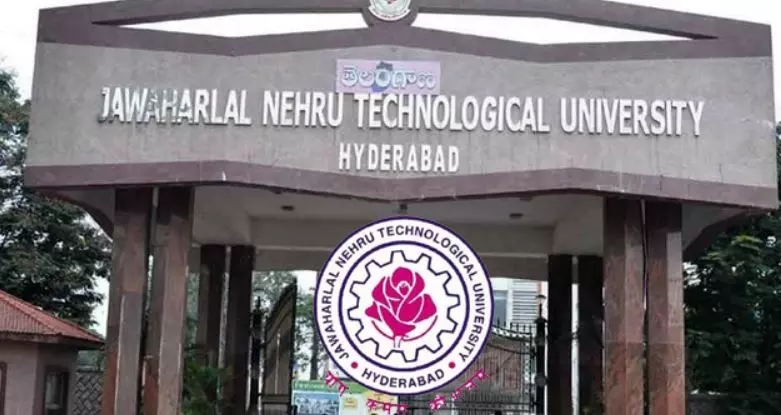
HYDERABAD: Engineers should develop better instruments suited to dryland agriculture and Indian conditions, Dr Stanford Blade, deputy director general, research and innovation, international crops research institute for the semi-arid tropics, said at Jawaharlal Nehru technological university Hyderabad (JNTUH) on Wednesday.
Blade was speaking at the valedictory session of the three-day international conference on artificial intelligence for sustainable future: transforming biotechnology-driven science, technology and society, which brought together nearly 200 registered participants, including scientists, academicians, clinicians, engineers, research scholars, students, industry representatives, innovators, start-ups and incubators.
Guest of honour Dr Qi Yang spoke about how AI intervention was improving precision in pharmaceutical and agricultural applications, while Dr Namrata Pathak, scientist-G and adviser, PCMP division, department of science and technology (DST), Government of India, outlined the DST’s role in promoting scientific research, innovation and translational ecosystems.
Pathak also interacted with representatives of 22 Telangana incubators at the TGIC incubators meet. Held under the theme, “From technology to commercialisation,” it focused on technology validation, intellectual property, incubation, funding, scale-up and commercialisation.
JNTUH vice-chancellor Dr T. Kishen Kumar Reddy, chief patron of the conference, said state universities were contributing to the latest developments in science and technology. He pointed to the potential of ancient bioformulations in traditional medicine and said biotechnology solutions needed to be sustainable. He also described Hyderabad as a favourable location for the biotechnology industry.
The conference, held from August 10 to 12, covered AI in healthcare, precision medicine and diagnostics, sustainable agriculture and food security, bioprocessing and bioentrepreneurship, environment, climate and clean energy, marine, space and defence biotechnology, and AI in policy, governance and society.
A panel on AI in biopharma, with RICH CEO Rashmi Pimpale, examined AI applications across the biopharmaceutical value chain, from discovery and development to manufacturing, commercialisation and patient delivery.
At the inaugural session, Dr Sarvesh Singh, CEO, Telangana Life Sciences, was the chief guest, while Prof. P. Reddanna was guest of honour. Prof. Narahari Sastry delivered the keynote, stressing interdisciplinary science and emerging AI-enabled approaches in biotechnology.
Telangana council of higher education chairman Prof. V. Balakista Reddy addressed teaching reforms, ethical use of AI and policy reforms. Biological E supported the conference and sponsored a scientific lecture, with its president and chief scientific officer Dr Philip Dormitzer also participating in the scientific programme.
The conference brought AI and biotechnology into conversation with electronics, electrical, mechanical, chemical, materials and computer science, with discussions pointing to applications in healthcare, agriculture, pharmaceuticals, instrumentation and biomanufacturing. Organisers also stressed technology translation, indigenous manufacturing, reducing import dependence and creating employment.
The valedictory session was attended by Prof. Vijay Qadar, former dean and professor, ANGRAU, Dr G.V. Narasimha Reddy, principal, university college of engineering science and technology Hyderabad, conference conveners Prof. A. Uma and Prof. E. Hemalatha and representatives of OWSD and the Virat Foundation.
