Telangana Budget Boosts Education with Rs. 24,174 Crore Allocation

Telangana Government expands residential schools, increases welfare spending, but fails to address infrastructure deficiencies in regular schools
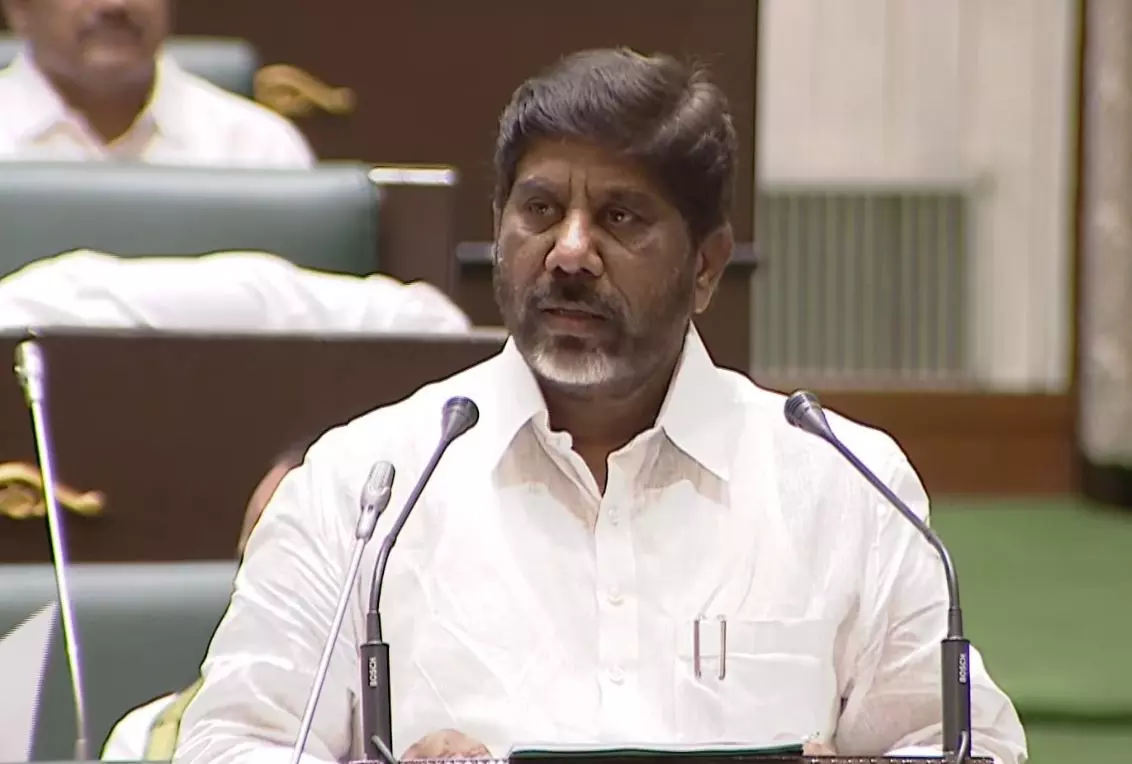
Hyderabad:The state Budget has allocated Rs. 24,174 crore to the education sector for 2025-26, marking a 13.5 per cent increase from the previous year.
One of the biggest allocations was Rs. 11,600 crore for Young India Integrated Residential Schools. The government will set up 58 such schools, ensuring at least one in every constituency. These schools aim to provide high-quality education to students from SC, ST, BC, and minority communities.
Each school will be built on 20 to 25 acres and will include digital classrooms, sports fields, and staff residential quarters. Students will receive free accommodation, meals, uniforms, textbooks, and training for competitive exams. This initiative was first introduced in October 2024 with an initial budget of Rs. 5,000 crore, and its expansion has been one of the biggest moves in the budget.
In higher education, Rs. 550 crore has been set aside for Koti Women’s University, renamed after Chakali Ailamma, for infrastructure development.
The budget also focuses on student welfare, particularly in government-run hostels and schools. Diet charges in welfare hostels and Kasturba Gandhi Girls’ Schools have been increased by 40 per cent, and cosmetic charges by 200 per cent, benefiting 7.66 lakh students. The government has also introduced the common diet scheme to ensure uniform meals for students in welfare hostels. In an effort to support 10th-grade students, evening snacks are now being provided in government schools to help them focus on their studies.
Despite these allocations, the state’s school infrastructure remains a concern. Out of 1,023 government residential schools in Telangana, 662 do not have their own buildings. Many gurukuls operate in rented spaces with minimal facilities, often lacking even basic toilets.
Deputy CM and finance minister Mallu Bhatti Vikramarka acknowledged this issue, admitting that while the global education system had evolved, Telangana’s government schools continued to lag behind.
Reactions to the Budget allocations were mixed. The Telangana State United Teachers’ Federation (TSUTF) said it focused too much on residential schools while neglecting the 26,067 regular government schools. TSUTF president Chava Ravi pointed out that while government residential schools cater to only 5.5 lakh students, nearly 16 lakh students study in government, district, and mandal parishad schools, the majority of whom come from marginalised communities.
Ravi argued that the Budget’s allocations did not go far enough in addressing the needs of these students, particularly in ensuring better infrastructure and quality midday meals.
Some saw the Budget as a step in the right direction. Manek Rao S., senior academic, speaking to Deccan Chronicle, praised the government’s initiatives, saying, “The increased funding for residential schools and student welfare programmes is a positive move. If implemented effectively, it will improve access to quality education for underprivileged students and create better learning environments.”
The Telangana Economic Survey reported that 11,062 new teacher posts were filled, skill development expanded with 10,000 students training annually in banking, financial services, and insurance (BFSI) courses, the Young India Skill University is to train 20,000 students, while an MoU with ITE Singapore to bring global vocational training standards. The New India Literacy Programme - ULLAS will target 40 lakh illiterate adults with a Rs. 15.67 crore budget, per the survey.
Only 35 per cent of students attend government schools, with 19.4 lakh in public institutions versus 36.35 lakh in private schools. The Gross Enrollment Ratio (GER) is 110 for boys, 112.6 for girls, but transition rates drop to 75.6 per cent for higher secondary, the survey noted.
School infrastructure is improving under Amma Adarsha Patashala Committees (AAPCs), which completed upgrades in 16,072 of 18,366 schools, spending Rs. 641.10 crore, according to the survey.
New junior colleges and English language practicals are being introduced to prepare students for TOEFL and IELTS. Technical education too is expanding with new government engineering and polytechnic colleges, including the upgrade of Government Polytechnic at Kosgi. A six-month industrial training programme has also been launched.
While this is a push towards improving the state’s schools and colleges, the allocation still falls short of what experts and educators have been demanding.
Over the past decade, the Budget has surged by 203 per cent, rising from Rs. 1,00,637 crore in 2014-15 to Rs. 3,04,965 crore, but the education budget has only grown by 126 per cent in the period.
