Telangana Assembly Approves FY27 Budget

Bhatti described said the “People’s Budget” that aims to benefit every family in the state and lay a strong foundation for Telangana’s transformation into a leading economy by 2047 with a $3trillion economy.
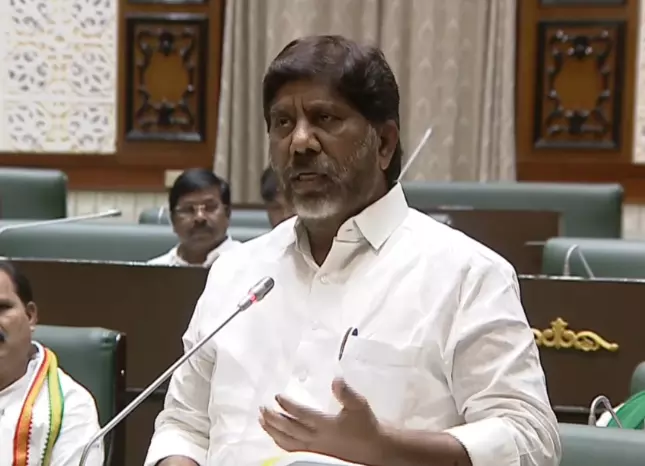
Hyderabad: The Legislative Assembly on Monday approved the State Budget for 2026–27 with an outlay of ₹ 3.24 lakh crore by passing the Appropriation Bills for the financial year commencing on Wednesday, enabling government expenditure for the coming financial year. The House passed two key Appropriation Bills introduced by Deputy Chief Minister and finance minister Mallu Bhatti Vikramarka, authorising the release of funds for various government programmes and administrative needs.
Replying to the debate in the Assembly, Bhatti described said the “People’s Budget” that aims to benefit every family in the state and lay a strong foundation for Telangana’s transformation into a leading economy by 2047 with a $3trillion economy.
Bhatti highlighted the state’s strong economic performance under the Congress government, stating that Telangana had recorded a growth rate of 10.7 per cent, significantly higher than the national average of 8 per cent. He said the per capita income of the people had increased substantially and expressed confidence that the state was on track to achieve its ambitious goal of becoming a $3 trillion economy by 2047.
He asserted that Telangana possessed the required human resources and institutional strength to sustain high growth and meet its long-term targets.
Bhatti highlighted the rapid development of Hyderabad, noting that the city continued to attract global investment due to its skilled workforce. He said the government was implementing a systematic development strategy under the “CURE, PURE, RARE” policy framework — referring to the city core region, the periurban area and rural zones — to boost GSDP, with allocations made to promote startups and infrastructure development through the public-private partnership (PPP) model.
Stressing that agriculture remained a priority, Bhatti said budgetary allocations were aimed at benefiting the 45 per cent of the population dependent on the sector. The government would promote oil palm cultivation and encourage farmers to take up commercial crops to enhance incomes.
Significant allocations were also announced for temple development and tourism. An amount of ₹700 crore has been earmarked for reconstructing the Omkareshwara Swamy temple at Manchirevula on the banks of the Musi River, while ₹351 crore has been allocated for the development of the Bhadrachalam temple and construction of Pushkar ghats. Additionally, ₹500 crore has been set aside for conducting the Godavari Pushkaralu on a grand scale.
On irrigation, Bhatti said the redesign of the Pranahita-Chevella project into the Kaleshwaram project had deprived Adilabad of water, and assured that the present government was committed to addressing the issue. He also recalled that despite assurances at the time of bifurcation, Telangana had not been granted national project status, unlike the Polavaram Project approved by the Centre.
He said the state was pursuing a cooperative federal approach and had urged the Centre to sanction the Suryagarh scheme for 40 lakh households, calling on BJP legislators to support the demand. He maintained that there had been no reduction in funds for SC, ST and BC welfare and that previous allocations had been carried forward.
The government was also preparing legislation to curb food adulteration, recognising it as a serious public health concern. Housing for the poor has been prioritised, with ₹22,500 crore allocated under the Indiramma housing scheme, providing ₹5 lakh per unit, while bills are being cleared on a weekly basis.
Urban infrastructure initiatives include expanding the Hyderabad Metro Rail to ease traffic congestion and developing key tourist destinations such as the Musi Riverfront, Charminar, Birla Mandir, Golconda Fort and Laad Bazaar. Measures are also underway to address waterlogging issues and ensure adequate fuel supply across the state.
The minister said that 39 sewage treatment plants had been sanctioned to ensure only treated water flows into the Musi River, while underground electricity infrastructure is being planned for the Old City. He also announced the launch of 25 new residential schools this year and assured that ₹700 crore per month was being disbursed towards retirement benefits, with plans to increase it to ₹1,000 crore.
Pending payments under welfare schemes such as Shaadi Mubarak and Kalyana Lakshmi are being cleared, while overseas scholarships for students are being released regularly. The state has also cleared ₹3,000 crore in dues under centrally sponsored schemes.
Criticising changes in the employment guarantee scheme that reduced the Centre’s share to 60 per cent, Bhatti said the state would pass a resolution opposing the move. He added that Telangana was maintaining its fiscal deficit at 2.8 per cent, below the permissible 3 per cent limit.
Highlighting education reforms, he said a Telangana Public School would be established in every constituency, offering free transport, nutrition and educational facilities. Chief Minister A Revanth Reddy was personally overseeing reforms in the sector, he said. Skill development initiatives, including TASK, advanced technology centres and a Skill University, are being strengthened, with special training for students seeking overseas employment.
The government was also setting up Young India Integrated Residential Schools at a cost of ₹200 crore each, while increasing hostel diet and maintenance charges. In higher education, ₹100 crore has been allocated to Osmania University and ₹500 crore to Chakali Ilamma Women’s University, along with support for other institutions, including a proposed Earth Sciences University in Kothagudem.
Deputy Chief Minister and finance minister Mallu Bhatti Vikramarka, tabling appropriations Bills in the Assembly, said:
Telangana recorded 10.7% growth rate, higher than the national average of 8 per cent.
Per capita income increased substantially.
CURE, PURE, RARE policy framework would boost GSDP.
Allocations made to promote start-ups and infrastructure development through the public-private partnership (PPP) model.
Budgetary allocations benefit 45% of population that is dependent on agriculture.
Government to address problems caused by the redesign of Pranahita-Chevella project into the Kaleshwaram project.
Government to promote oil palm cultivation, and encourage commercial farming.
Significant allocations for temple development and tourism: ₹700 crore for reconstructing Omkareshwara Swamy temple on the Musi, ₹351 crore for Bhadrachalam temple, Pushkar ghats, ₹500 crore for Godavari Pushkaralu.
Asks Centre to sanction Suryagarh scheme for 40 lakh households.
No reduction in funds for SC, ST and BC welfare; previous allocations carried forward.
Government preparing legislation to curb food adulteration.
Housing for the poor prioritized; with ₹22,500 crore allocated under the Indiramma scheme, bills cleared on a weekly basis.
Urban infrastructure initiatives include expanding the Hyderabad Metro Rail to ease traffic congestion and developing key tourist destinations such as the Musi riverfront, Charminar, Birla Mandir, Golconda Fort and Laad Bazaar.
39 sewage treatment plants had been sanctioned to ensure treated water flows into the Musi
Underground electricity infrastructure is being planned for the Old City.
25 residential schools to be launched this year.
₹700 crore per month was being disbursed towards retirement benefits, with plans to increase it to ₹1,000 crore.
Pending payments under welfare schemes such as Shaadi Mubarak and Kalyana Lakshmi being cleared.
Overseas scholarships for students being released regularly; government cleared ₹3,000 crore in dues under centrally sponsored schemes.
State to pass resolution changes in the employment guarantee scheme that reduced the Centre’s share to 60 per cent.
Telangana Public School to be established in every constituency, offering free transport, nutrition and educational facilities.
Skill development initiatives, including TASK, advanced technology centres and a Skill University, are being strengthened.
Young India Integrated Residential Schools at a cost of ₹200 crore each, while increasing hostel diet and maintenance charges.
₹100 crore has been allocated to Osmania University and ₹500 crore to Chakali Ilamma Women’s University
Support for other institutions, including a proposed Earth Sciences University in Kothagudem.
