Suicide Drone Sky Striker Key to Precision Strikes Operation Sindoor

During Operation Sindoor, the Indian Army is believed to have destroyed key bases belonging to terror outfits Jaish-e-Mohammed and Lashkar-e-Taiba. The operation marks a significant tactical shift, using unmanned systems for deep-strike missions in hostile territory.
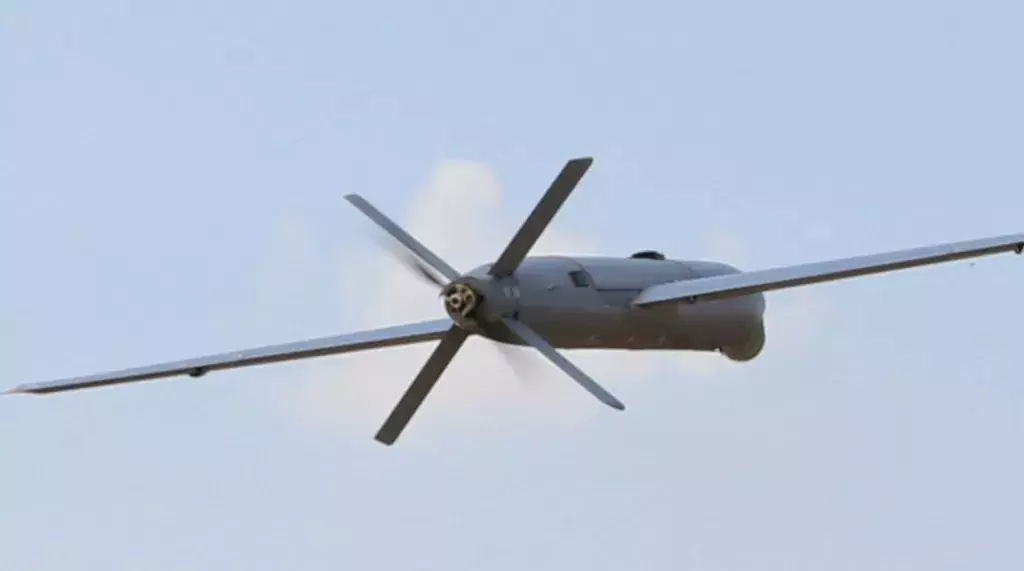
Hyderabad: The Indian Army's midnight retaliatory strikes under Operation Sindoor have brought the spotlight on a relatively new but deadly addition to India’s military arsenal — the suicide drone Sky Striker.
According to defence sources, this loitering munition played a crucial role in destroying terror launchpads across nine locations in Pakistan-occupied Kashmir and Pakistan on Tuesday night.
While missiles like Scalp and Hammer were reportedly part of the operation, the Sky Striker added a new dimension to India's strike capabilities. The drone is unique in its operation — not just a surveillance tool but a weaponised unmanned aerial vehicle (UAV) that operates much like a guided missile.
Capable of carrying 5–10 kilograms of explosives, a Sky Striker can fly up to 100 km and hover over an area while identifying and locking onto high-value targets. Once the target is identified, it dives and self-destructs on the target, ensuring maximum damage with minimal risk to personnel. Its near-silent operation makes it ideal for surprise attacks in sensitive regions.
Developed with Israeli technology by Elbit Systems, the Sky Striker is manufactured in India by Alpha Design Technologies in Bengaluru. In 2021, India placed an order for over 100 of these drones following extensive trials. The decision reportedly gained momentum after the 2019 Balakot airstrikes, as India looked to enhance its ability to carry out precise, low-casualty operations across the border.
During Operation Sindoor, the Indian Army is believed to have destroyed key bases belonging to terror outfits Jaish-e-Mohammed and Lashkar-e-Taiba. The operation marks a significant tactical shift, using unmanned systems for deep-strike missions in hostile territory.
Officials have yet to release official footage or statements confirming the full extent of the drone's involvement, but multiple military sources indicate that Sky Striker drones were successfully deployed in several of the nine targeted sites.
With increasing threats from across the border, the use of suicide drones like the Sky Striker showcases India's evolving approach to modern warfare — relying on precision, stealth, and indigenous capability.
GFX—Sky Striker (Indigenous combat drone)
Type: Loitering munition (suicide drone)
Origin: Israeli technology by Elbit Systems
Manufacturer in India: Alpha Design Technologies, Bengaluru
Explosive payload: 5 to 10 kg
Range: Up to 100 km
Function: Locates, locks onto, and destroys targets by self-destructing on impact
Mode of operation
Designed for high-precision strikes with minimal collateral damage
Silent operation allows for undetected, surprise strikes
Can loiter over target areas before attacking
Reduces risk to Indian personnel during cross-border operations
Effective in both urban and remote combat environments
Reflects India’s shift toward unmanned and indigenous defence technology
Used in Operation Sindoor to target terror camps in Pakistan-occupied Kashmir
Procurement decision followed the 2019 Balakot airstrikes
India ordered over 100 units in 2021 after successful testing
Ideal for targeting high-value or time-sensitive enemy assets
