Study Warns India On Threat From Moist Heat Waves

The study, ‘Anatomy of moist heatwaves in India during summer monsoon season’ has shown for the very first time that India’s monsoon season not only brings rain to the land, but the phenomenon of moist heatwaves.
HYDERABAD: Large swathes of India are prone to ‘moist heatwaves (MHWs)’ which in turn could result in the barely talked about wet bulb temperatures that have widespread public health implications, a new study has found.
The study, ‘Anatomy of moist heatwaves in India during summer monsoon season’ has shown for the very first time that India’s monsoon season not only brings rain to the land, but the phenomenon of moist heatwaves. Unlike ordinary heatwaves, moist heatwaves are driven by humidity as much as temperature, resulting in what is known as wet bulb temperatures. These conditions occur when the air is already humid, resulting in a situation where sweat cannot evaporate from skin, which in turn reduces the ability of the human body to cool itself. Lack of awareness of these weather conditions can result in heat exhaustion and even fatal heatstroke within hours, especially to those involved in physical labour.
“We have shown for the first time that India's summer monsoon actively controls the location and timing of moist heatwaves in the country,” Dr Akshay Deoras, a research scientist at the National Centre for Atmospheric Science & Department of Meteorology, University of Reading, UK, the lead author, told Deccan Chronicle.
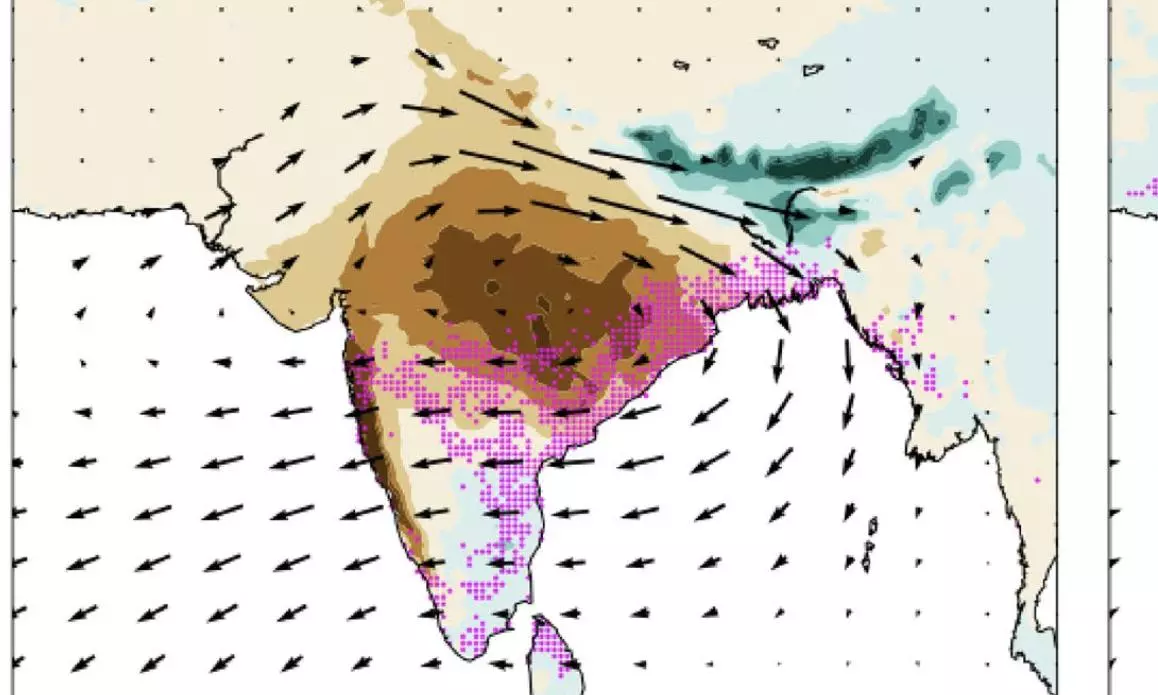
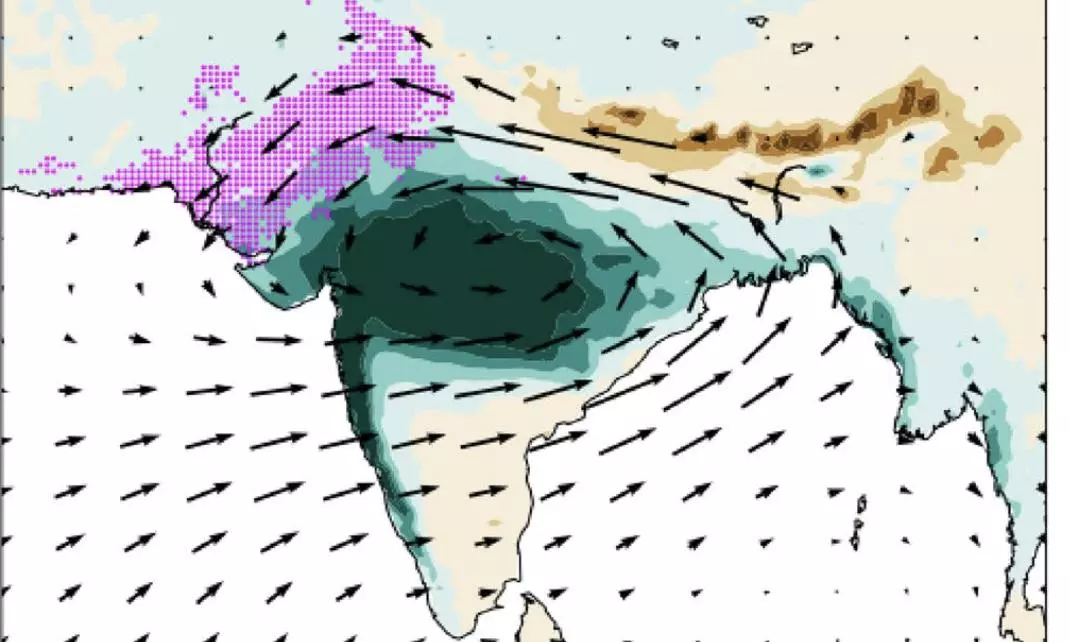
The study, published in the journal Climate Dynamics, with the researchers poring over more than 80 years of weather data, found that the MHWs can shift from region to region, depending on where the monsoon rains take a break and where they are active. “We can predict where and when the MHWs will occur, and people can be warned in advance about conditions that can result in dangerous heat exhaustion,” Dr Deoras said.
And among the states that the study found evidence of MHWs, and consequently wet bulb temperatures, are several parts of Telangana and Andhra Pradesh. Dr Deoras explained: “The MHWs occur over peninsular India during monsoon breaks, while they occur during active rain spells in northern and north-east India.”
According to Dr Deoras, the research has demonstrated a definite link on how the Indian monsoon is the “key driver of where and when this deadly risk develops. Because we can forecast these monsoon patterns weeks ahead, this creates real opportunities to prepare and protect people.”
He said Indians are aware of dry heatwaves during the hot summer months, but MHWs are not known. Saying this lack of awareness makes MHWs more dangerous, Dr Deoras said early alerts on coming of MHWs can held in when to organise, or avoid public events, such as cricket matches and other large gatherings, to reschedule activities, extend drinks breaks, and strengthen on-site medical provision to protect both participants and spectators.
With MHWs bringing with them wet bulb temperatures with them, a weather condition where the sweat from the body does not evaporate due to excessive moisture in the air — or relative humidity as the condition is commonly known – that results in dangerous and even fatal heat exhaustion as the body cannot cool itself, early prediction of MHWs can also help public health services, and the people themselves, to be prepared, Dr Deoras said.
In addition to serious health concerns, wet bulb temperatures also result in increased electricity demand and according to a 2024 report by the Institute of Energy Economics and Financial Analysis, which used the WTB days data as a metric, found that on such days, demand for electricity rises substantially “on hotter, humid days, reflecting the demand for air conditioning and fans,” and that in the 2023 too, IEEFA found that wet-bulb temperatures strongly predicted the increased demand for power.
Moist Heat Waves
Are driven by humidity as much as temperature. When air is already humid, sweat cannot evaporate from skin, leaving the body unable to cool itself. This can lead to heat exhaustion and fatal heat stroke within hours.
Wet Bulb Temperatures
A measurement that combines heat and humidity. A WBT of 31 degrees Celsius is extremely dangerous for humans, if it hits 35 degrees C, it becomes close to unsurvivable for more than about six hours, even for fit and healthy adults resting in shade.
