Study Flags Rising Groundwater Risks In Musi Basin

Study flags rising groundwater pollution risk in Musi basin
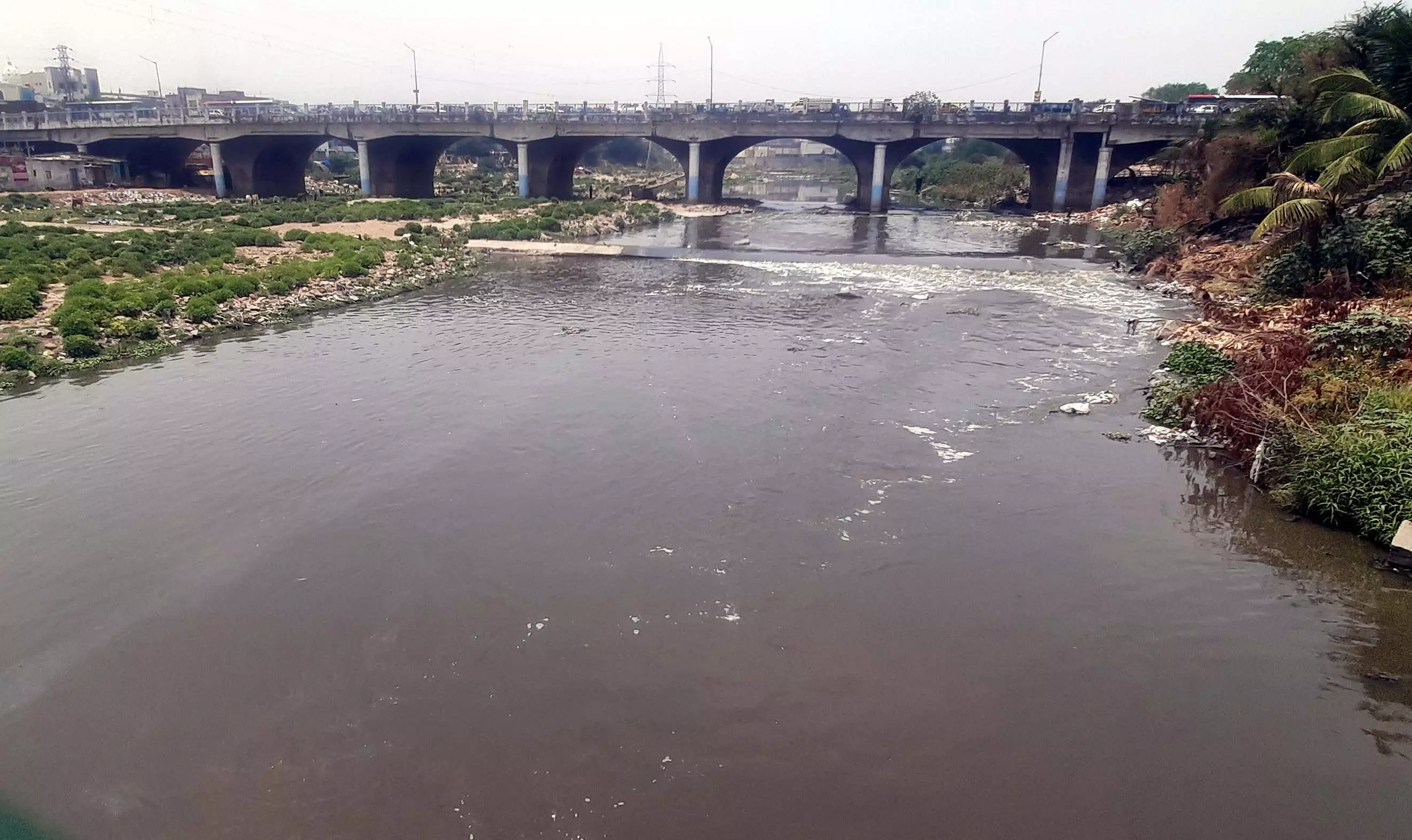
Hyderabad: A recent study covering more than 25 years of data by National Geophysical Research Institute (NGRI), Hyderabad, Academy of Scientific and Innovative Research, Ghaziabad, and the JNTU-Hyderaba’s department of civil engineering, has raised concerns over increasing groundwater vulnerability in parts of the Musi river basin, highlighting the growing risk of pollution in several sub-basins due to hydrogeological and human factors. While most sub-basins recorded some recovery in groundwater levels over the past decade, areas like Hussain Sagar witnessed a decline, indicating stress on aquifers.
This was published in the ‘Current Science’ journal and researched by S. Chandrapuri, N.C. Mondal and M.V.S.S. Giridhar.
The research used analysed rainfall, groundwater levels, and water quality indicators between 2007 and 2023. The findings reveal that sub-basins such as Paleru, Muchkunda, Shamirpet, and Ibrahimpatnam are particularly vulnerable to groundwater contamination.
According to the study, the basin receives an average annual rainfall of about 1,047 mm, with nearly 82 per cent occurring during the monsoon months from June to September. Despite a slight increase in rainfall over the years, groundwater recharge remains uneven across regions. On average, only about 14.96 per cent of monsoon rainfall contributes to groundwater recharge, with the highest recharge observed in Ibrahimpatnam (21.68 per cent) and the lowest in Osmansagar and Hussainsagar (12.06 per cent).
Groundwater levels showed significant variation across the basin, ranging from shallow depths of 0.25 metres to as deep as nearly 30 metres below ground level. While most sub-basins recorded some recovery in groundwater levels over the past decade, areas like Hussainsagar witnessed a decline, indicating stress on aquifers.
The study also found notable differences in water quality. Total dissolved solids (TDS), a key indicator of water salinity, ranged from relatively fresh to highly saline conditions. Sub-basins such as Muchkunda and Ibrahimpatnam recorded higher salinity levels, suggesting stronger rock-water interactions and possible human-induced contamination.
Using what is called ‘entropy-based analysis’, a way of using information variables, researchers established strong links between rainfall, groundwater levels, and water quality. Areas with higher interaction among these factors were identified as more vulnerable to pollution. The Muchkunda, Ibrahimpatnam and Shamirpet regions showed particularly high vulnerability due to this interconnected behaviour.
The study attributes these variations to factors such as land use patterns, soil characteristics, and urbanisation. Urban areas like Hussainsagar, with more impermeable surfaces, showed reduced groundwater recharge, while agricultural regions like Paleru demonstrated better infiltration.
We have to arrest the runoff of rainfall during monsoon to reduce vulnerability. We are also working on sub basins as we have a lot of data sets and it requires six months to publish it, said N.C. Mondal, principal scienti
Future research should integrate the entropy-based results with land-use, soil permeability, and pollutant source data to enhance the precision of vulnerability assessment. Continuous monitoring and model calibration are essential to improve reliability and support sustainable groundwater management and policy formulation in the data-scarce Musi River Basin.
