Using embedded pressure and motion sensors, the device continuously monitors grip pressure and hand movement while a person writes
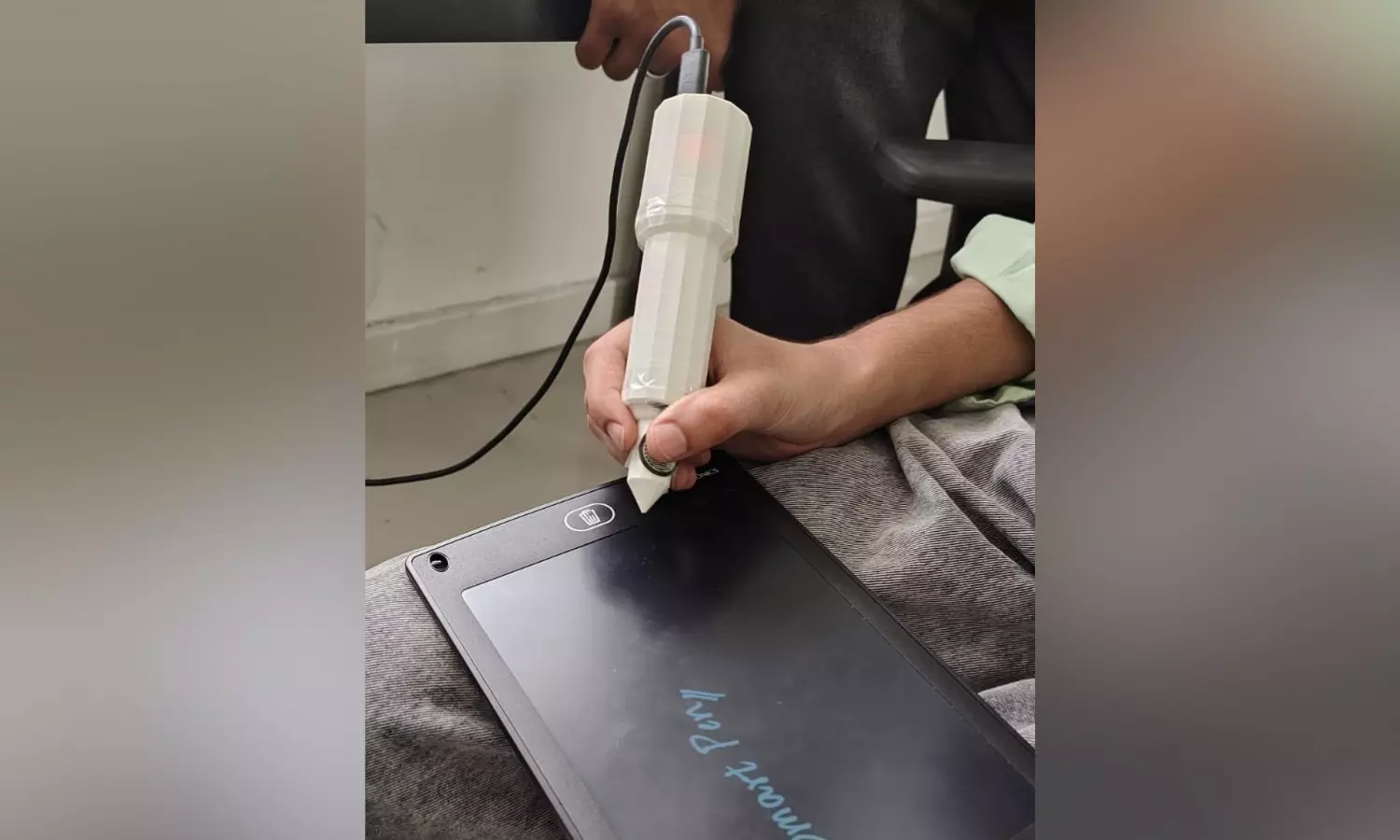
HYDERABAD: What began with watching a boy in their community struggle to hold a pen has grown into an assistive technology project that could make writing easier for people with motor disabilities. A team of five 18‑year‑old engineering students has developed NeuroGrip, an AI‑powered smart pen that helps users improve their grip and handwriting in real time.
The innovation was developed by Challa Spurthi Reddy, Meela Amrutha, Palla Geetesh Nandan, Siddartha Anishetty and Addagulla Vikas, who call themselves Team Watt’s Up, from the NxtWave of Innovation in Advanced Technologies (NIAT). “We were inspired by a boy from our community who experiences motor difficulties while writing. Watching him struggle motivated us to build an assistive solution,” Reddy told DC.
NeuroGrip is designed for people with motor disabilities, learning‑related writing difficulties such as dysgraphia, and those undergoing hand rehabilitation. Using embedded pressure and motion sensors, the device continuously monitors grip pressure and hand movement while a person writes.
“The microcontroller processes this data and instantly alerts the user whenever unhealthy writing patterns are detected,” Anishetty explained. He added that the device responds with a gentle buzzer and LED indicator, allowing users to correct their grip immediately instead of analysing handwriting only after it is completed.
The team said the first prototype was tested with the boy who inspired the project and with other volunteers. “The feedback showed the device worked, but it was bulky. We redesigned the hardware layout, refined the sensor calibration and built a smaller, cleaner second prototype,” Amrutha said.
Developing the device was not without challenges. “Integrating multiple hardware components and calibrating the sensors for reliable performance was our biggest challenge. Continuous testing, debugging and guidance from mentors at NIAT helped us improve the prototype’s stability and accuracy,” Nandan shared.
The students said their long‑term goal is to make the technology affordable and easier to use. “We plan to keep the device affordable by using low‑cost components and eventually develop a lightweight wearable attachment that can be fitted to any standard pen,” Vikas said.
The team believes NeuroGrip can support people with motor disabilities, those with writing‑related learning disorders and individuals recovering from hand injuries, helping them write with greater confidence and independence.

