Strategic Autonomy Lets India Balance Ties with Major Powers, Protect National Interests: Delhi LG Sandhu at EFLU

Delhi Lieutenant Governor Highlights India’s Growing Global Role, Demographic Strength and Need to Build Capabilities in Emerging Technologies
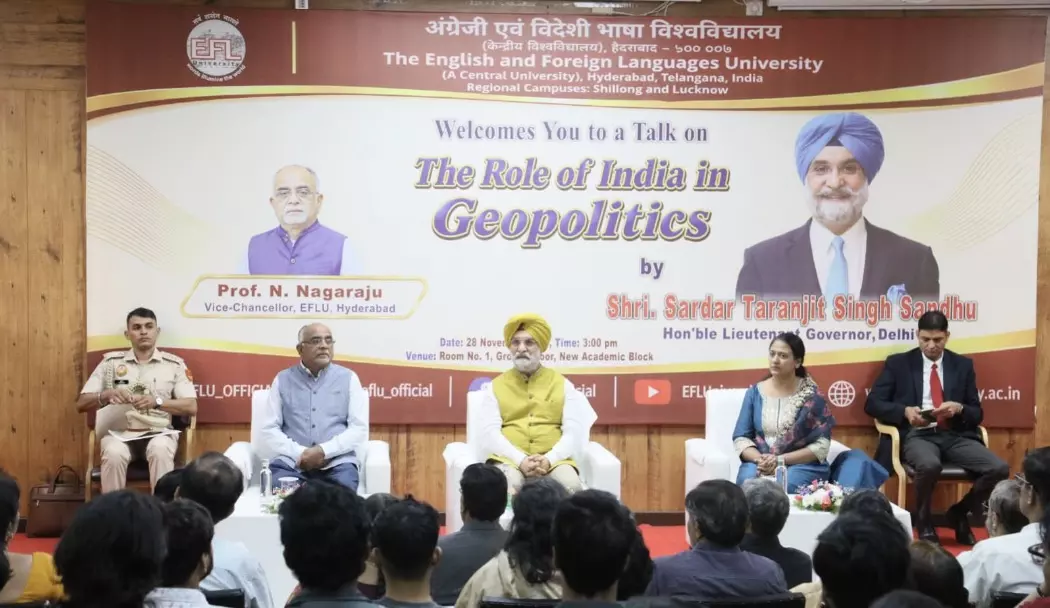
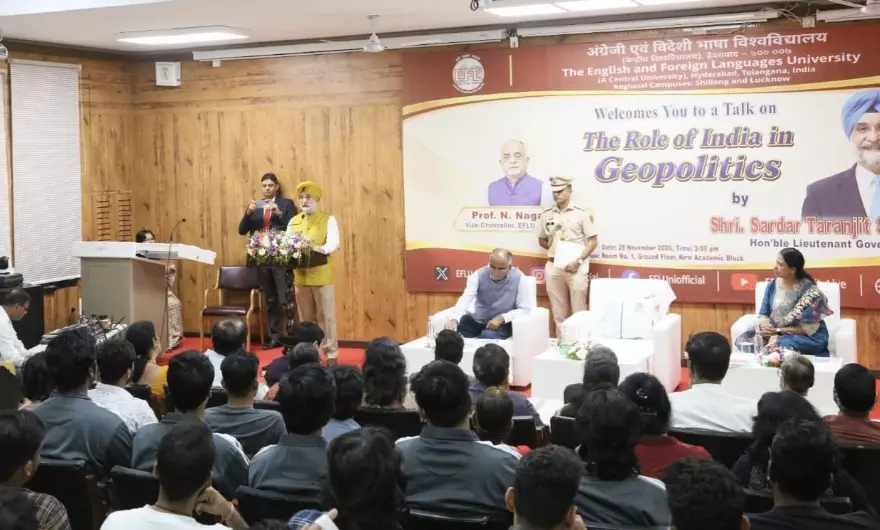
India’s strategic autonomy allows it to maintain relationships with major powers while protecting its national interests, Delhi Lieutenant Governor Sardar Taranjit Singh Sandhu said at the English and Foreign Languages University (EFLU) in Hyderabad on Saturday.
“India today engages with the international community from a position of confidence and capability,” Sandhu said, speaking on ‘India’s Role in Geopolitics’. He said the world was undergoing major political and strategic changes, driven by shifting geopolitical alignments, resource security concerns, technological competition and regional conflicts.
He described India as an increasingly dependable global partner, citing its Vaccine Maitri initiative during the Covid-19 pandemic and its contribution to global healthcare through affordable medicines and vaccines. Sandhu also pointed to India’s demographic advantage, with nearly 68 per cent of its population in the working-age group. This human capital offered opportunities in services, research, innovation and entrepreneurship, he said, adding that a skilled workforce would help India strengthen its position in the global knowledge economy.
On emerging technologies, he called for greater capabilities in artificial intelligence, semiconductors and digital technologies. India’s scalable digital public infrastructure had attracted international attention and strengthened its global competitiveness, he said. Urging students to prepare for the future, Sandhu asked them to embrace innovation and turn their talents into productive and commercially viable assets.
During the programme, he also launched EFLU’s academic journals along with Vice-Chancellor N. Nagaraju Dr Rajaram, Officer on Special Duty to the VC, and registrar Sini Manchala.