The government’s goal is to ensure that people from poorer sections benefit from advanced medical care: Health minister Damodar Rajanarsimha
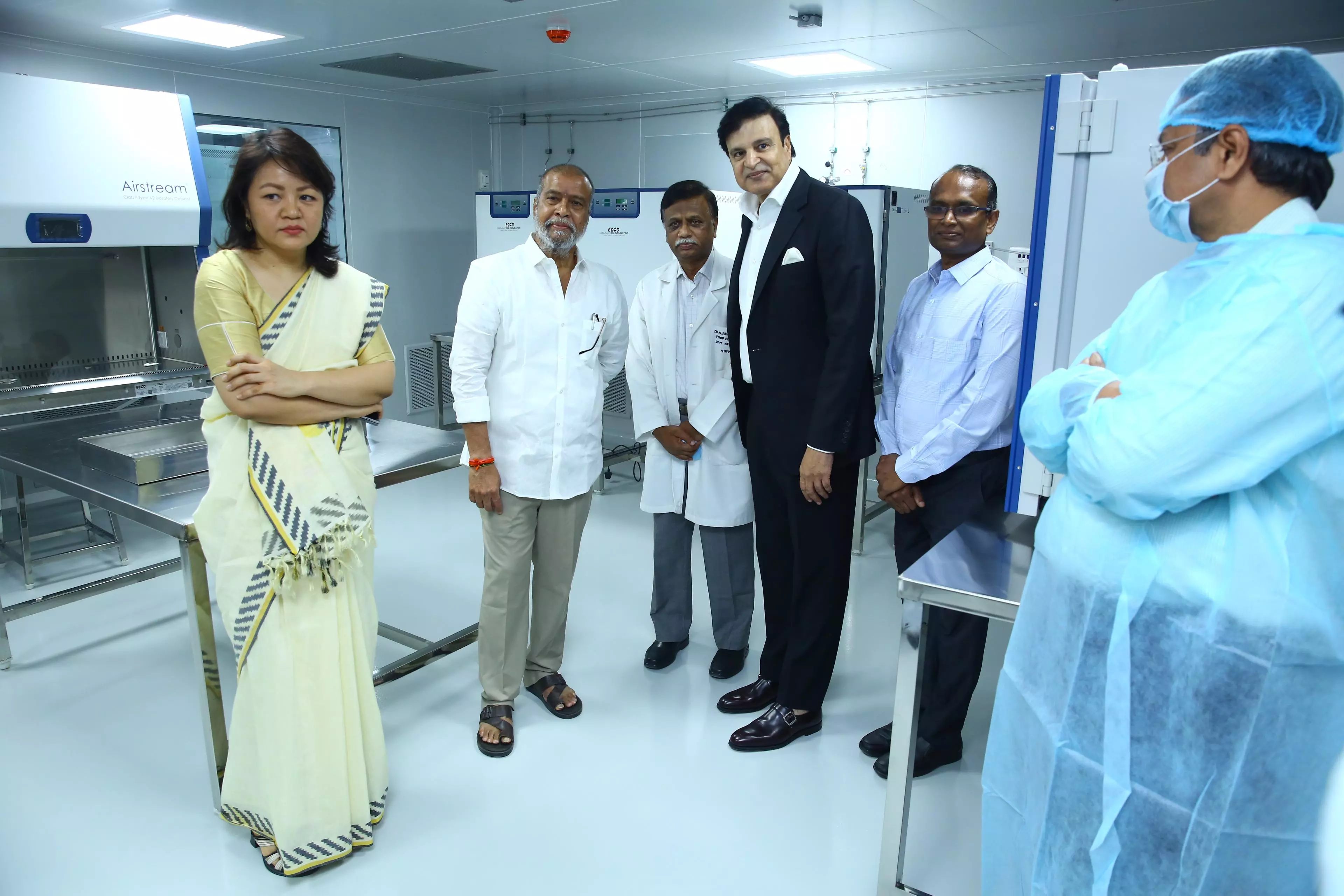
HYDERABAD: Health minister Damodar Rajanarsimha on Monday inaugurated a stem cell laboratory at Nizam’s Institute of Medical Sciences (NIMS), aimed at expanding access to stem cell research and treatment within the public healthcare system.
The minister said the government’s goal is to ensure that people from poorer sections benefit from advanced medical care. The laboratory has been set up at NIMS with the support of US‑based biotechnology firm Tulsi Therapeutics.
Explaining stem cell therapy in simple terms, Rajanarsimha likened stem cells to seeds that grow into trees. “Just as a seed grows into a tree, stem cells can develop into new cells and organs. They help repair parts of the body damaged by disease or injury,” he said.
He noted that stem cell therapy could help patients with conditions unresponsive to conventional medicines, including cancer, blood disorders and thalassemia, by supporting regeneration of damaged tissue. At present, such treatment is largely confined to corporate hospitals and involves high costs. “By setting up this lab at NIMS, we want to provide stem cell therapy at a much lower cost for poor patients,” he added.
NIMS director Dr. Bheerappa said India is witnessing a rise in metabolic, degenerative and autoimmune diseases such as heart disease, stroke, diabetes, kidney ailments and chronic inflammatory conditions. Early studies suggest stem cell therapies may help address gaps where existing treatments fall short, he said.
Tulsi Therapeutics founder and CEO Dr. Sairam Atluri said regenerative medicine is being studied worldwide and has been identified by the World Economic Forum as a key area of medical innovation.
He explained that Tulsi Therapeutics transferred stem cell technology from the United States and developed a stem cell and exosome platform over three years in Telangana, with research carried out at ASPIRE BioNEST, a BIRAC‑supported incubation centre at the University of Hyderabad.
The platform underwent multiple scientific tests, including single‑cell RNA sequencing, to assess safety and performance. Studies in rodents showed reversal of severe liver damage and reduced mortality, supporting further clinical research, he added.

