Simple Tests Show How To Spot Food Adulteration

FSSAI-backed event highlights risks, promotes easy checks for everyday foods
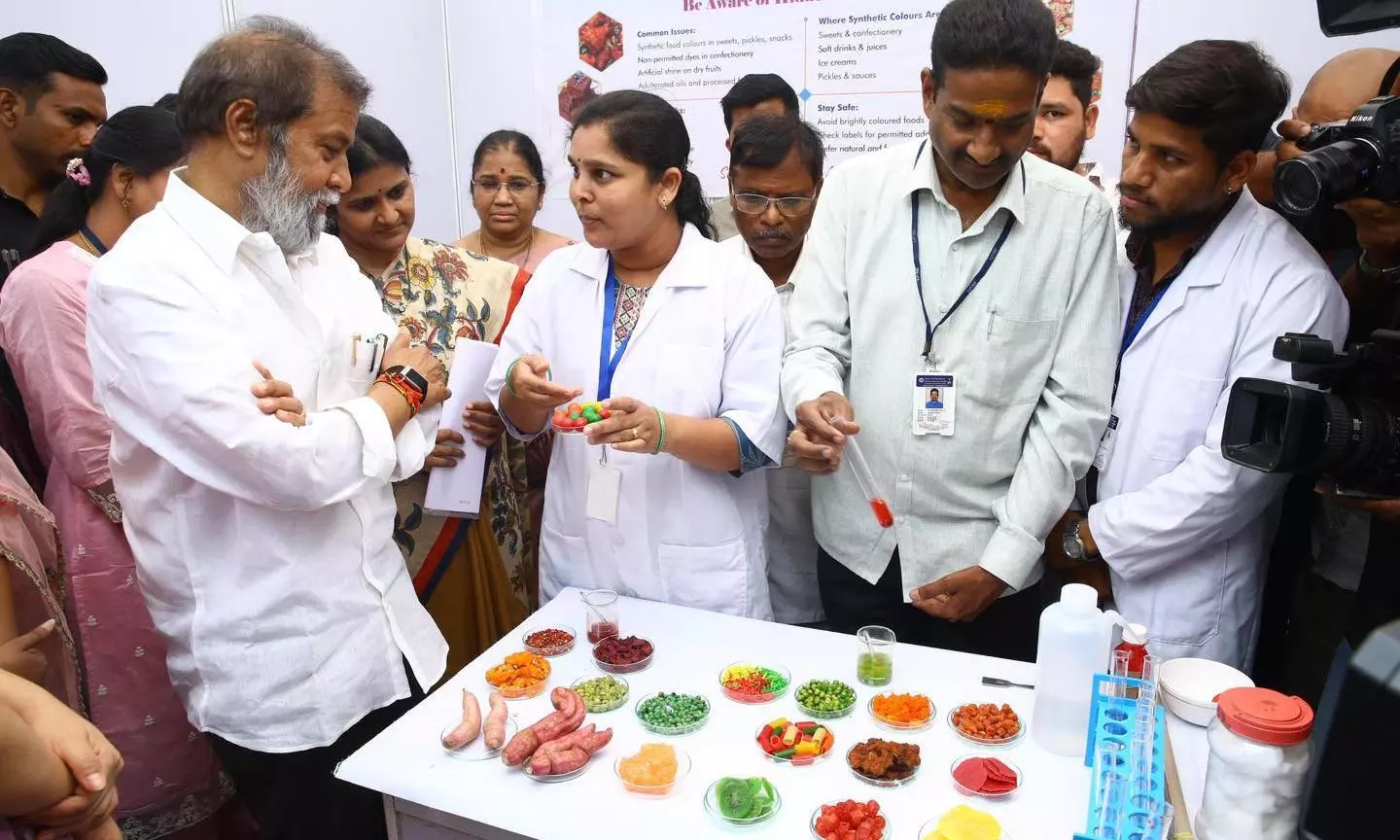
Hyderabad: In a bid to raise awareness on food safety, the commissioner of Food Safety Lab, in association with the Food Safety and Standards Authority of India (FSSAI), organised an exhibition demonstrating simple techniques to detect adulteration in everyday food items.
As part of the 99-day Praja Palana — Pragathi Pranalika, the department of Ayush and the commissioner of food safety held the health week programme at the Konijeti Rosaiah Government Nature Cure Hospital on Monday.
Officials used distilled water and iodine to show adulteration in cereals, pulses, fruits, chocolates, milk, spices, jaggery and paneer. They encouraged people to read ingredients and check colours, noting that artificial colouring is a major adulterant in markets.
Engineer R. Kavitha asked how such tests could be done at home. An officer explained: “Iodine available in pharmacies can be used for milk, jaggery and paneer, while distilled water, which is boiled water, is used for other items. This is very helpful as our children ask for a variety of foods and we tend to buy ingredients in markets.”
Senior citizen Jaya raised concerns about milk adulteration: “We elderly cannot survive without tea and the recent incident in Andhra Pradesh is fearful. Adding two to three drops of iodine in milk tells us if it is adulterated and can save us from kidney-related illness.”
The stall featured displays for detection of adulteration in cereals and pulses, beverages, and spices and condiments. Demonstrations included turmeric residue tests, floating tests for pepper, rubbing cumin seeds to detect colouring, and iodine tests for milk and paneer.
Officials explained that adulteration in cereals and pulses may include stones, dust and polishing agents, while beverages like tea and coffee may contain reused leaves, chicory or synthetic colouring. Spices were shown to be vulnerable to contamination with artificial colours, sawdust and fillers.
Health risks such as digestive disorders, toxicity and long-term complications were highlighted.
Health minister Damodar Rajanarsimha, Hyderabad district collector Harichandana Dasari, and commissioner of health S. Sangeetha Satyanarayana visited the stalls. The minister handed registration certificates to 175 Anganwadi cooks. He also toured food vendor stalls, tasting millet-based dishes including millet ice cream and coffee, and appreciated efforts to educate the public on adulteration.
