Sigachi Factory Explosion: 14 Victims Identified, 50 Samples Sent for DNA Profiling

In cases of chemical explosions, scientists also examine whether any chemicals were present in the body and verify them against a comprehensive database or by comparing them with substances found at the explosion site.
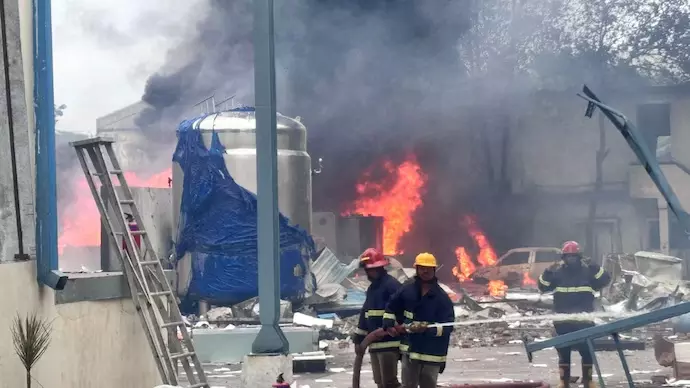
Hyderabad: A team of 10 doctors from Osmania Medical College, with the help of three doctors from Sangareddy Government Medical College and one doctor from GMC Wanaparthy, are working tirelessly to identify the deceased, who were burned to death in the Sagachi factory explosion.
On Monday night, they identified 14 bodies and 50 samples from other bodies which were beyond recognition were sent to the Forensic Science Laboratory (FSL) in Lakdikapul for DNA profiling and analysis.
Thirty-four injured are being treated at different hospitals such as Pranam Hospital, Dhruva Hospital, Panacea Hospital, and Archana Hospital.
Two of the injured were brought to Hyderabad. A 25-year-old microbiologist with serious burns and in critical condition, is being treated at Yashoda Hospital in Hitech City. A 27-year-old woman, who sustained 25 per cent burns, was brought to Star Hospital at Nanakramguda and is now in stable condition.
According to Shikha Goel, DGP, FSL is focusing on DNA matching to identify the bodies and is also examining chemicals from the site to determine which compounds were involved.
“Presently, we have received 50 samples, including those from the deceased and control samples from relatives. Five teams are working at the FSL to process them. The teams will work 24x7 until all samples are processed,” the police official said.
"DNA examination conducted at the FSL uses high-end equipment and modern technology to analyse the samples, resulting in higher accuracy and reduced processing time. PCR-based STR technology is used to generate DNA profiles from various samples. The equipment used includes an Automated DNA Extraction System (EZ2), a Thermal Cycler (PCR), and a Genetic Analyzer (STR). While most labs take about 15–20 days, we are capable of reporting within 24–48 hours," Goel said.
The identification of bodies is a meticulous process that requires both skill and presence of mind. “The forensic teams identify bodies through their clothes, personal belongings like jewellery and bags, and distinguishing marks such as scars or tattoos,” said Dr T. Nagender Babu, assistant professor, forensics department, Gandhi Medical College.
“DNA testing becomes necessary only when the bodies lack identifiable external features. In such cases, DNA samples are collected from muscle tissue, bones, hair follicles, etc., and sent to the Forensic Science Laboratory for profiling and analysis. Scientists sequence the DNA and compare it with that of the relatives. The entire process — from extraction to profiling and analysis — takes at least 24 hours,” he explained.
He further added that in disasters involving multiple casualties, the first step is correlating the recovered bodies with the individuals known to be present at the site before the incident.
“If one body is found in a room where the explosion occurred, and investigators know how many people were in that room at the time, they try to locate the remaining bodies and assess whether they show similar signs of impact. Next, all bodies are numbered, DNA samples are collected, and sent to the lab. The lab then sequences the DNA and compares each sample with those from the relatives. It’s a long-drawn process that typically takes 2 to 4 days,” Dr Nagender added.
The most crucial factor, he emphasised, is that viable (live) biological material must be present in the body for DNA testing. Completely charred or mutilated bodies without such material cannot be identified.
In cases of chemical explosions, scientists also examine whether any chemicals were present in the body and verify them against a comprehensive database or by comparing them with substances found at the explosion site.
