Shaktism Remains Ancient Deep-Rooted Tradition In Telangana

"Idols of goddesses, identified as Lajjagauri or Jogulamba, have been found in Alampur (Jogulamba Gadwal district), Keesaragutta, and other sites across the state. These idols are distinct in their representation, crafted with a flower in place of the head”: Historian Dr Dyavanpalli Satyanarayana.
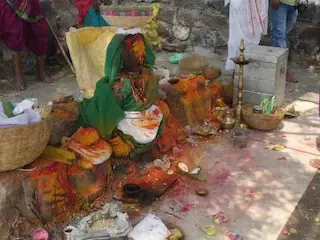
HYDERABAD: Worship of the Goddess or Shaktism in Telangana is deeply rooted in history, with references dating back to the 5th century BCE. Suttanipāta, a Buddhist text, makes an early mention of the goddess Attagaamini, who guided a sage named Bavari on the banks of the river Godavari near Dharmapuri.
However, local Gond tribals still worship the goddess Attagāmini as Padmalpuri Kako on the left bank of the Godavari in Mancherial district, highlighting the region’s prominence in early goddess traditions.
“Idols of goddesses, identified as Lajjagauri or Jogulamba, have been found in Alampur (Jogulamba Gadwal district), Keesaragutta, and other sites across the state. These idols are distinct in their representation, crafted with a flower in place of the head,” said historian Dr Dyavanpalli Satyanarayana.
The idols symbolise fertility, prosperity, and the life-affirming expectations of the people who worshipped the goddess. “The floral goddess came to be known as Bathukamma, a name still deeply cherished among rural communities. Her worship was not limited to ritual practices alone but also evolved into a cultural identity. This is reflected in the naming of villages after her, such as Brathukeswaramu in Nalgonda district and Bathikepally in Karimnagar district, showing how devotion shaped geography,” Dr Satyanarayana explained.
Not only local but also foreign accounts add weight to Telangana’s ancient religious traditions. Greek ambassador Megasthenes, who stayed in the court of Maurya emperor Chandragupta around 320 BCE, mentioned that naked yatis roamed along the banks of the Tungabhadra river.
This indicates the worship of their Goddess Jogulamba, at Alampur, also situated on the Tungabhadra’s bank. The Jogulamba temple, regarded as one of the Shakti Peethas, continues to draw devotees, linking ancient traditions to contemporary faith.
The Telangana heritage department has been preserving the 7th-century CE Mahishasuramardhini idols in the Alampur Jogulamba Museum. One of the oldest Lajja Gauri sculptures, discovered during excavations at Keesaragutta, is also being preserved.