Seethakka Says Rainwater Harvesting Key to Recharging Groundwater

The minister assured that the government would extend full support to Jalasiri works through the employment guarantee scheme. She instructed officials of all departments to remain accessible to the public, work with accountability, and prepare development plans based on the needs identified through gram sabhas.
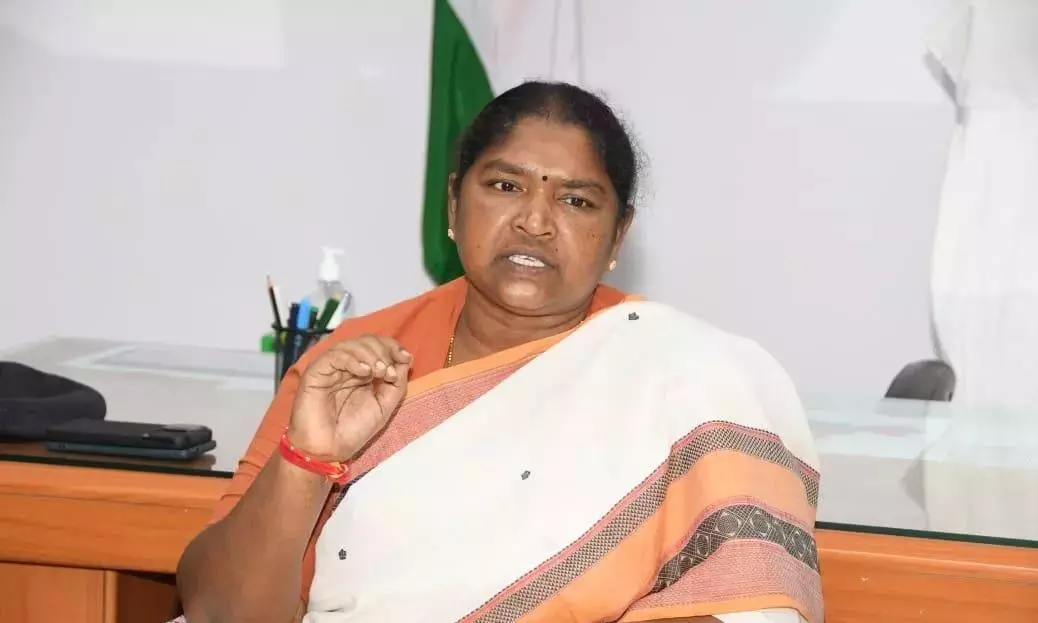
Warangal: Stressing the need for effective rainwater conservation to improve groundwater reserves, Rural Water Supply minister Dr. Danasari Anasuya Seethakka on Tuesday called upon people to actively participate in the Telangana government's flagship Jalasiri programme by voluntarily constructing rainwater recharge pits.
Addressing the Mulugu Mandal General Body Meeting and the Jalasiri Awareness Seminar at the MPDO office in Mulugu, Seethakka said groundwater recharge through rainwater harvesting is the primary objective of the Jalasiri initiative, particularly in view of the anticipated drought conditions arising from the El Niño phenomenon.
Highlighting the Jalasiri campaign, the minister appealed to people to embrace the theme – A recharge pit for every household, a village pond for the community, and a farm pond for every field – towards conserving every drop of rainwater. She urged citizens to treat the programme as a collective mission to strengthen groundwater resources and tackle future water scarcity.
Seethakka encouraged women self-help groups (SHGs) and women farmers to play an active role in implementing the Jalasiri initiative. Advising farmers to adapt to prevailing weather conditions, Seethakka urged them to shift towards low-water, drought-resilient crops and use available water resources judiciously. Selecting crops suited to climatic conditions, she said, would help minimise losses and ensure sustainable agriculture.
The minister assured that the government would extend full support to Jalasiri works through the employment guarantee scheme. She instructed officials of all departments to remain accessible to the public, work with accountability, and prepare development plans based on the needs identified through gram sabhas.
Seethakka directed officials to convene gram sabhas over the next two days to identify and approve development works under the Mahatma Gandhi National Rural Employment Guarantee Scheme (MGNREGS). She asked local bodies to prioritise the construction of Gram Panchayat buildings, women's self-help group offices, Anganwadi centres, livestock sheds, milk sheds, farm ponds, and other community assets.
The minister said mandal-level general body meetings serve as an effective platform to identify and resolve village-level issues. Such meetings, she maintained, should be held once every two months to review development works and formulate solutions in coordination with public representatives, officials, and village sarpanches.