SCs, STs Lack Basic Necessities of Modern Society

Telangana data shows higher deprivation, financial stress in marginalised groups
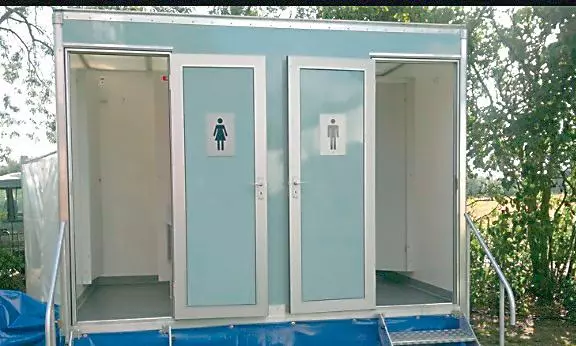
Hyderabad: An analysis of the Telangana Socio-Economic Survey 2024 data reveals stark disparities in living conditions across marginalised communities in Telangana. Compared to backward classes (BCs) and general castes (OCs), households belonging to Scheduled Castes (SCs) and Scheduled Tribes (STs) disproportionately lack necessities like toilets and electricity, underscoring persistent social inequalities.
While more than 13 per cent of households in Telangana do not have toilet facilities and nearly six per cent lack access to electricity, the lack of sanitation facilities is more acute among marginalised communities.
Nearly one-third — 32.5 per cent — households of Scheduled Tribes (STs) reported a lack of toilets, followed by 18.8 per cent of those belonging to Scheduled Castes (SCs). In comparison, 10.8 per cent of Backward Classes (BCs) and only 4.5 per cent of General Castes (OCs) lack such facilities, highlighting stark inequalities in access to basic sanitation.
Despite progress under national sanitation programmes, including the achievement of ODF Plus status for 8,990 villages, ODF Plus Rising status for three villages and ODF Plus Model status for 8,379 villages as of July 12, 2024, gaps persist in household-level infrastructure.
Disparity is also seen in electricity access, which is considered essential for modern living, education and livelihoods. As many as 6.56 lakh households, or 5.8 per cent of the total, reported not having electricity. The deficit is highest among STs at 11 per cent, followed by SCs at 8.3 per cent. In contrast, only 4.7 per cent of BCs and 2.7 per cent of OCs lack electricity, reflecting a clear social and rural divide.
Access to tap water remains another area of concern, with 21.2 per cent of households reporting no piped water supply. The lack of access is reported by 21 per cent of STs and 19.7 per cent of SCs, while 20 per cent of BCs face similar constraints. General Castes fare relatively better, with 12.8 per cent lacking tap water, underscoring inequalities in public service delivery and basic amenities.
Financial vulnerability is evident from reliance on informal credit sources, with 6.8 per cent of households reporting loans from moneylenders. This dependence is higher among STs at 9.7 per cent and SCs at 8.8 per cent, compared to 7.1 per cent among BCs and 5.1 per cent among OCs, indicating limited access to formal financial institutions and exposure to high-interest borrowing.
Further, seven per cent of households reported taking loans for marriage or medical needs, pointing to inadequate savings and social security. SCs show the highest dependence at 10.9 per cent, followed by STs at 6.9 per cent and BCs at 7.3 per cent, while OCs report the lowest at 3 per cent, suggesting better financial resilience among upper castes.
Housing conditions further reflect disparities, with 63.5 per cent of households living in houses with two or fewer rooms, indicating overcrowding and inadequate living space. This proportion rose to 73.7 per cent among SCs and 75.5 per cent among STs, while BCs stood at 63.9 per cent. In contrast, 47.4 per cent of OCs live in such conditions.
Only 27.5 per cent of households reported living in houses with three or more rooms, with OCs significantly better off at 42.8 per cent compared to 18.9 per cent among SCs, 17.6 per cent among STs and 28.5 per cent among BCs.
