Schools to Reopen with Key Changes in Telangana

For the first time, 87 per cent of textbooks for Classes 1 to 10 were dispatched before June
Hyderabad: As government schools across Telangana prepare to reopen on June 12, a series of curricular changes, digital upgrades, and policy shifts await students and staff alike. CBSE and ICSE schools have already begun and will resume after the summer break, but the state-run system is entering a new phase that ranges from language mandates to AI-integrated learning.
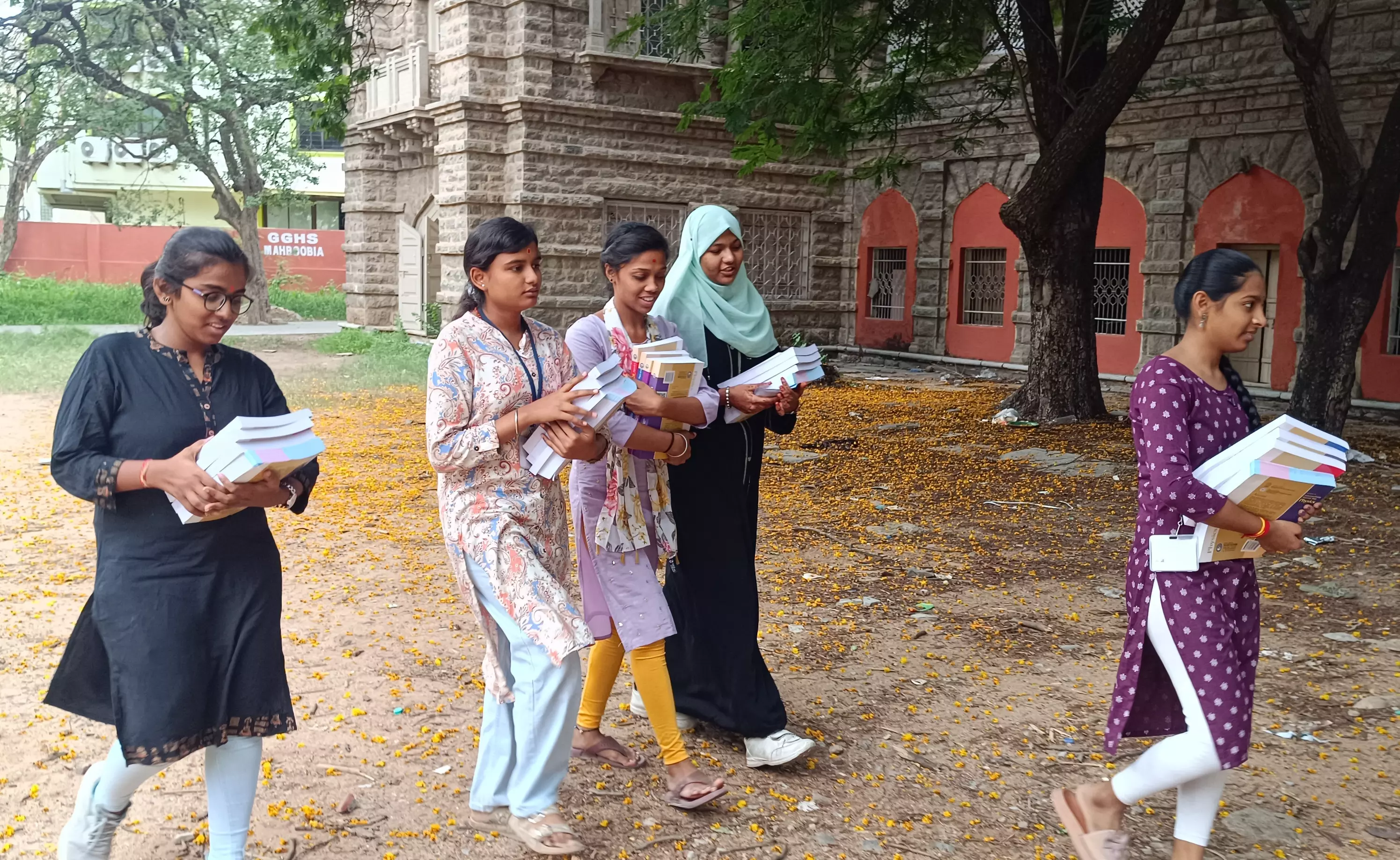
For the first time, 87 per cent of textbooks for Classes 1 to 10 were dispatched before June. Schools were asked to finish distribution by June 5. Printed during the holidays and stored in district godowns, the books now come in two parts to reduce student burden. Notebooks are being distributed free of cost, and every book carries a QR code to prevent resale. The covers feature Telangana Talli and Gitam symbols to link education to state identity.
“The work was fast-tracked and this year everything from uniforms to notebooks is ready in advance,” said Dr K. Ravikant Rao, principal at DIET Hyderabad and former education department official.
AI and digital literacy have been introduced into science from Class 1 to 9 in government schools. Interactive Flat Panel Boards are being installed in high schools, and discussions are ongoing about expanding this to private schools. A delegation had earlier visited the EkStep Foundation’s Bengaluru office to explore AI-enabled dashboards and pedagogic tools. The state is also adapting elements from Kerala’s ICT-integrated model and aligning it with foundational literacy goals.
CBSE schools have begun implementing the new sugar board policy. Schools must now display sugar limits and health advisories on junk food. “We’ve cut down sugar, removed aerated drinks, and brought in traditional options like coconut water, chaas and lime juice,” said Nandita Sunkara, principal of DPS Secunderabad.
“Our CEO has lined up sessions with dieticians, and we’re planning slogan writing and poster competitions around juvenile diabetes.” Yoga and meditation have also been added to the school day as a part of overall well being of students.
Telangana’s Telugu Compulsory Act is now being enforced across CBSE, ICSE, and international schools from Classes 1 to 10. The move is being contested in court, with a hearing scheduled for June 11. “Most schools are already teaching both Hindi and Telugu,” said petitioner Rahul Kejriwal, who seemed hopeful for a verdict in their favour.
“But there aren’t enough Telugu teachers. Even administrators are pushing back now.”
He pointed out that CBSE’s mother tongue proposal for early years is optional. Several school heads in Hyderabad said classrooms are too diverse for single-language instruction. “It may work in rural areas, not in urban schools like ours,” said a CBSE principal.
Each mandal now has a dedicated education officer and food standards are being upgraded in residential schools. Cooking staff from 495 KGBVs were recently trained at the Institute of Hotel Management and will now serve as district-level master trainers.
The TSWREIS has also rolled out several new initiatives. Along with smart panels and AI learning in the curriculum, model paper frameworks and bridge courses are in place to help students who are preparing for exams like NEET, JEE, and CUET.
Facial recognition attendance has also been launched in selected government schools as a pilot project and students are marked present using AI-linked apps that scan their faces. Teachers log their attendance through the same platform however, mobile phone use by teachers is now restricted to this function alone and must be authorised by the school head.
