School Fees See Steep Hike, Parents Call For Fee Cap

“Middle-class families today pay more for kindergarten than some pay for college": Hyderabad Schools Parents’ Association member Venkat Sainath
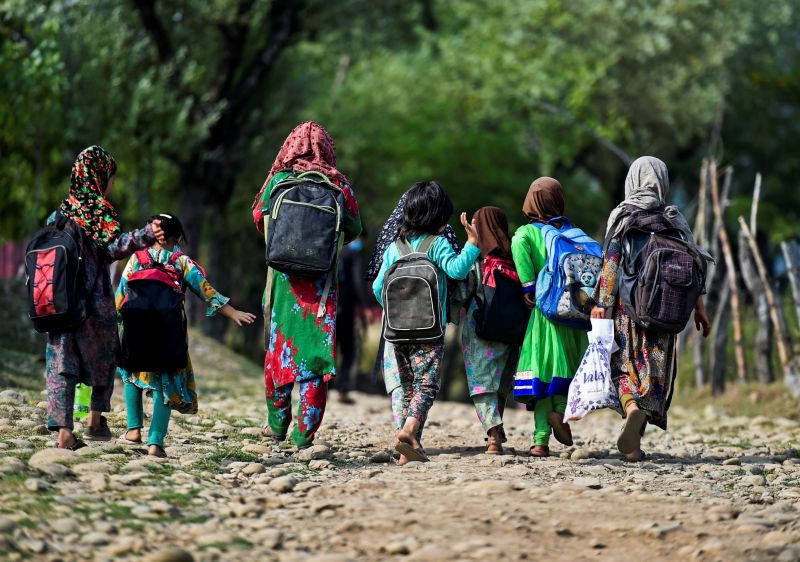
HYDERABAD: How much of a family’s income should school education take away, and how far can a fee slip stretch before parents lose control of their budgets. This question is back in Hyderabad’s admission season, as parents say private schooling admissions have begun.
National surveys place the average spend for a private school student at about ₹25,000 a year, but the reality in Telangana’s cities is far steeper, often touching ₹2 lakh or more for a single child. “Middle-class families today pay more for kindergarten than some pay for college,” said Hyderabad Schools Parents’ Association member Venkat Sainath.
Parents point to fee slips that circulate widely every year. These show admission charges running into tens of thousands of rupees, “initiation fees” of ₹45,000, and transport bills that activists say can fetch a school around ₹9 lakh per month per bus route.
Hyderabad schools opened admissions for 2026-27 quoting ₹1.1 lakh to ₹1.5 lakh for Class 1, compared to about ₹80,000 last year. Some international schools charge between ₹3.6 lakh and ₹10.5 lakh in tuition.
Sainath said several schools have moved “straight to 30 to 40 per cent hikes,” and added that “schools are taking everything from high fees to donation, whatever they can.”
TEC member Prof P.L. Vishveshwar Rao said parents are reaching out to him with the same concerns and added that “private school fees have gone far beyond what an average income can support.”
Activists estimate that domestic workers and daily-wage earners earning ₹10,000 to ₹20,000 a month spend half of it on private schooling if they choose that option.
Middle-income families, often earning between ₹5 lakh and ₹15 lakh a year, spend anywhere between 10 and 30 per cent of their income on one child’s schooling, and sometimes up to 60-80 per cent when transport, uniforms and books are added.
Sainath gave his own example. “I have two children. One child’s fees alone come to about ₹1.5 lakh. By the time books, transport and other charges are added, it reaches five or six lakh for the house.”
National Sample Survey (NSS) 2025 data places Telangana's average annual spend per school student at about ₹30,848, slightly above Tamil Nadu and close to Karnataka. Private schools form only 28 per cent of total schools in the state but teach nearly 60 per cent of students.
The Telangana Education Commission (TEC), chaired by retired IAS officer Akunuri Murali, drafted a fee regulation Bill and submitted it on January 24. Murali said the proposal went to a cabinet sub-committee and then to the legal department. “They are examining it to find out if there are any loopholes so that no one can question it in court,” he said.
According to him, the government has indicated commitment to the issue, though he added that “the government has been busy in the last two or three days with several things.” He said fee practices cannot continue without oversight because “it is not possible to treat education like a business where anything goes.”
The draft categorises schools and proposes caps based on city tier, campus size, teacher salaries and other parameters. It fixes reviews every three to four years, allows hikes only in line with inflation and bans capitation fees and forced purchase of books or uniforms.
It also gives the commission the responsibility of monitoring RTE 25 per cent seats. Penalties can reach ₹10 lakh and repeated violations can lead to cancellation of recognition.
Murali said clarity on the timeline may emerge “after the panchayat selections are over,” and that TEC will brief the government again on the “urgency of bringing a regulation.”
Past attempts to control fees in undivided Andhra Pradesh and later in Telangana stalled in courts or faded without enforcement. Pressure on the state has grown since 2025, as admissions began with fresh hikes and complaints multiplied. Sainath said, “Parents are complaining everywhere. Schools are hiking, and the bill is still pending.”
Other states use different systems. Delhi drafted its own bill in 2023. Surveys show spending has risen and 27 per cent of students take private coaching, rising to 31 per cent in cities. A long-term estimate places the cost of schooling a child from age three to seventeen at about ₹30 lakh.