Supreme Court Approves Local Quota Rules For Admission

The Telangana High Court had held the state's permanent residents cannot be denied benefits of admissions in medical colleges only because they lived outside the state for sometime
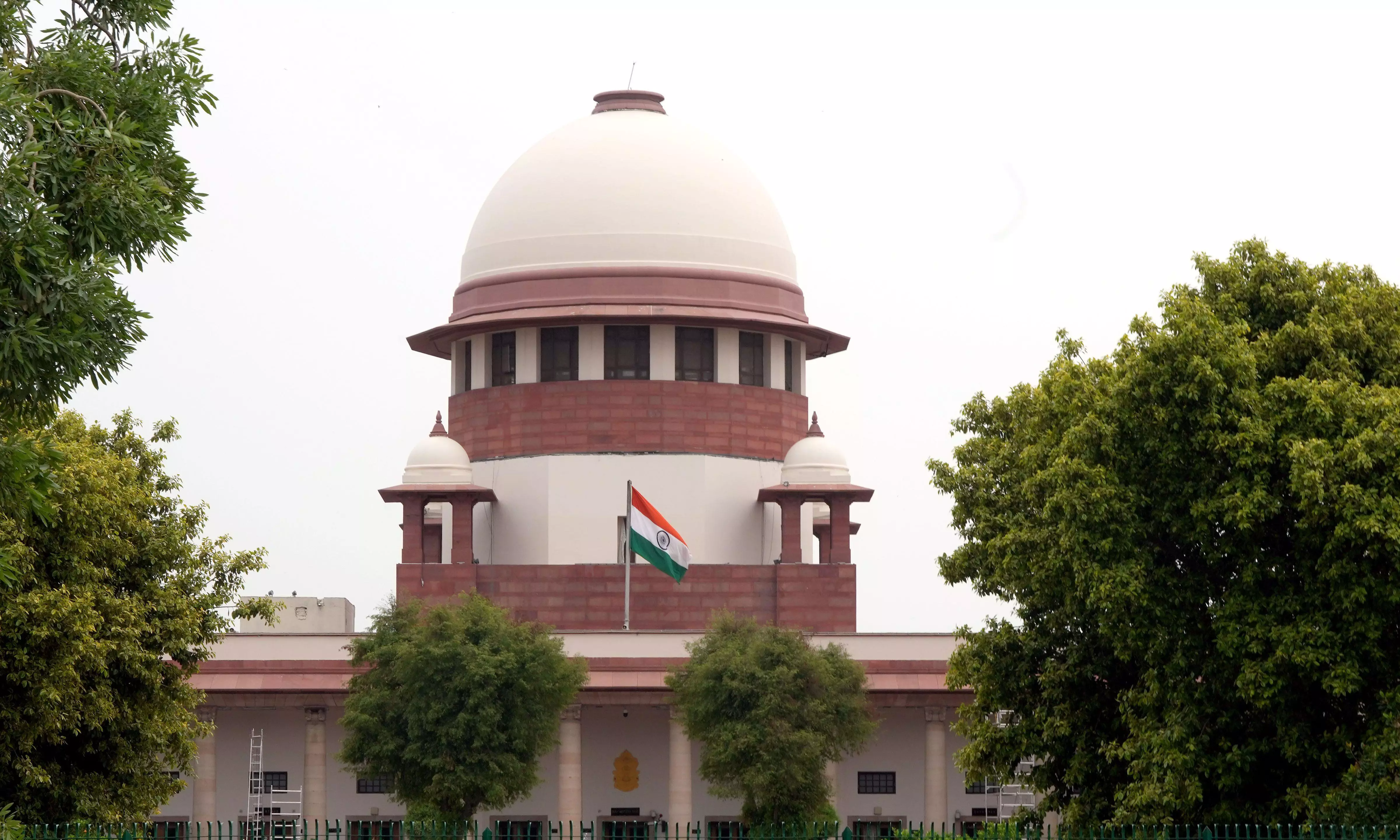
New Delhi: The Supreme Court on Monday upheld Telangana's domicile rule making only those students, who have studied for the last four years up to Class 12 in the state, eligible for admissions in medical and dental colleges under its 85 per cent quota for local students.
A two-judge bench of Chief Justice of India B.R. Gavai and Justice K. Vinod Chandran allowed the appeal of the state government and its universities while upholding the Telangana Medical and Dental Colleges Admission (Admission into MBBS & BDS Courses) Rules, 2017, amended in 2024.
The rules earmark a 85 per cent reservation under the state’s local quota.
Referring to judgments that uphold special treatment to local students in competitive exams, the apex court said, “We are unable to uphold the impugned judgment dated August 29, 2023 of the High Court of Telangana.”
The High Court held that the state's permanent residents cannot be denied benefits of admissions in medical colleges only because they lived outside the State for some time.
Writing a 32-page verdict for the bench, Justice Chandran dealt with the question whether “the wisdom of the legislature in defining a ‘local candidate' entitled to apply under the ‘Competent Authority Seats/Quota', by a subordinate legislation, in consonance with a Presidential Order issued under Article 371D of the Constitution, can be interfered with and expanded by the high court under Article 226".
The verdict agreed to the submissions that the expansion of the definition would frustrate the special provision under Article 371D, intended to confer a benefit to those local candidates in Telangana who could be given preferential admission to the medical courses.
“At the outset, we have to state that without a definition of what constitutes residence or at least without reference to a statute or rule prescribing the issuance of a residence certificate, the directions issued by the High Court would only result in an anomalous situation, making the reservation unworkable and open to a series of litigation,” the verdict said.
Concurring with the state government’s contentions, the top court said the object of the classification was justified as it desired to help to some extent students who are its residents.
The new rule provided up to 85 per cent reservation for candidates who have either studied in the educational institutions in the local area for a period of not less than four consecutive academic years ending with the academic year in which the student qualified for admission.
“We have already held that the pre-amended rule defining a local candidate was perfectly in order, the reasoning of which applies squarely to the amended rule also... We find no reason to take a different view with respect to the amended rule also; 15 per cent having been conceded to the All India quota,” it said.
The top court considered the state's proposal to make certain amendments in the rule to help candidates from outside Telangana for any period during the requisite four consecutive academic years.
The state had proposed to extend the benefits of state quota to the children of employees of the Telangana government who "served or are serving outside Telangana corresponding to the candidate's year/s of study outside Telangana".
The children of serving or retired employees from the Telangana cadre of All India Services (IAS/IFS/IPS) would also benefit under the proposed amendment.
“The said proviso should allay and mitigate the grievances of those who claim that they were taken out of the State by compulsion of the movement of their parents outside the State by reason of employment in Government/All-India Services/ Corporations or Public Sector Undertakings constituted as an instrumentality of the State of Telangana as also defence and paramilitary forces who trace their nativity to the State, subject to the conditions thereunder," the top court ruled.
"With only the said reservation, we uphold the Rules of 2017 as it stood amended in 2024," the verdict said.
