SC Judge Calls for Stronger Anti-Trafficking Law

He noted that procedural delays, witness intimidation, inadequate evidence collection and the absence of institutional victim protection mechanisms continue to contribute to poor conviction rates.
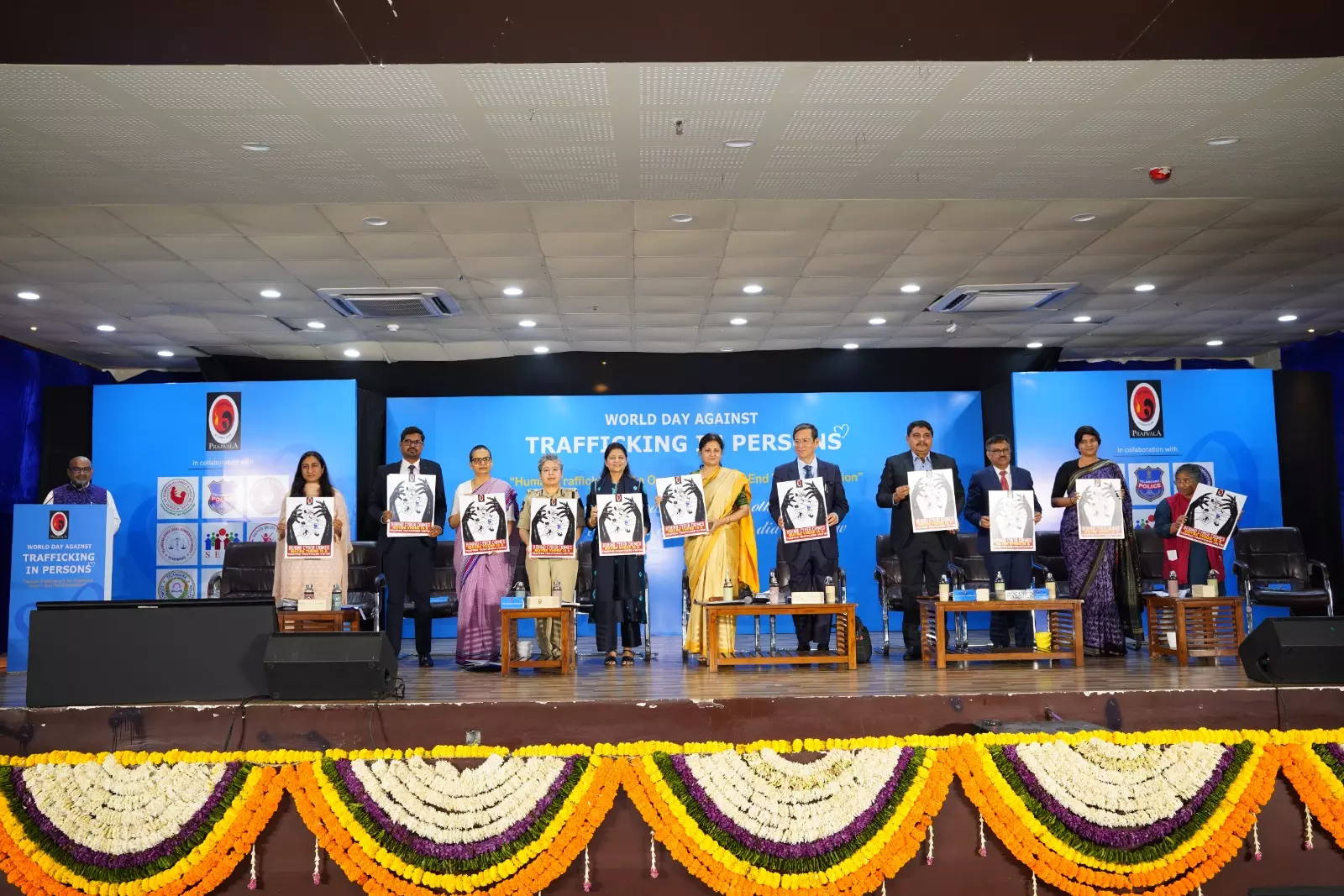
Hyderabad:Supreme Court judge Justice N. Kotiswar Singh on Saturday highlighted the low conviction rate in human trafficking cases in India, saying it remains between 5 and 10 per cent despite sustained efforts by law enforcement agencies. He called for a comprehensive anti‑trafficking law, stronger victim protection mechanisms and better coordination among stakeholders to effectively combat the crime.
Addressing the World Day Against Trafficking in Persons conference organised by NGO Prajwala with the theme Trapped Behind the Scam here, in the presence of Justice Moushumi Bhattacharya of the Telangana High Court, Justice Singh said India still lacks a unified legislation exclusively dealing with trafficking in persons after earlier attempts to enact such a law lapsed in Parliament.
He noted that procedural delays, witness intimidation, inadequate evidence collection and the absence of institutional victim protection mechanisms continue to contribute to poor conviction rates.
Justice Singh stressed that the primary focus should be on rescuing victims, ensuring rehabilitation and strengthening support systems. He also called for improved training of law enforcement personnel and adequate staffing and funding for agencies working to combat trafficking.
Justice Moushumi Bhattacharya said the nature of human trafficking has undergone a significant transformation with the rise of cybercrime and digital technology. She observed that trafficking is no longer confined to traditional forms of sexual exploitation or forced labour, but increasingly involves cyber fraud and online scam operations.
She said online frauds such as phishing, malware attacks, identity theft, fake investment schemes and pig butchering scams are increasingly being used by trafficking syndicates to exploit victims. The common thread running through all forms of trafficking, she added, is the deprivation of a person’s freedom, choice and agency, often trapping victims in cycles of debt, coercion and exploitation.
Departments including women development and child welfare, state police, prosecution, Telangana State Legal Services Authority, Society for Elimination of Rural Poverty (SERP), women safety wing, education and labour, along with the Telangana High Court, participated in the conference, which brought together 500 delegates from across the state.
Sunitha Krishnan, founder of Prajwala, said the event also marked 30 years of the organisation’s work in combating human trafficking and advancing survivor‑centred rehabilitation and justice.
Justice Ujjal Bhuyan, judge, Supreme Court of India, emphasised the need to strengthen legal and institutional responses to trafficking. Shikha Goel, principal secretary, home, spoke about Telangana’s coordinated anti‑trafficking framework and the importance of integrating cyber capabilities with law enforcement to address emerging forms of trafficking facilitated through digital platforms.
The conference featured three thematic technical sessions addressing key dimensions of the anti‑trafficking response.
