SC Disposes of Telangana's Plea against Polavaram Project, State to File Fresh Lawsuit

12 Jan 2026 4:58 PM IST12 Jan 2026 4:58 PM IST
The top court was hearing a plea filed by the Telangana government against the Centre's extension of financial assistance to Andhra Pradesh to expand the Polavaram project
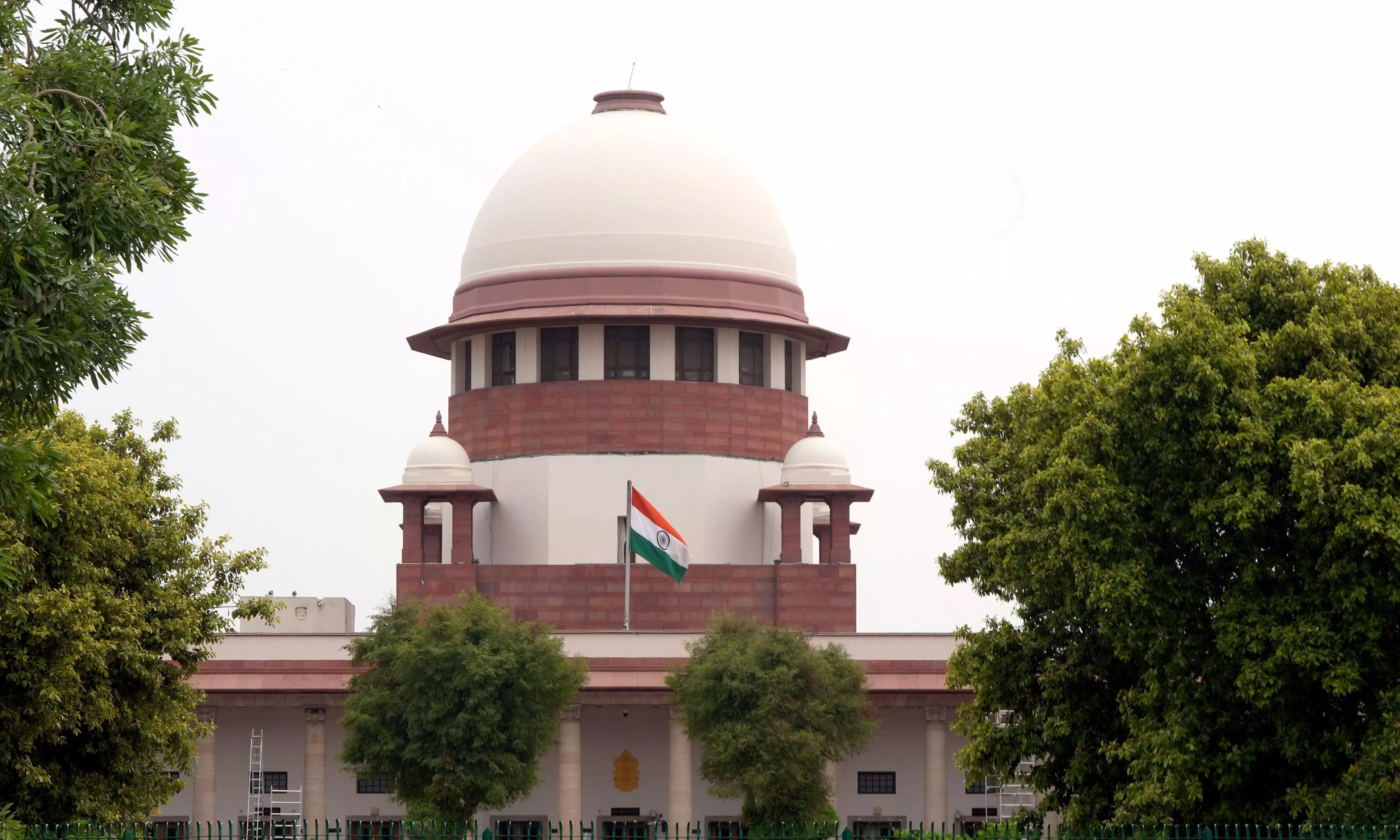
Supreme Court (File Photo)
Hyderabad: The Supreme Court on Monday permitted the state government to withdraw its writ petition challenging the Polavaram-Nallamalasagar link project (PNLP) in Andhra Pradesh , and gave Telangana liberty to take appropriate legal remedies to challenge the project by way of filing a civil suit.
A Supreme Court bench comprising Chief Justice of India Surya Kant and Justice Joymalya Bagchi raised concerns regarding the maintainability of the writ petition under Article 32, noting that the dispute was not confined to Telangana and Andhra Pradesh. The court observed that Maharashtra and Karnataka were also parties to the Godavari water dispute award and pointed out that these two states were being made parties in the Telangana government petition.
Speaking outside the court, irrigation minister Uttam Kumar Reddy said the state government would follow the court’s advice to file a civil suit on the matter of stopping AP from going ahead with the PNLP.
Senior advocate Abhishek Manu Singhvi, appearing for Telangana, contended that the fixed and allocated quantum of Godavari waters to the Andhra Pradesh from the Polavaram multipurpose irrigation project was clearly defined and limited under the award of the Godavari Water Disputes Tribunal (GWDT), 1979-80, as approved by the advisory committee of the Union jal shakti ministry. It was argued that Andhra Pradesh was entitled to utilise only 449 tmc ft (thousand million cubic feet) of water. But, AP has created infrastructure to use more than allocated quantity.
The Telangana government contended that any diversion or utilisation of water under the guise of harnessing flood waters, beyond the allocated limit, amounted to a direct violation of the tribunal award.
In addition to violations of water allocation, Telangana relied upon specific provisions of the AP Reorganisation Act, 2014. It was contended that there had been a blatant breach of Sections 84(3)(ii) and 85(8)(d) of the Act, which mandated prior approvals and coordination with multiple statutory and institutional stakeholders. These include the Godavari River Management Board, Krishna River Management Board, ministry of jal shakti, Polavaram Project Authority, the apex council, and the Union ministry of environment, forest and climate change. Telangana argued that the impugned works were undertaken without securing mandatory clearances and approvals envisaged under the Reorganisation Act. Senior counsel Singhvi also pointed out that AP had violated the guidelines issued by the Central Water Commission.
The Chief Justice Bench intervened and as why the Telangana government, when it was not challenging the ‘vires’ (power) of the provisions of the Acts and relying on the award, had why filed a writ petition under Article 32. The bench observed that it was better to file a civil suit challenging the attempt to going beyond the allocation of water.
The court observed that the dispute was not confined to Telangana and Andhra Pradesh, but involved multiple states with competing legal rights, making it more appropriate for adjudication through a civil suit under Article 131 of the Constitution.
In view of these observations, the Telangana government sought and was granted permission to withdraw the writ petition with liberty to get appropriate remedy before the appropriate forum. When the court mentioned that the writ petition was dismissed as withdrawn, senior counsel Singhvi said it was a sensitive issue and requested the court to put it as disposed of. The court agreed to his request.
( Source : Deccan Chronicle )

Next Story