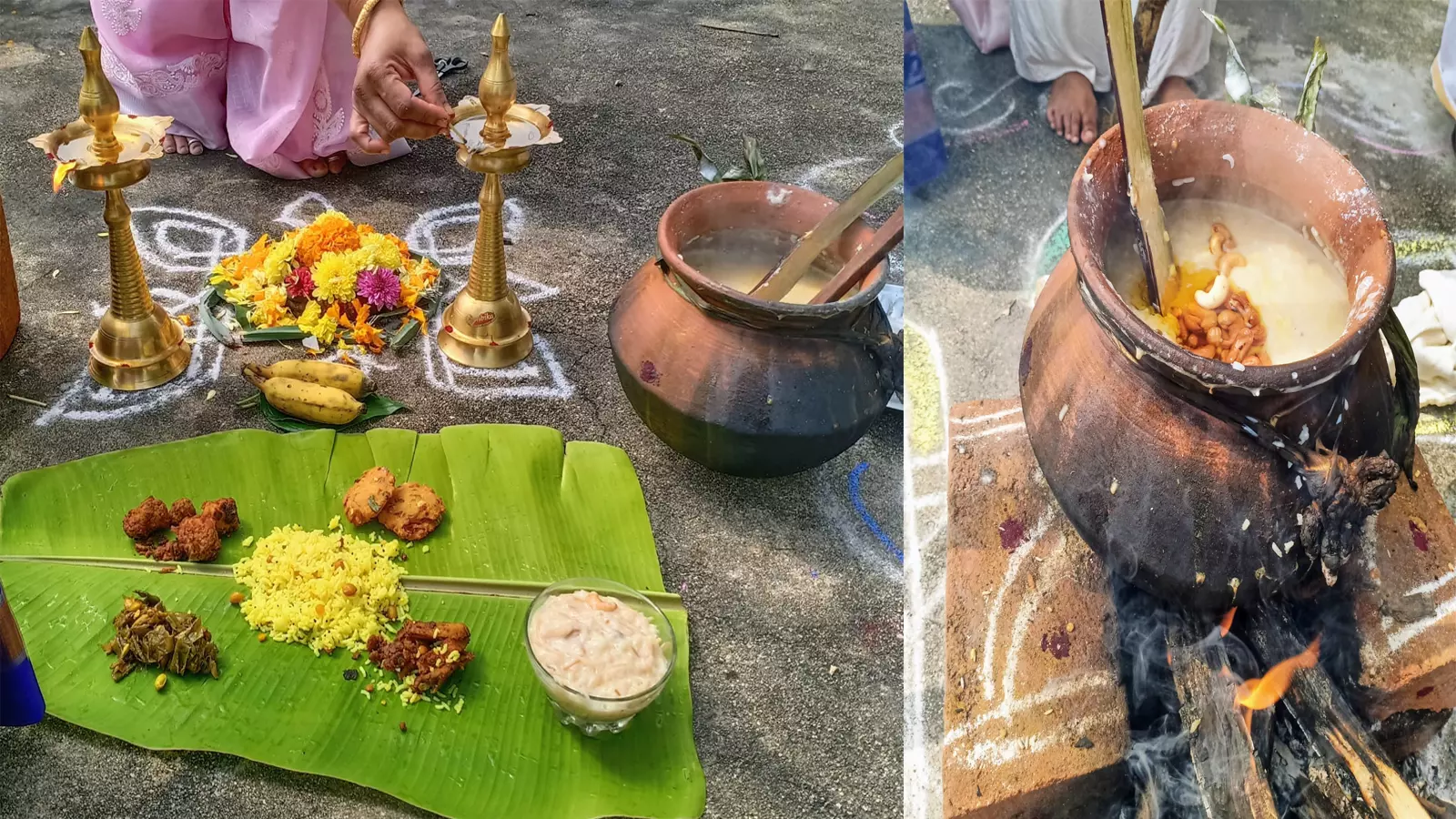
Sankranti in the Telugu states is not just a festival on the calendar, it is a living, breathing expression of gratitude, memory, climate, crops, and community. From the smell of new rice simmering on wood fires to the crackle of oil as snacks are shaped by practiced hands, the festival unfolds differently across Andhra Pradesh, Telangana, and Rayalaseema, yet remains bound by a shared rhythm of harvest and home.
For Chef Meera Girija Tadimeti, who has been championing Andhra cuisine across the Telugu states, Sankranti food begins with what the land has just yielded. “It starts right from using new rice to moong dal to the usage of fresh jaggery, sesame seeds and sugarcane,” she explains. Dishes such as paramannam, chakkera pongali, ariselu, and chakkilalu all centre around rice, reflecting the agrarian heart of the festival. In her home, new rice and jaggery are non-negotiable—new rice for its soft, creamy texture and fresh jaggery for its depth of flavour and purity.
Across the regions, sweets change as local produce does. Telangana kitchens bring out nuvvu muddalu and bellam poosa alongside ariselu, while Andhra homes lay out a more expansive festive spread: gorumitilu, sunnundalu, gavvalu, kajjijayalu, bellam boondi achu, and the ever-present paramannam and chakkera pongali. Savoury preparations such as sakkinalu and pulagam, once staples of rural homes, are now rarely made in urban kitchens because of the skill and time they demand.
“Sakkinalu especially requires practice. The twirl, the shape, it’s an art that fewer people attempt at home today,” Meera notes.
Some dishes bind the Telugu states together but change subtly from place to place. Pulagam and pongal appear on both sides, but while pulagam is drier and spiced with pepper, ginger, and jeera, pongal is softer and more fluid. Kajjijayalu in Andhra and garijalu in Telangana look similar, but their fillings—coconut in one, peanut and sesame in the other... tell stories of regional crops and climate.
Climate and geography shape Sankranti menus deeply. Telangana’s fields of peanuts, pulses, and corn show up in garijalu fillings and hearty pulagam, while Andhra Pradesh’s abundance of rice, sugarcane, vegetables, and pulses defines dishes like kalaguralu (mixed vegetables), mukkala pulusu, and rich sweet pongals. Even cookware carries meaning—new earthen or bronze pots are brought out, wooden presses squeeze oil from ariselu, and special moulds give gavvalu and janthikalu their distinctive forms.
Traditionally, Sankranti cooking has been led by women, though Meera observes that this is slowly changing. “Men are beginning to share the load, especially with access to recipe videos,” she says, hopeful that future festivals will see more hands leading the festive kitchen. Preparations often begin a week or even ten days in advance, with savouries made first, followed by sweets that mature in flavour over time.
For many, ariselu and chegodilu are instant portals to childhood. Memories of her grandmother and mother preparing snacks weeks ahead, children waking early to draw rangolis and place gobbemmalu, and afternoons filled with stolen snacks and chatter capture the emotional core of the festival. Many of these recipes, like ariselu, were never written down, learned instead by watching, assisting, and repeating.
Urbanisation has changed Sankranti food ways. Many families now order from sweet shops or home-food outlets instead of cooking everything themselves. Yet Meera believes consumption itself is a form of preservation. “If we stop buying or cooking these dishes, we risk losing our culinary heritage,” she warns.
That sense of urgency is echoed by Rajeshwari Puthalapattu, a custodian of Rayalaseema cuisine, who describes Sankranti as a multi-day ritual deeply rooted in gratitude to nature. In Rayalaseema, the festival traditionally unfolds over five days, each with distinct food practices and symbolism. Bhogi begins with fire rituals: burning old belongings to signify renewal and cooking pongal outdoors to honour the Sun, believed to be a living God. In many communities, Bhogi also marks the start of non-vegetarian feasting, with goat meat dishes, paya, and biryani prepared for the day.
Children are blessed with bhogi pallu—a shower of jujubes, sugarcane pieces, coins, turmeric rice, and flowers—symbolising prosperity and growth. Sankranti itself turns predominantly vegetarian, with pongal, kadambam (a mixed vegetable preparation), sweet pumpkin curries, and elaborate offerings to ancestors laid out on banana leaves. Kanuma, the third day, honours cattle, while Mukkanuma sees entire villages carrying pongal to forested areas near fields, offering food to the land itself.
Rayalaseema’s food reflects both harvest and climate. Dishes like ukkiri—rice and dal cooked in jaggery syrup with spices and mosunda, made with ragi and wheat granules, are designed to keep the body warm during winter and last for weeks. Sweets such as oliga and penilu, along with ariselu and undalu, mark the festival as what many call peddala panduga—the ancestors’ festival.
Telangana cuisine researcher Jyoti Valaboju offers yet another perspective. In many Telangana homes, Sankranti is marked by cooking with whatever rice is available in the city, while villages use freshly harvested grain. Dishes like kallegura—a mixed vegetable curry made only during this time. Nuvvula pulagam, sakkinalu, and laddus dominate Bhogi, while Sankranti day itself becomes a time for family gatherings, often accompanied by natukodi chicken and celebration. For her, the festival is less about rigid rules and more about togetherness, sharing food, and marking a new agricultural year.
Across regions and generations, Sankranti food continues to evolve…sometimes cooked, sometimes bought, sometimes recreated abroad through potlucks and community gatherings. Yet its essence remains unchanged. Whether simmering in bronze pots, fried in ancestral courtyards, or shared across continents, Sankranti food remains a language of gratitude: to the land, the seasons, and the people who gather around the table to celebrate them.