Revised Earthquake Zone System in the Offing

New quake zone map to prioritise infrastructure safety, reflect urbanisation and future risks
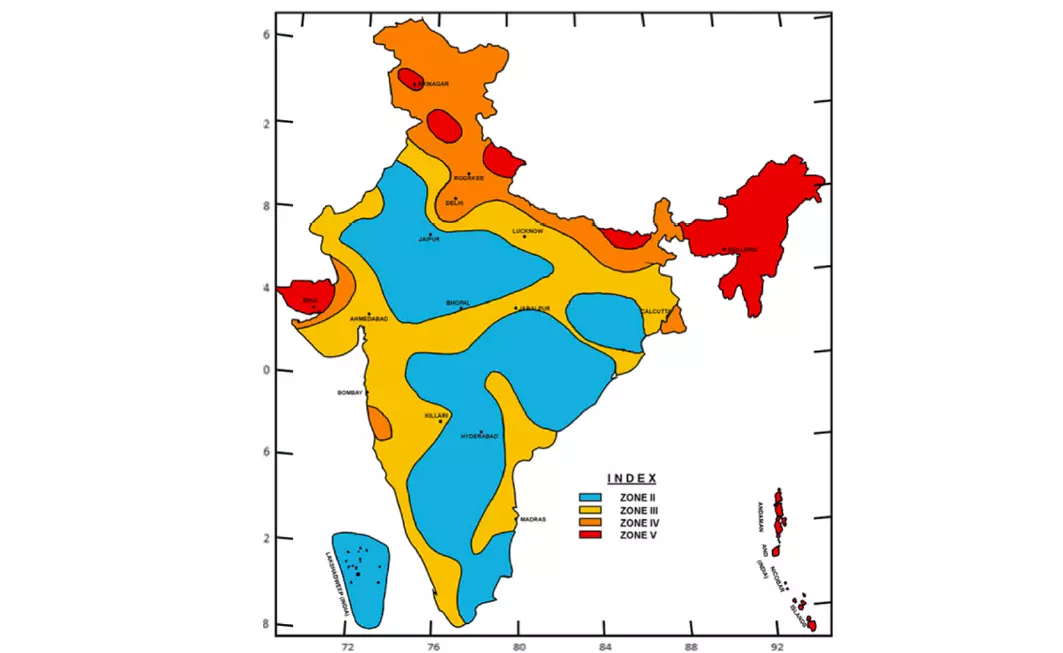
Hyderabad: India will soon have a new map of earthquake hazard zones, keeping up with the fast-developing infrastructure needs of the country, and will return from the current five-zone to a six-zone system. The revised zonation — unlike the past system that relied mostly on quake history of various parts of the country and its impact — will be a forward-looking document that takes into account potential quake impacts on infrastructure and urban population conglomerations in the country in the event of a quake.
A large team of experts drawn from various scientific institutions have put together a draft document on the new zones, the rationale behind the zoning aspects, and this document is likely to be give a final shape and approved by the Bureau of Indian Standards in the next few months.
One of the primary factors that went into the extremely detailed study in the run-up to the draft’s preparation is the recognition that India is experiencing rapid urbanisation fast expanding construction activity.
“It is not the quakes that can kill lives, it is the infrastructure, be it buildings, or other large structure whose stability, and earthquake resilience that determines the outcome of a quake. For long, the focus was on the impact on people learnt from post-quake knowledge but this new document integrates infrastructure safety in terms of building codes, which can be key to human safety,” a senior scientist involved with the study said.
One of the key elements that was recognised early on with the National Disaster Management Agency in 2007 commissioning a study to examine all the past studies and update the country on earthquake hazards. A series of other studies followed and the NDMA in 2019, commissioned another study with the BIS as the umbrella agency to improve and finalize earthquake hazards in India based on consultations with the organizations with expertise on these matters. The outcome of all this work, over these several years, was the preparation of the latest version of the earthquake zone map of India included in the Indian Earthquake Code – IS 1893.
The challenge before the scientists involved in the preparation of the latest document, some of whom Deccan Chronicle spoke with, was to stay on the point — that is factor in the country’s increasing urbanisation. With about 57 per cent of India’s landmass is considered to be at risk from moderate to severe earthquake hazards and this area, spread across the country, is home to 80 per cent of the country’s population. this aspect needed addressing which the latest study has taken into account. Then there is the ever-increasing rural-to-urban population migration, resulting in large infrastructure development in urban areas, and several of these areas are in one or the other quake-prone zones.
The project, funded by the NDMA, saw scientists from various scientific and research institutions who formed part of a large Criteria for Earthquake Design committee, that looked at earthquake resilient designs. “The new zones are slightly different. The previous zoning was based on past damages. The revised thought process is that a zone map should be for the future. The goal is to make safety the top most priority. And this safety is not just preventing loss of human lives, but to prevent economic losses,” Dr STG Raghukanth, from the Indian Institute of Technology, Chennai, the lead author of the ‘Draft Earthquake Zone Map of India’ study now under BIS’ scrutiny said.
