Telangana Gets GPS Rovers, to Finish Error-Free Mapping in 10 Mins

Official sources said the satellite-based method eliminated ambiguity in boundary identification and drastically reduced the scope for manipulation that often resulted in prolonged legal disputes.
Hyderabad: In a major technological shift aimed at resolving long-standing land disputes and speeding up surveys with 100 per cent accuracy, the revenue department is set to replace the nearly 200-year-old chain-and-staff method of land measurement with a GPS-based system.
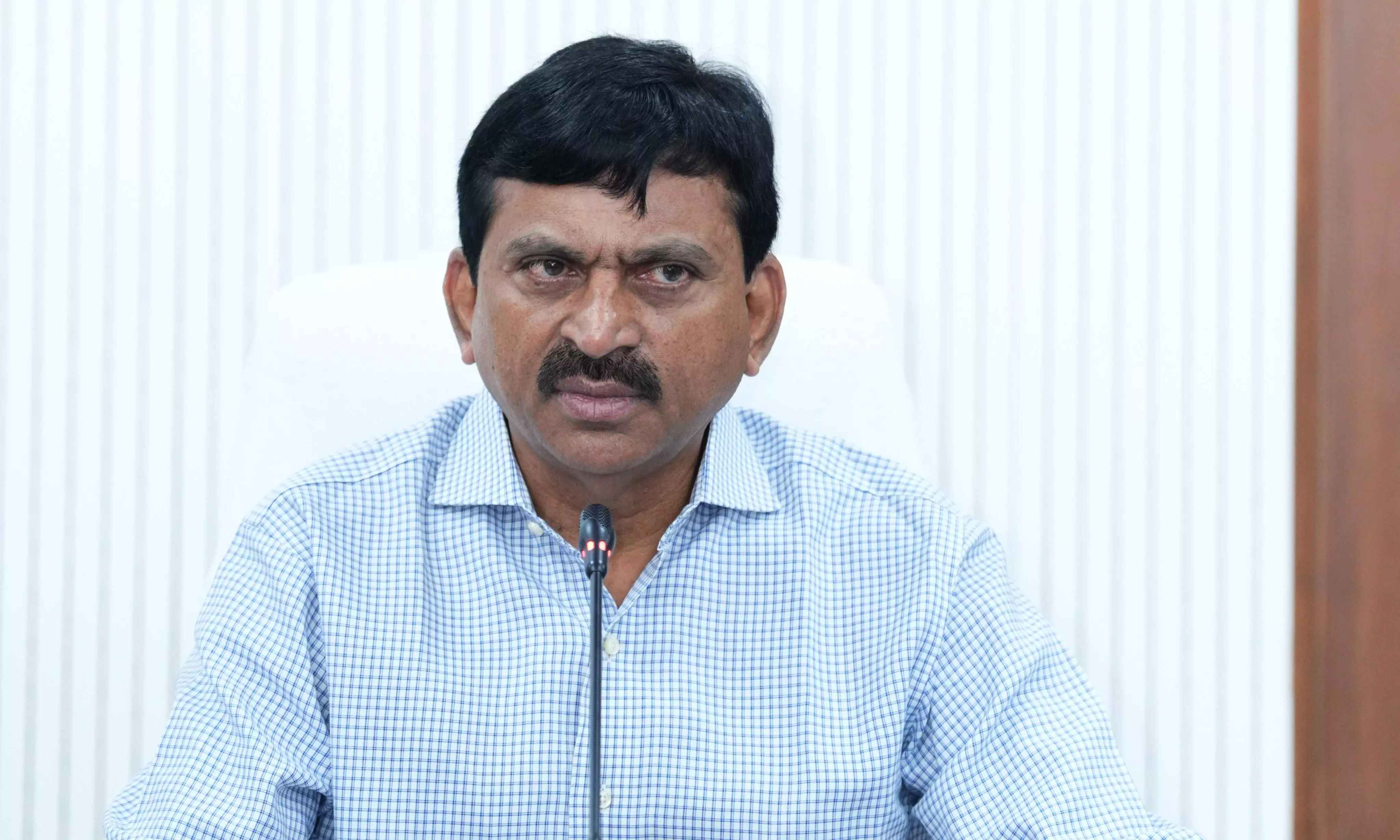
Revenue minister Ponguleti Srinivas Reddy will distribute close to 1,000 advanced surveying instruments, known as rovers, which will facilitate satellite-driven land administration.
Official sources said the traditional method, which relied on iron chains, tapes and manual drafting, was not only time-consuming but also prone to human error. Under the old system, a single land survey would take at least 70 minutes in the field, followed by nearly three hours to manually draw maps.
With the introduction of rover technology, the entire process can now be completed in about 10 minutes, significantly reducing labour and delays.
The new system uses a compact, survey-grade receiver mounted on a pole, resembling a smartphone, which captures precise geographic coordinates. The rover is connected to a tablet through which commands are issued. Surveyors walk along the outer boundaries of a plot, marking straight lines or curves with multiple points where required.
Official sources said the satellite-based method eliminated ambiguity in boundary identification and drastically reduced the scope for manipulation that often resulted in prolonged legal disputes.
The government has approved a plan to modernise land survey operations and strengthen the infrastructure of the revenue and land records departments. As part of this initiative, the government has acquired 400 rovers and 600 more are to be procured for faster and more accurate land measurement. The new equipment will enable the department to provide digital ‘C’ copies of land maps to citizens in a much shorter time.
Minister Srinivas Reddy proposed the introduction of rover-based surveys to bring a revolutionary change in agricultural land measurement. The satellite-backed surveys would offer permanent solutions to boundary disputes, family partition conflicts and ownership-related litigation by fixing land limits through geo-coordinates that are permanently stored in government records.
Officials explained that once a plot is surveyed and digitised, it effectively gets a form of “digital fencing”. Even if boundary stones are removed or physical features such as canals or paths are altered in the future, the original coordinates can be re-established instantly using the rover, clearly proving the extent of each landholding.
The GPS-based technology is also expected to be effective in difficult terrain. In areas with dense bushes, trees or uneven land where chain surveys earlier posed serious challenges and took days to complete, satellite signals will allow easy and accurate measurement. Reduced human involvement, officials added, will also curb corruption, bias and undue influence at the field level.
The government plans to roll out the global navigation satellite system-based surveys as a pilot project from January, with phased implementation across all districts. Tenders, staff training and deployment of additional rovers are being fast-tracked to ensure that agricultural land surveys are completed statewide in a time-bound manner, providing long-awaited relief to farmers and landowners.
