Rescuers Overcoming Enormous Odds, Making Headway in SLBC Tunnel
Amid the unequal battle between the forces of nature, and that of man, 13 km inside the SLBC tunnel, and some 500 metres below the surface, specialist rescue workers on Monday, Day 11 after the tunnel collapse on February 22, achieved a much-needed breakthrough.
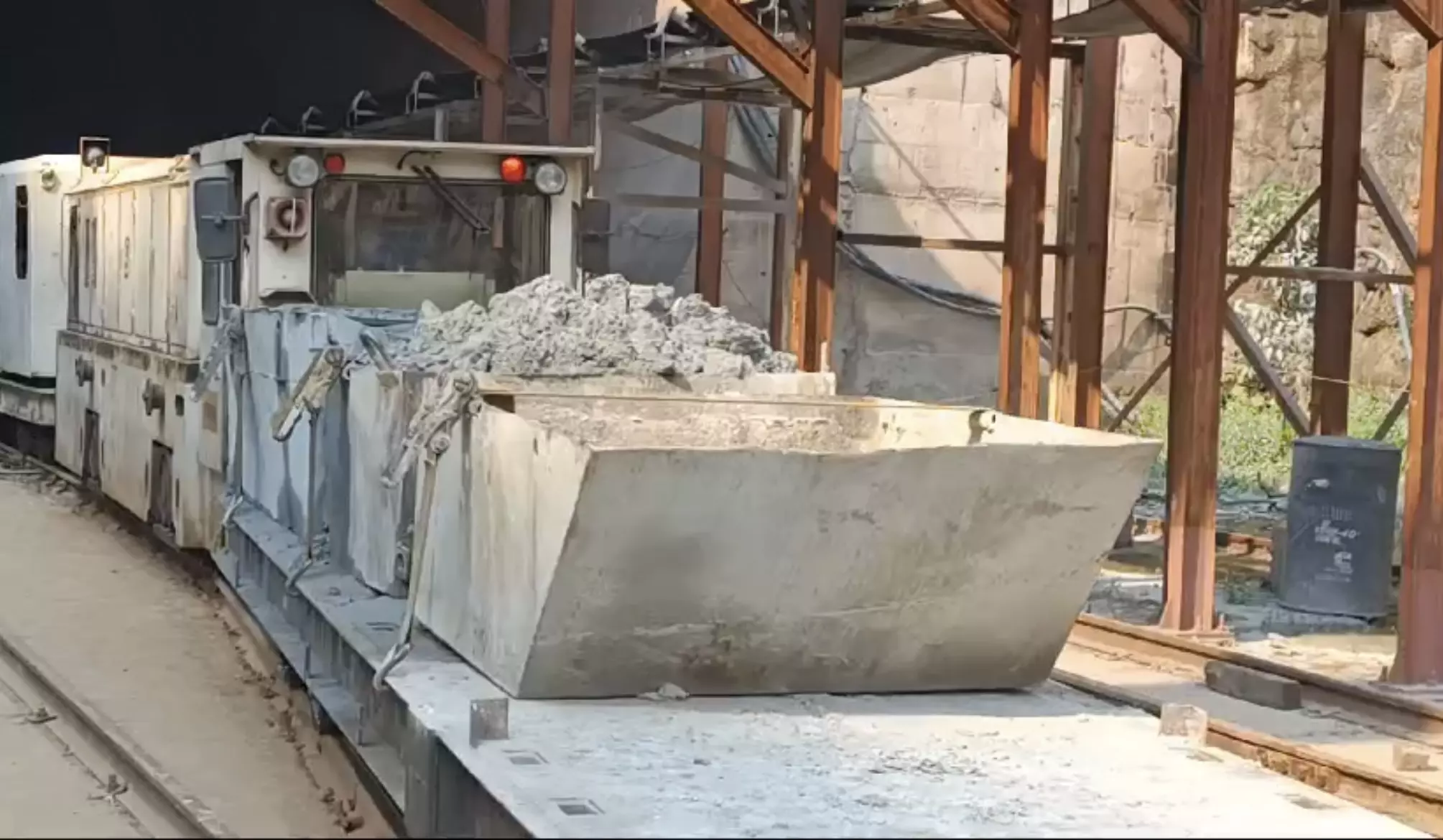
Hyderabad: Amid the unequal battle between the forces of nature, and that of man, 13 km inside the SLBC tunnel, and some 500 metres below the surface, specialist rescue workers on Monday, Day 11 after the tunnel collapse on February 22, achieved a much-needed breakthrough.
While on the one hand they kept the water seepage at bay by effectively pumping out the water, they also succeeded in cutting through much of the rear section of the tunnel boring machine (TBM). Workers have begun removing the dismantled TBM sections in a bid to open access to the tonnes of accumulated silt where the eight missing workers are believed to be located.
“Most of the TBM metal blocking the tunnel has been cut, including its heavy base plates. There is a large compressor that needs to be moved, but with care as it has some fuel in it. That work is going on,” said Arvind Kumar, special chief secretary, disaster relief, who supervising and coordinating the work by a dozen rescue agencies.
Repairs to the broken conveyor belt system are almost complete, which means it can be put to work from Tuesday to remove silt. “Coupled with the removal of the TBM portions, and the restarting of the conveyor belt, we hope to step up the silt removal process,” Kumar said on Monday.
He said once the path way was cleared, reaching the last 40 metres, where the silt is piled up very high inside the nine-metre diameter tunnel, would become easier.
“Currently, not more than three or four people are being allowed into this section for safety reasons. We hope to begin using a small excavator from tomorrow (Tuesday) for removing the silt which can pave way for more people to safely access this part of the tunnel and speed up the search for the missing persons,” he said.
Meanwhile, a team of scientists from the National Seismological Centre is expected to arrive at the tunnel site to assist in assessing the conditions and provide advise on how to safely move ahead. Also, the National Geophysical Research Institute (NGRI) is expected to deploy aerial electro-magnetic survey on Tuesday to help understand the conditions above and around the tunnel. This information can help in taking decisions on how to go about removing the rock and silt debris.
Though an official from one of the rescue agencies said that this debris was now compacted and not as hazardous as earlier for removal, there were still some concerns on the condition in the area on top of the tunnel, and whether or not efforts to remove the debris would result in further fall of rock and debris.
While one section – the rear part of the TBM that was thrown back some 70 metres by the mass of collapsing rock, silt and water – has now more or less been dealt with, the front portion of the machine, including its cutting head located at the tunnel head, is completely buried under silt.
While four of the missing workers are believed to be in this section of the collapsed tunnel, hopes are rising that the four others who are suspected to have gone under the silt towards the rear of the machine may be found in the next 24 to 48 hours.
