Rare ‘Naga Bonam’ Sculpture Found in Karimnagar

Such votive stones are traditionally offered to deities or saints as acts of devotion, gratitude, or in fulfilment of vows.
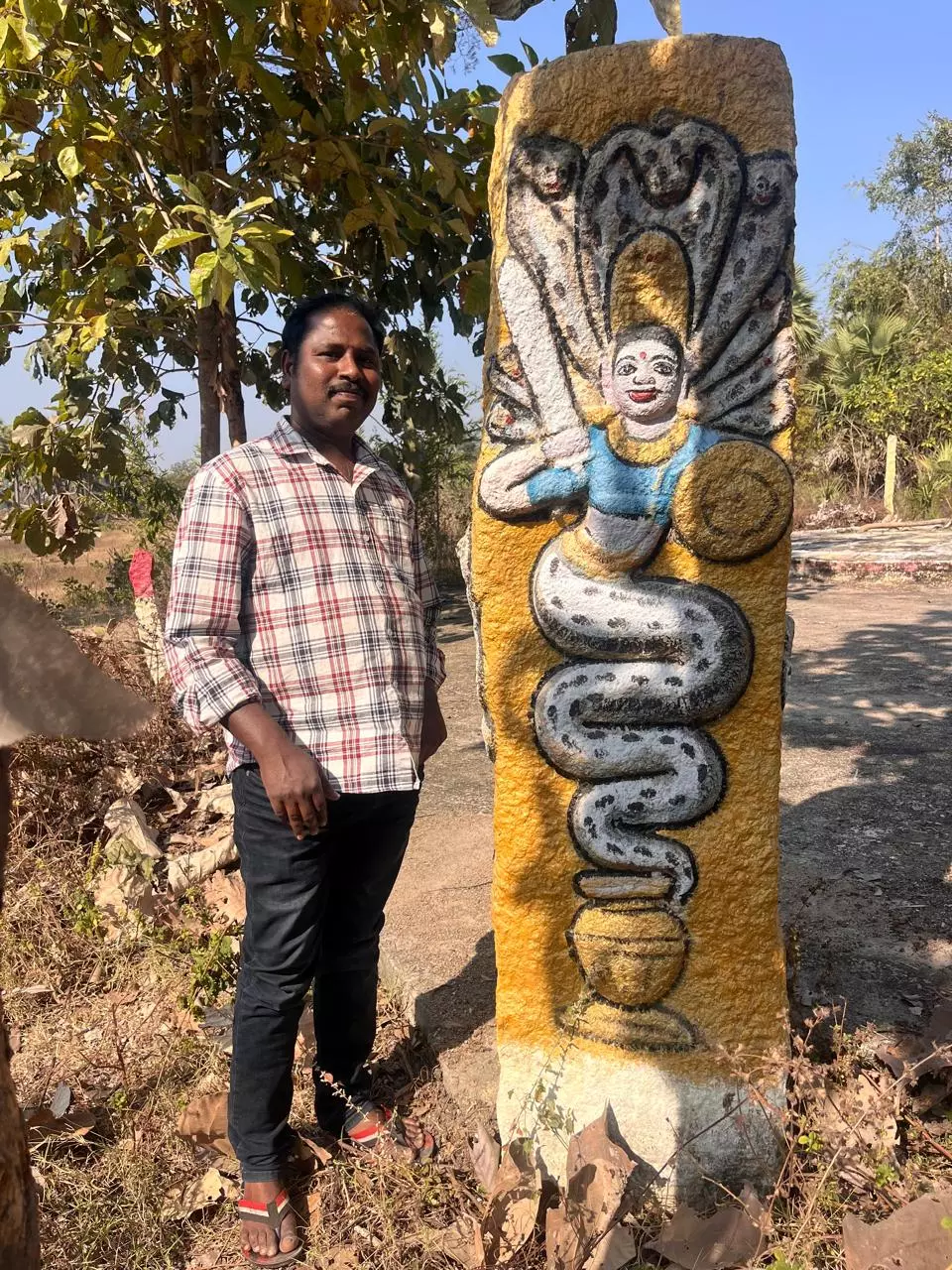
Karimnagar: A rare historical sculpture depicting the ‘Naga Bonam’ (ritual to serpent god) tradition was discovered at Potlapalli in the Husnabad constituency of Karimnagar by Kotha Telangana Charitra Brundam (KTCB) member Kolipaka Srinivas.
The sculpture was identified near the Sammakka Gadde area and provides significant evidence that the ritual of offering Bonam, a traditional food offering to local village deities, was not confined to goddesses such as Poshamma and Katta Masavva, but was also dedicated to the serpent god, indicating the practice of Nagula Bonam.
Carved on one of several Naga Shilas (serpent stones) installed as votive offerings, the sculpture features a five-hooded human-serpent deity (Nara–Naga), with a Kumbham or Bonam pot clearly depicted at the base. Such votive stones are traditionally offered to deities or saints as acts of devotion, gratitude, or in fulfilment of vows.
According to Sriramoju Haragopal, convener of KTCB, the artistic style suggests that the serpent stones date back to the Rashtrakuta period. This makes the Potlapalli carving one of the oldest known archaeological representations of the Bonam tradition in Telangana. While most Naga sculptures are executed in high relief, this Naga Bonam depiction stands out as a rare semi-relief work.
Historians noted that although depictions of women carrying Bonam pots on their heads have been found at the Velpugonda Shiva Temple in Medak and in several Kakatiya-era sculptures, the Potlapalli discovery further strengthens the deep historical roots of Telangana’s cultural identity. The presence of such artefacts confirms that the Bonam tradition has remained a localised religious practice for over a millennium.
