Power Supply Resilience Boosts Data Centre Growth in Hyderabad

Capacity jumps to 859 MW on policy support, lower costs and power resilience
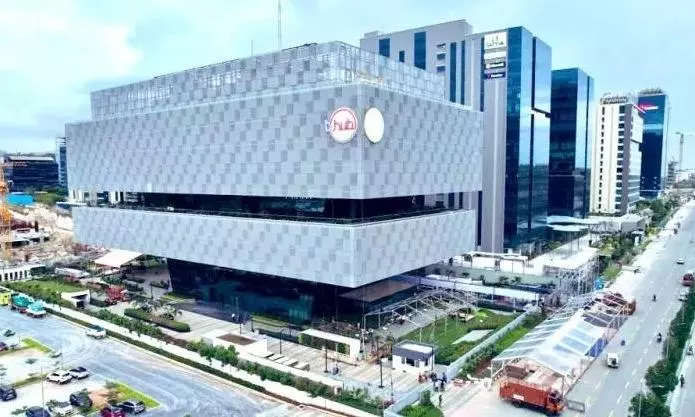
Hyderabad: Hyderabad has emerged as a leading hub for data centres in India, driven by large-scale investments and supportive state policies amid surging demand from artificial intelligence and cloud services. The city’s installed data centre capacity reached 859 MW in 2025, placing it behind Mumbai and Chennai but ahead of other southern cities.
Telangana’s single-window clearance system and the Digital Personal Data Protection (DPDP) Act have acted as key anchors for this expansion. Large-scale data centre operators benefit from land costs, which are on average 40 per cent lower than those in other metro cities, while enjoying comparable fibre density — a combination that has accelerated capacity planning.
The sharp rise from just 54 MW in 2024 has significantly increased power demand. However, Telangana’s proactive measures have ensured supply stability.
The government policy mandates dual power grids to enhance reliability and resilience, along with access to up to 100 per cent renewable energy and subsidised tariffs to ensure uninterrupted supply. These measures are complemented by full renewable open access, an official of the southern discom said.
The state hosts 26 operational data centre facilities operated by firms such as CtrlS, Sify and Microsoft in Hitec City and along the Outer Ring Road. The boom, fuelled by expansions including Microsoft’s over 300 MW capacity and Amazon’s Rs 60,000-crore investment commitment, has placed a strain on the power grid.
Data centres are power-intensive, accounting for about 0.5 per cent of India’s total electricity consumption in 2025, a share projected to rise to three per cent by 2030. Hyderabad’s contribution reflects its current 859 MW IT load.
Industry reports attribute the surge to the proliferation of high-performance servers and cooling requirements that account for 38-40 per cent of total energy use. This has prompted TGSPDCL to undertake infrastructure upgrades and adopt precautionary measures to prevent overloading.
Expansion projects include targeted reinforcements in Cyber City circles such as Kondapur and Ibrahimbagh, where demand rose by 10-13 per cent in late 2024 and early 2025 compared to previous years.
Officials said renewable energy adoption through green power purchase agreements by companies such as Amazon and Microsoft has helped mitigate grid pressure, while diesel backup systems and emerging hydrogen pilot projects have achieved utilisation rates of over 60 per cent.
Policy incentives such as TG-iPASS single-window clearances within 15 to 30 days, capital expenditure subsidies and lower operating costs by 20–30 per cent have accelerated the development of 600 MW data centre parks.
TSSPDCL records confirm that these strategies have effectively bridged the demand-supply gap, with no major outages despite rapid IT expansion. This power resilience positions Hyderabad to sustain growth towards an estimated 2,961 MW capacity by 2031 at a compounded annual growth rate of 28 per cent, reinforcing the state’s competitive edge over Mumbai and Chennai among major data centre hubs.
