Plea Seeks Women Quota in State Bar Council Polls

The judge is hearing a writ plea filed by N.T. Lavanya, advocate.
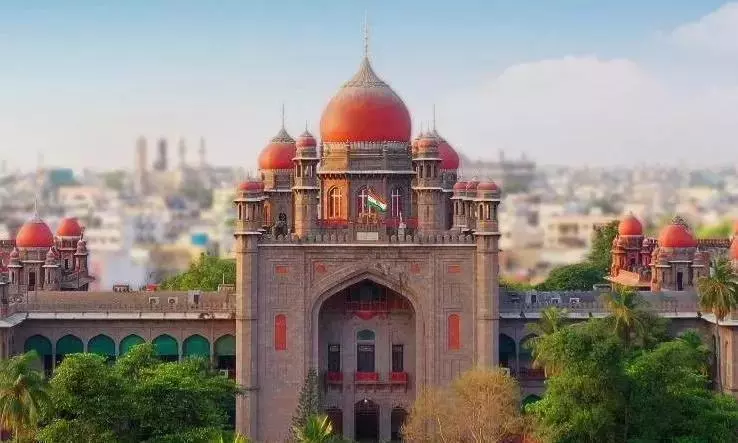
Hyderabad:Justice E.V. Venugopal of the Telangana High Court admitted a writ plea challenging the Bar Council of Telangana election notification issued on December 20, 2025, on the ground that it was issued in violation of binding judicial directions governing the conduct of Bar Council elections with regard to reservations for women. The judge is hearing a writ plea filed by N.T. Lavanya, advocate. The petitioner questioned the legality of the election notification issued without constituting a high-power election committee (Phase-I) as mandated by earlier orders of the Supreme Court. The petitioner contended that the notification was issued in an arbitrary manner, without authority or jurisdiction, and in disregard of binding directions issued by the apex court regulating Bar Council elections. The petitioner contended that the notification violated a series of Supreme Court directions mandating 20 per cent representation for women advocates through elections and 10 per cent through co-option in State Bar Councils. According to the petitioner, no mechanism, modality or voting procedure was framed or notified to implement the mandatory women’s representation before issuing the election notification, rendering the election process illegal and unsustainable. The petitioner sought quashing of the impugned election notification and a direction to the respondents to evolve and notify a lawful mechanism, including appropriate voting procedures, to ensure compliance with the Supreme Court directions on women’s representation in the Bar Council of Telangana. The judge directed the respondents to obtain instructions in the matter.
‘No caste’ column sought in census
Justice Nagesh Bheemapaka of the Telangana High Court ordered notice to the director of census operations and other authorities in a writ plea seeking recognition of “No Caste” and “No Religion” as an optional identity in the Census and other official records. The judge was dealing with a writ plea filed by Mohd Waheed and D.L. Krishna Chand, on behalf of Kula Nirmulana Sangham. The petitioners challenged the inaction of the respondent authorities in considering their representations, which the petitioners contended was illegal, unlawful, and unconstitutional. The petitioners sought directions to the respondent authorities, particularly the Registrar General and Census Commissioner of India, and the director of census operations, to add a separate column for “No Caste” and “No Religion” in both physical and digital population enumeration forms for individuals who voluntarily choose such an identity. The petitioners highlighted that the 16th National Census proposed enumeration of socio-economic and caste data, making it imperative to provide an option for citizens who do not identify with any caste or religion. The petitioners sought directions to the principal secretary, general administration department, and other state departments to declare and publish data pertaining to individuals who opted for “No Caste” and “No Religion” during the Telangana Comprehensive Social, Economic, Educational, Employment, Political and Caste Survey. Additionally, the petitioners requested directions to the respondents to provide a “No Caste” and “No Religion” column in birth and death registrations, as well as in school admission and school leaving certificates, and other educational records, in both paper and digital formats, for those who opt for it.
Air India says it has paid dues
A two-judge panel comprising Chief Justice Aparesh Kumar Singh and Justice G.M. Mohiuddin took on file a writ appeal on the issue of whether workers of Air India were entitled to specific service benefits, including gratuity, under the Payment of Gratuity Act. The panel was hearing a writ appeal filed by Air India which challenged the order of a single judge that had upheld the orders of the controlling authority and the appellate authority the workers were entitled to gratuity. The orders had stated that Air India, being a government of India undertaking (at the time of filing the appeal), was expected to act as a model employer. The underlying writ petition was filed by workers claiming to be employees of MKR Air Conditioning and Refrigeration Works, seeking payment of gratuity for the period during which they worked for the principal employer, Air India. The workers contended that the controlling authority and the appellate authority had allowed their claims. Senior counsel A. Venkatesh, appearing for Air India, contended that the core issues related to the liability of a principal employer to pay gratuity to contract labour, and the jurisdiction of the controlling authority under the Payment of Gratuity Act. He contended that the single judge had failed to deal with the specific grounds raised in the writ plea and submitted that Air India had deposited the amount as directed by the authorities. Counsel appearing for the controlling authority and the appellate authority contended that 50 per cent of the gratuity amount was disbursed. The panel ordered notice to the proprietor of MKR Air Conditioning and Refrigeration Works and ordered that no coercive steps shall be taken against the principal employer. The panel directed that an indemnity bond be obtained for disbursement of the remaining amount.
