The panel comprising Chief Justice Aparesh Kumar Singh and Justice G.M. Mohiuddin was hearing a PIL filed by Dr Cheruku Sudhakar and social worker Kabbaka Shravan Kumar.
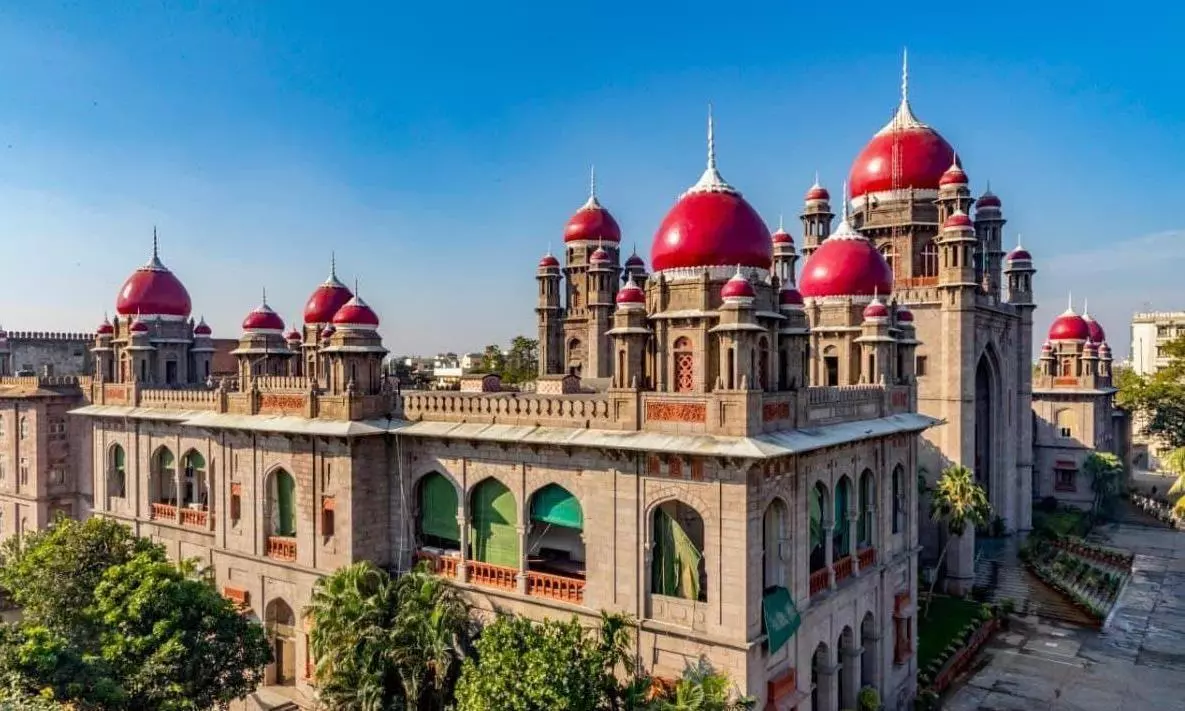
Hyderabad: A two-judge panel of the Telangana High Court took on file a public interest litigation (PIL) seeking minimum relief measures to flood-affected areas. The panel comprising Chief Justice Aparesh Kumar Singh and Justice G.M. Mohiuddin was hearing a PIL filed by Dr Cheruku Sudhakar and social worker Kabbaka Shravan Kumar. The petitioners contended that the respondent authorities failed to implement the National Disaster Management Minimum Standard Relief, thereby depriving affected communities of potable water, food, shelter, medical cover, sanitation, ex gratia assistance and compensation for crop and property damage. It was the case of the petitioners that such inaction was arbitrary and in violation of the Constitution, besides being contrary to the Disaster Management Act, the Epidemic Diseases Act and binding judicial precedents. The respondents contended that such reports were filed and assured the court that a compilation of the compliance reports would be prepared. Recording the submission, the panel directed the respondents to file the necessary documents and it is posted for further hearing.
2. HC to examine 'right to be forgotten' plea
A two-judge panel of the Telangana High Court, comprising Justice P. Sam Koshy and Justice S.Chalapathi Rao, will examine facets of the right to be forgotten. The facet of the fundamental right was the context of a writ petition challenging the inaction of judicial and police authorities in masking the name of a software employee from official websites in relation to certain disposed and pending criminal cases. The petitioner contended that despite making specific representations in December 2024 and later in March, the High Court Registry, the Rangareddy District Court, and the Telangana police failed to disguise his name in case records displayed on their respective websites. The petitioner argued that the continued publication of his name in connection with disposed and ongoing matters violates his right to privacy under Article 21 of the Constitution. The panel posted the matter for further hearing.
3. Police protection sought for Arbaeen event
Justice N.V. Shravan Kumar of the Telangana High Court on Tuesday heard in part a writ petition seeking police protection for Alambardari (relic holding) during the Markazi Juloos-e-Arbaeen scheduled on August 15, filed by Mir Talib Ali Khan Razvi Afsar. The petitioner challenged the failure of the Telangana Wakf Board and the Hyderabad police commissioner to act on his complaint. The petitioner alleged that third parties were unlawfully encroaching upon his Alambardari rights in connection with the upcoming procession and sought police protection to safeguard them. His case was that his complaint was not considered by the respondent authorities, thereby violating his rights under the Constitution. During the hearing, the judge questioned the petitioner’s counsel about the delay in approaching the court at the last stage and why the private individuals named in the complaint were not impleaded as parties. The judge directed the petitioner to implead the private parties and ordered the issuance of notice. The matter is posted to Wednesday.
4. Contractor challenges hospital bid rejection
Justice Nagesh Bheemapaka of the Telangana High Court admitted a writ plea challenging the disqualification of a contractor's bid in a Rs.100-crore project for constructing a 100-bedded sub-district hospital at Kukatpally. The judge was dealing with a writ plea filed by NJR Constructions Private Limited, contending that the respondents, particularly the Telangana Medical Services and Infrastructure Development Corporation, arbitrarily rejected the bid during the pre-qualification stage, citing “wrong disclosure” of litigation history. The disqualification was allegedly based on a rival bidder’s complaint, without verifying the facts, seeking clarification or issuing a show-cause notice. Claiming that the action was illegal, high-handed and violative of the Constitution, the petitioner sought to set aside the disqualification and direct the authorities to consider the bid in accordance with law. In the alternative, the petitioner is seeking to declare certain tender clauses on litigation disclosure as non-mandatory, stating that all other qualification and performance criteria were met.

