Phone Tapping Case: SC Extends Police Custody of Prabhakar Rao Till Dec 25

SIT constituted by Telangana government to fast-track probe; accused to be released on December 26
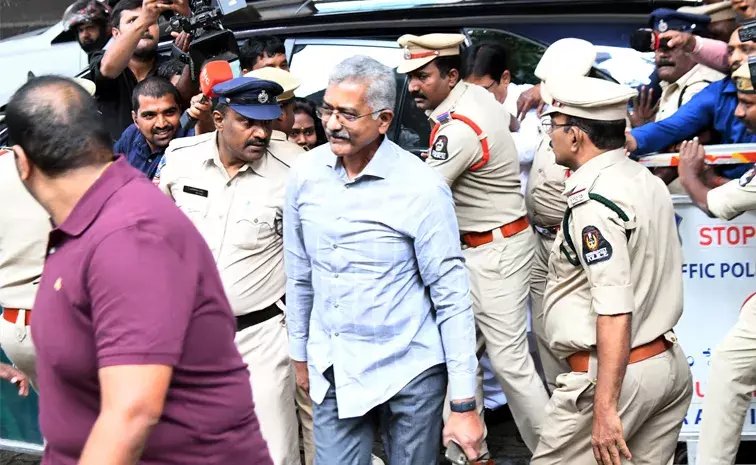
Hyderabad: The Supreme Court on Friday extended the custody of phone-tapping accused T. Prabhakar Rao till December 25, while making significant oral observations on surveillance, privacy and the limits of state power. The court made it clear that Rao should be released on December 26 and gave him protection from any coercive action until the matter was heard again on January 16.
On December 11, a Supreme Court bench of Justice B.V. Nagarathna and Justice R. Mahadevan had directed Rao to surrender before the investigating agency in the phone-tapping case for one week of custodial interrogation. On the request of the state government, the bench on Friday extended his custody one more week and kept his anticipatory bail petition pending.
Solicitor General Tushar Mehta, appearing for the state, submitted a status report to the court. He argued that although Rao had surrendered as directed by the court, he was not cooperating with the investigation and was allegedly attempting to destroy digital evidence, including data stored in his iCloud accounts.
According to the prosecution, Rao had misused the resources of the then-State Intelligence Bureau (SIB) to conduct illegal surveillance on targeted individuals under the pretext of monitoring left-wing extremism.
At this stage, a broader constitutional debate unfolded on the issue of surveillance and the right to privacy.
The bench observed that Rao might have acted under the instructions of state authorities. “…They should not give it…. without instructions, the officers do not follow.,” the bench said.
Responding, Solicitor General Mehta said: “We have to remove that impression that everything is under political control. In this case, such an impression was given… If any political leader orders someone to shoot someone else... would the officer do that," Mehta asked.
The bench observed that citizens live in an “open world” and questioned why a person should be afraid of surveillance if they had nothing to hide. “Ideally it (illegal surveillance) should not be done…. Secondly those who have nothing to hide, need not be bothered,” Justice Nagarathna observed.
Reacting to the view, the state government said that the issue was not about openness but about illegal surveillance by state machinery. Solicitor General Mehta and senior counsel Siddarth Luthra emphasised that even the highest constitutional authority, including the President, could not authorise surveillance without the backing of law.
Referring to the nine-judge bench judgment in Justice K.S. Puttaswamy v. Union of India’, S-G Mehta said that privacy was a fundamental right intrinsic to human dignity, liberty and autonomy, encompassing personal communications and family life. “My personal communications with my wife… I have a right not to be under surveillance,” Mehta said.
Senior advocate Ranjeet Kumar, representing Prabhakar Rao, strongly opposed the extension of custody, and submitted that the former official had been subjected to questioning from 10 am to 10 pm for seven consecutive days and argued that such prolonged interrogation violated Article 21 of the Constitution. Kumar submitted that the investigating agency had access to documents and hard disks and was attempting to extract a self-incriminating statement from Rao and to get him to implicate others.
Senior counsel Dama Sheshadri Naidu, also appearing for Rao, pointed out that the petitioner was 69 years old and a cancer survivor, and argued that 12 hours of daily interrogation was intended to break his spirit. Seeking relaxation of interrogation hours, counsel emphasised that Rao was not accused of a violent crime.
The bench declined to intervene in the schedule of questioning. Justice Nagarathna orally observed that Rao was a seasoned officer who could withstand interrogation. The bench also ordered that no coercive steps be taken against him until the next date of hearing.
