Scheduling the next hearing for October 8, the court stated that the state must legally reconcile its welfare goals before proceeding with the quota hike
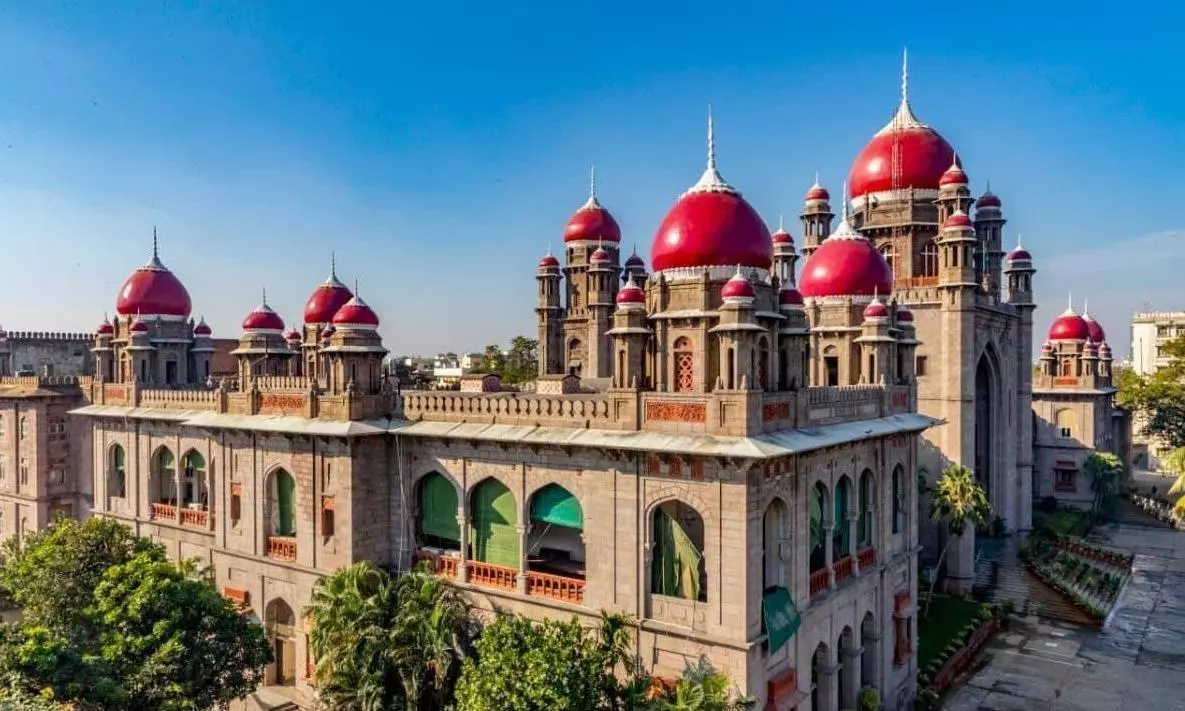
Hyderabad: The Telangana High Court on Friday declined to grant a stay or issue status quo orders on the implementation of Government Order (GO) No. 9, which enhanced reservations for Backward Classes (BCs) in local body elections from 25 per cent to 42 per cent.
A division bench of Justice Abhinand Kumar Shavili and Justice B. Vijaysen Reddy was hearing two house motion petitions filed separately by B. Madhava Reddy and another challenging GO 9. The bench issued notices to the state government and adjourned the matter to October 8. The court clarified that if the election notification is issued in the meantime based on GO 9, the writ petitions challenging it will continue to remain valid.
The petitions challenged GO 9 on two key grounds — that it violated the Supreme Court’s 50 per cent ceiling on reservations, and that the Bill providing for a 42 per cent BC quota had not yet received the Governor’s assent, and therefore had not become law. The petitioners argued that even as an executive order, the GO could not override the 50 per cent constitutional limit.
The bench questioned the state government for implementing the enhanced quota while the Bill was still pending with the Governor. “How do you overcome the mandatory compliance of Article 200, which grants power to the Governor to assent to Bills passed by the Legislature?” the court asked.
Referring to a recent Supreme Court ruling that set a three-month time limit for Governors to assent or return Bills, the court observed, “Even if you had considered that judgment, you issued GO 9 before the grace period of three months expired, since the Bill was sent to the Governor only after August 31.”
The bench further asked advocate general (AG) A. Sudershan Reddy to cite a Supreme Court judgment that allowed a Bill pending with the Governor to be treated as law. “Without becoming a law, how is the government empowered to issue a GO enhancing reservations?” the court asked.
The judges also remarked that if the single judge’s order directing the government to hold local body elections by September 30 had forced the government’s hand, it could have sought an extension of three to six months instead. “If the government truly intended to help a section, it should have done so within the framework of the law. You failed to follow due process and now blame the courts for intervention,” the bench observed.
At one stage, the court advised the government to defer the elections to November or December, warning that it would otherwise be compelled to issue stay orders, which could have a larger impact. The bench then granted 15 minutes for the AG to seek instructions from the government on deferring the polls or giving an undertaking that elections would not proceed based on GO 9 until the next hearing after the Dasara vacation.
When the advocate general could not confirm the government’s position within the allotted time, the court adjourned the case to October 8. The petitioners’ counsel sought status quo orders, expressing concern that the government might issue the election notification in the meantime, but the court declined the request, reiterating that the petitioners’ cause would survive even if the notification were issued.
Earlier, the AG argued that the state’s legislative competence could not be questioned, adding that the Governor’s assent was not mandatory for implementing a welfare-oriented policy decision. Senior advocates B. Mayur Reddy and Prabhakar, appearing for the petitioners, cited the Supreme Court’s judgments in the Indira Sawhney and Krishna Murthy cases, which reaffirmed that reservations for Backward Classes could not exceed the 50 per cent limit and that proportional representation did not apply to them.

