Only Six of 237 STPs in Hyderabad Meet Pollution Control Norms

TGPCB Issues Show-Cause Notices After Inspections Find 222 Operational Plants Failing to Meet Treated Wastewater Standards
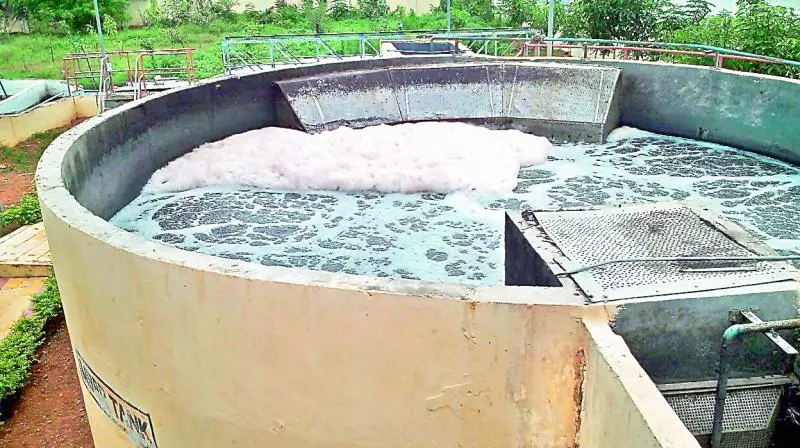
Only six of the 237 sewage treatment plants (STPs) inspected at major residential and commercial projects across Hyderabad were found to be complying with prescribed pollution control standards, while nine were non-operational and discharging untreated sewage, according to the Telangana Pollution Control Board (TGPCB).
The remaining 222 STPs were operational, but laboratory analysis of samples collected from their outlets revealed that treated wastewater exceeded the prescribed pollution standards, indicating deficiencies in their operation and maintenance. The TGPCB has issued show-cause notices to the operators of the projects for failing to comply with environmental norms.
The inspections were carried out to prevent untreated sewage from entering lakes and other water bodies and promote the reuse of treated wastewater. The teams inspected captive STPs installed in major residential and commercial complexes and collected samples of treated sewage from their outlets for laboratory testing. The action comes amid concerns over deteriorating water quality in several lakes across Hyderabad.
Tests conducted between February and August 2026 under the national water monitoring programme showed that the water quality of several lakes had deteriorated to Class-E, the lowest category under the classification prescribed by the Central Pollution Control Board. Water classified under Class-E is suitable only for specified uses, including irrigation, industrial cooling and controlled waste disposal. Under environmental regulations, residential and commercial projects with a built-up area of 20,000 square metres or more must obtain consent for establishment and consent for operation from the TGPCB.
They are also required to operate their STPs according to prescribed treated wastewater discharge standards. The project operators must install dedicated flow metres and electricity metres and maintain daily records of STP operations, as directed by the Board. The government has been encouraging the reuse of treated wastewater for industrial purposes, construction activities, gardening and landscaping to reduce dependence on freshwater resources.