
Traditional Ojha metal craft practised by Gond tribal families in Telangana’s Asifabad district faces declining demand, rising raw material costs and limited market exposure.
Traditional Ojha metal craft is slowly fading into history due to low awareness and limited market exposure. Artisans continue to follow age‑old methods, making figurines, animal figures and household items, but the time‑consuming process and rising raw material costs make it difficult to sustain their work.
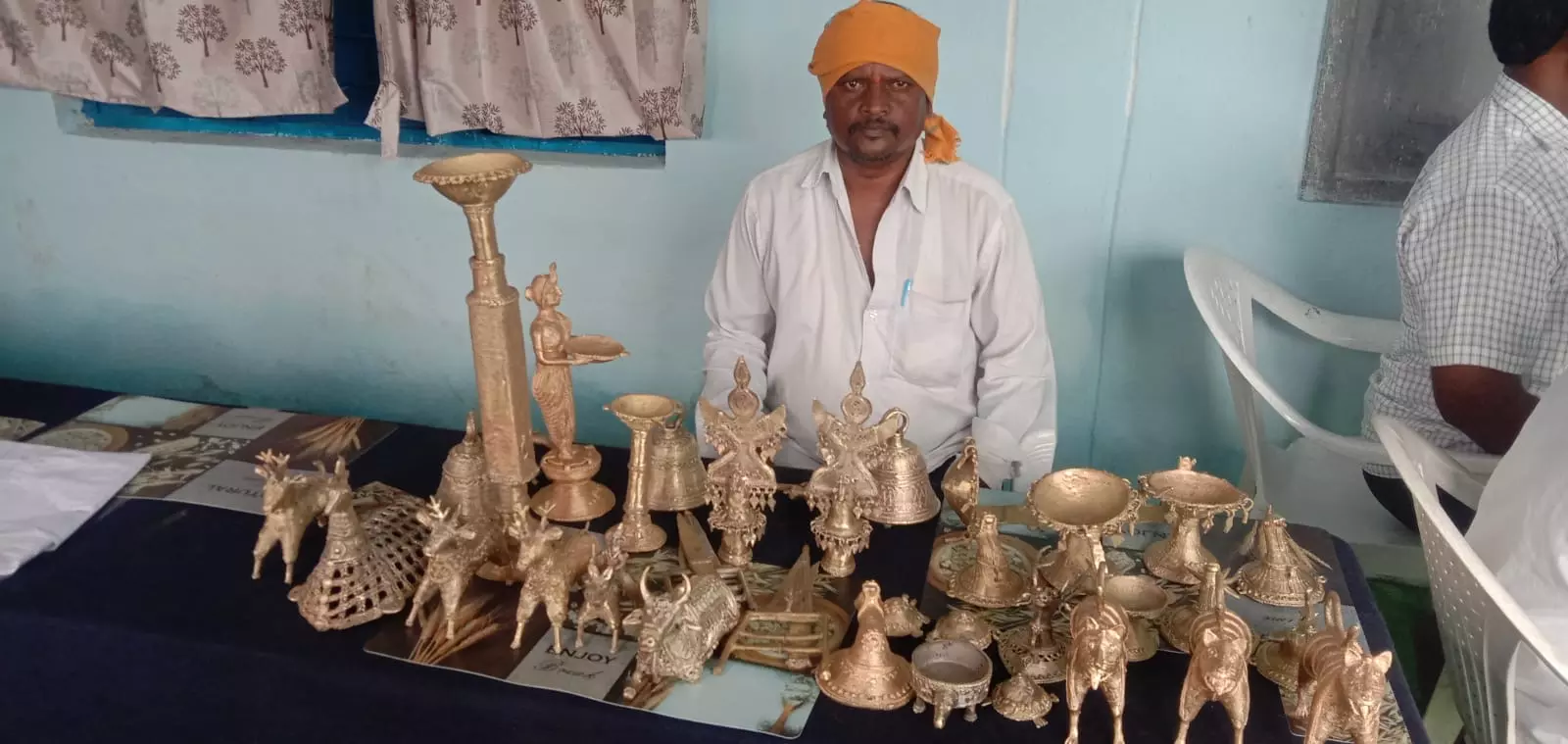
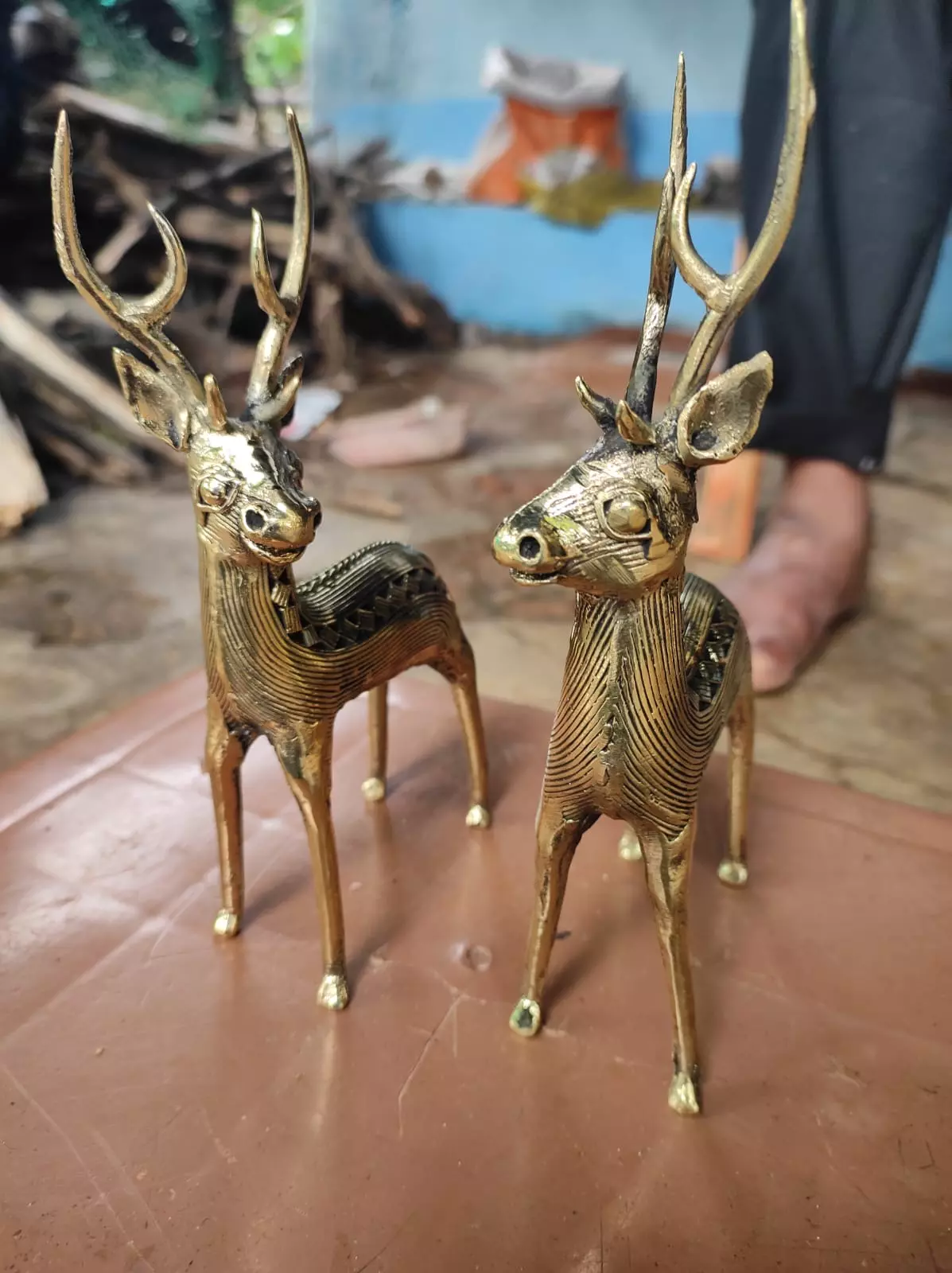
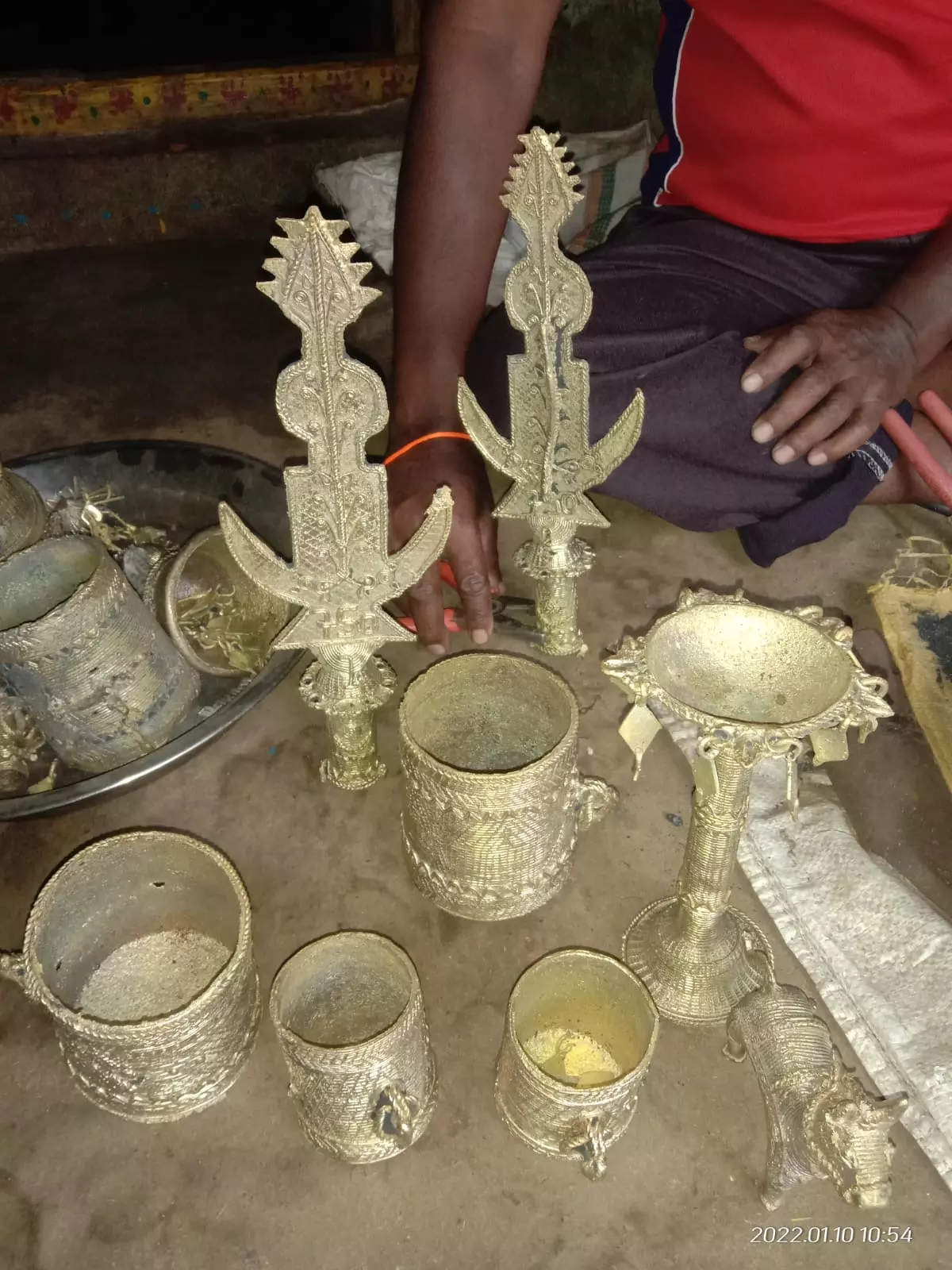
The Ojha craft, similar to Dhokra art, is practised by Gond tribal families in Jamgaon, Ushegaon and Keslaguda villages of Komuram Bheem Asifabad district. They produce elephants, peacocks, horses and other folk motifs, along with household and decorative items such as measuring bowls, pen holders, oil lamps, wall hangings, bells, paperweights and card holders.
The families have carried forward the work of their forefathers but now seek government support as awareness remains low and demand limited. They said products sold cheaply in villages fetched higher prices in cities. With no other livelihood, including agriculture, they depend entirely on the craft.
Although the Tribal Welfare department set up a unit for artisans, demand remains weak. Athram Dilip, an artisan, said they take up work only when orders come. Their products are closely associated with the Nagoba Jatara and tribal deities. He added that youngsters were being trained at the government unit to keep the tradition alive.
The artisans have sought subsidies to buy raw materials, particularly brass, whose price rose from ₹500 to ₹900 in three months. Dilip said Ojha craft was similar to Dhokra but lacked the same finishing. Yet artisans continue to follow traditional methods passed down through generations.
The work is labour‑intensive: a simple piece takes four to five days, while intricate designs need two to three weeks. Designs remain mostly traditional, and the craft gained some exposure only after 2013.
A. Suraj, a youngster, said he helps his parents and would continue the craft, but could not rely on it fully for livelihood as income comes only with orders. He said he would seek alternative work while keeping the tradition alive.