The petition was filed by Keeni Shivani, a woman candidate from the SC community who secured 141 out of 300 marks in the FMGE and sought relaxation of the minimum qualifying marks of 150.
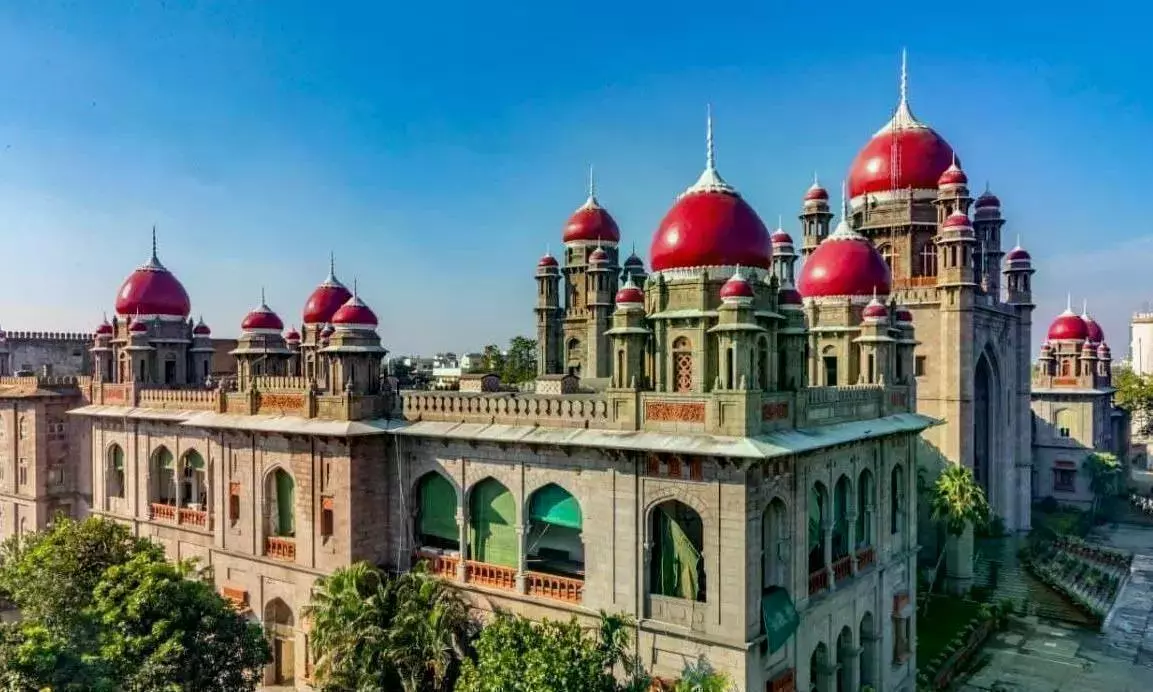
Hyderabad: Justice Nagesh Bheemapaka of the Telangana High Court dismissed a writ petition seeking relaxation of qualifying marks in the Foreign Medical Graduate Examination (FMGE), holding that courts could not rewrite statutory regulations governing professional licensing examinations. The petition was filed by Keeni Shivani, a woman candidate from the SC community who secured 141 out of 300 marks in the FMGE and sought relaxation of the minimum qualifying marks of 150. She contended that relaxations granted in NEET-PG should also be extended to FMGE candidates. The National Board of Examinations in Medical Sciences (NBEMS) contended that the FMGE was conducted strictly under the Screening Test Regulations, 2002, which prescribe a uniform qualifying score of 150 out of 300 marks without any provision for category-wise relaxation. It submitted that FMGE was a statutory licentiate examination to assess the minimum competency of foreign medical graduates before they are permitted to practise medicine in India, that NBEMS was the conducting authority with no power to relax the qualifying criteria, and that the validity of the FMGE framework has already been upheld by the Supreme Court. The respondents contended that NEET-PG and FMGE operate under different statutory frameworks and serve distinct purposes.
HC not to intervene in quarry licence case
A two judge panel of the Telangana High Court refused to intervene in quarry lease permissions granted in Sangareddy district and ruled that the villagers challenging the leases must exhaust the statutory revisional remedy available under the Telangana Minor Mineral Concession Rules. The panel comprising Chief Justice Aparesh Kumar Singh and Justice G.M. Mohiuddin dismissed writ appeals filed by J.G. Murali and other villagers. The appellants, owners of agricultural land in and around Solakpalle and Rallakathva, questioned the quarry lease originally granted in favour of J. Lavanya Prasad Raju and its subsequent transfer to private operators. They contended that the quarrying activities would adversely affect agricultural land, irrigation channels and nearby water bodies, including Peddacheruvu, a major irrigation source for the surrounding villages. The writ court initially suspended the quarry operations after taking note of reports submitted by the irrigation department indicating that the quarrying damaged feeder channels, roads and tank structures and posed a threat to irrigation sources and adjoining agricultural land. The court later vacated the interim suspension after it was brought to notice that the petitioners had already availed the statutory appellate remedy under the Telangana Minor Mineral Concession Rules. The appellants argued that the quarry lease and its transfer was granted without due consideration of the adverse reports of the irrigation authorities and that continued mining operations would cause irreversible damage to agricultural lands and water bodies. The panel accordingly relegated the appellants to the statutory remedy.
Non-advocates allowed to speak at Gadwal Bar Association stir
Justice T. Madhavi Devi of the Telangana High Court permitted non-advocates, excluding politicians, to address a proposed ‘relay birasana deeksha’ demanding prompt construction of a new court complex, outside the existing Gadwal court complex. The judge was dealing with an application filed in a writ plea by G. Sudhakar, president of the Gadwal Bar Association. The petitioner sought a clarification of an earlier order granting permission for the deeksha, pointing out that while the written order restricted speaking participation to advocates alone, no such restriction was imposed during the oral pronouncement in open court. It was contended that members of the public who are not advocates should also be permitted to address the gathering. Recording the undertaking of the petitioner that no politicians would participate and that no provocative speeches would be made, the judge permitted non-advocates to address the gathering. The judge clarified that all other conditions imposed earlier, including restrictions relating to traffic obstruction, abstention from court work and permissible sound levels, would continue to remain in force. The police authorities were directed to issue consequential permission orders within two days.
Relief for girl students of Sitaphalmandi school
Justice Juvvadi Sridevi of the Telangana High Court came to the aid of students studying in a dilapidated government school at Sitaphalmandi, directing the Telangana Dairy Development Cooperative Federation Ltd to immediately allot its quarters to enable the school to function. The judge was hearing a writ petition filed by Tripura Kota, a teacher, seeking directions to the authorities to construct a new building for the Government Primary Girls School in place of the existing dilapidated structure. The petitioner contended that despite repeated representations, no effective steps were taken to provide an alternative building or construct a new school. The petitioner alleged that the school was denied the benefit of infrastructure upgrades being extended to other government schools, adversely affecting the education of its students. The judge directed the respondents to ensure water and electricity supply to the allotted premises so that the school can commence operations without any further delay.

