No Backbenches in Government Schools in Hyderabad

Inspired by Sthanarthi Sreekuttan, new layout aims for equality, participation, and visibility
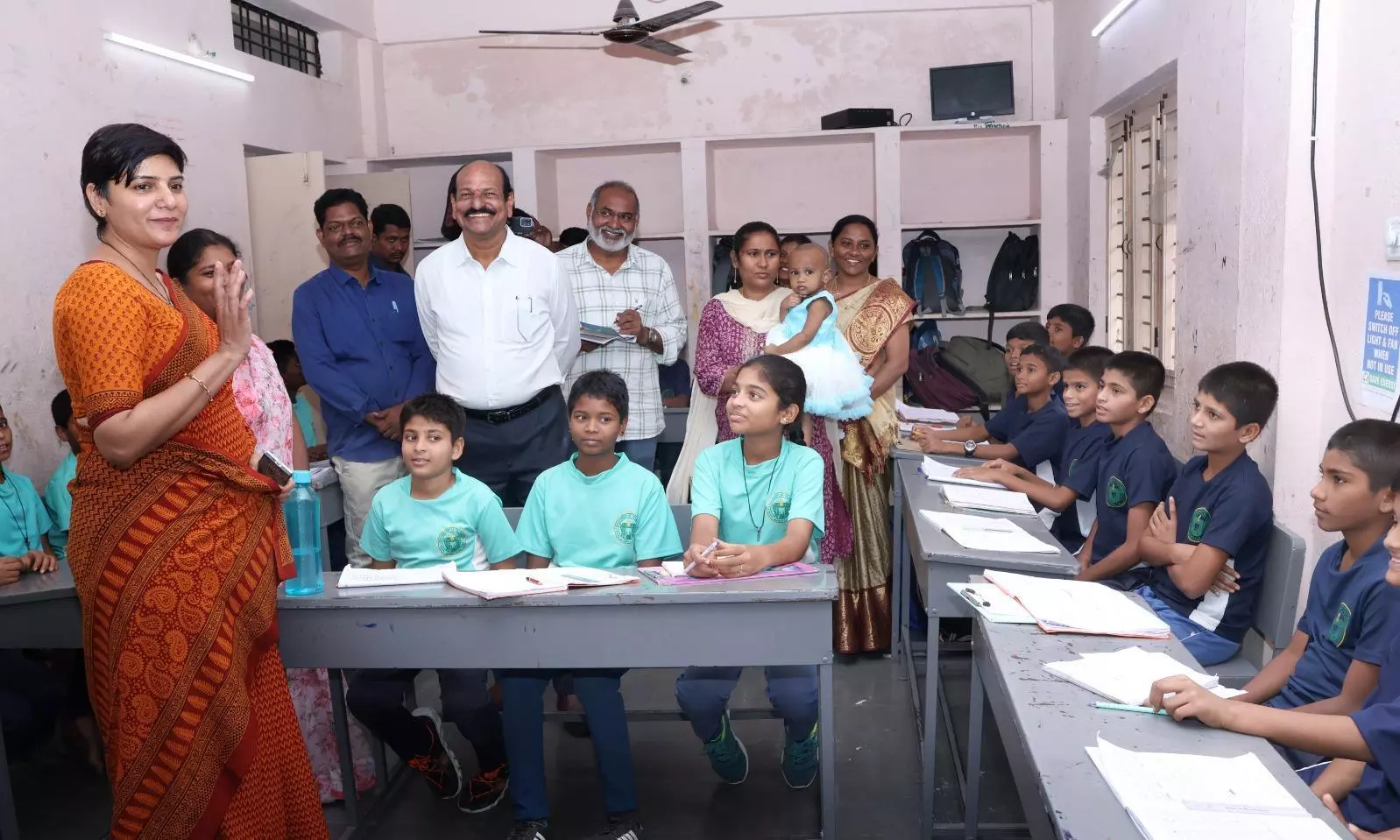
Hyderabad: All government schools across Hyderabad district have been asked to restructure their classrooms so that no student is a back bencher, adopting from Malayalam movie Sthanarthi Sreekuttan.
The decision, taken in a recent meeting led by Collector Hari Chandana Dasari, follows a broader pedagogical shift towards learner-centred classrooms recommended by the National Curriculum Framework (NCF) 2023. Kerala and other states like Punjab, West Bengal, and Tamil Nadu have already adopted this method.
“It might feel strange in the beginning, but maybe if everyone sits facing the teacher, we’ll all get a chance to speak,” said Kiran, a Class VIII student.
NCF proposes circular or group seating and calls for classrooms to be more inclusive and participatory. Spatial equity, the NCF argues, is essential for building confidence and dismantling classroom hierarchies. Seating design, in this view, is inseparable from inclusivity. A child who feels invisible in the classroom often stops trying to be heard.
Research published by University of Kassel in Germany found that fourth graders seated in a semicircle participated more and asked more questions than those seated in rows. A similar finding emerged from Tamil Nadu’s education pilot, where teachers reported more equal engagement when children sat in a U-shaped formation.
According to a review of multiple international classroom studies, students working individually or in silence performed better in straight rows, but collaborative discussions flourished in circular or U-shaped formats. Rows helped discipline; circles encouraged exchange.
Some students are unsure what to expect. “I always sit at the back because I feel more comfortable there,” said Zainab, a Class 9 student. “If we all have to sit facing the teacher now, I’m a little nervous. But maybe I’ll get used to it.”
Government school teachers also expressed apprehension. H. Reddy, a teacher at one such school, said space and infrastructure may pose hurdles. “Only 20 or 30 percent of our students have benches. We need 15, but many rooms have just seven or eight. Using boards might become harder in a U-shape. Right now, students sit wherever they want. There is no fixed idea of a front or back bench. I don’t know how we’ll fit everyone in a new layout,” he said, adding, “But nonetheless, the intent is great. Every student deserves to feel like they’re in the front row. Where you sit shouldn’t decide how much you learn.”
