Niti Aayog Lauds Telangana’s AI Booster for Agriculture

Report cites 21% yield rise and doubled farmer income, calling Telangana’s AI initiative a replicable success
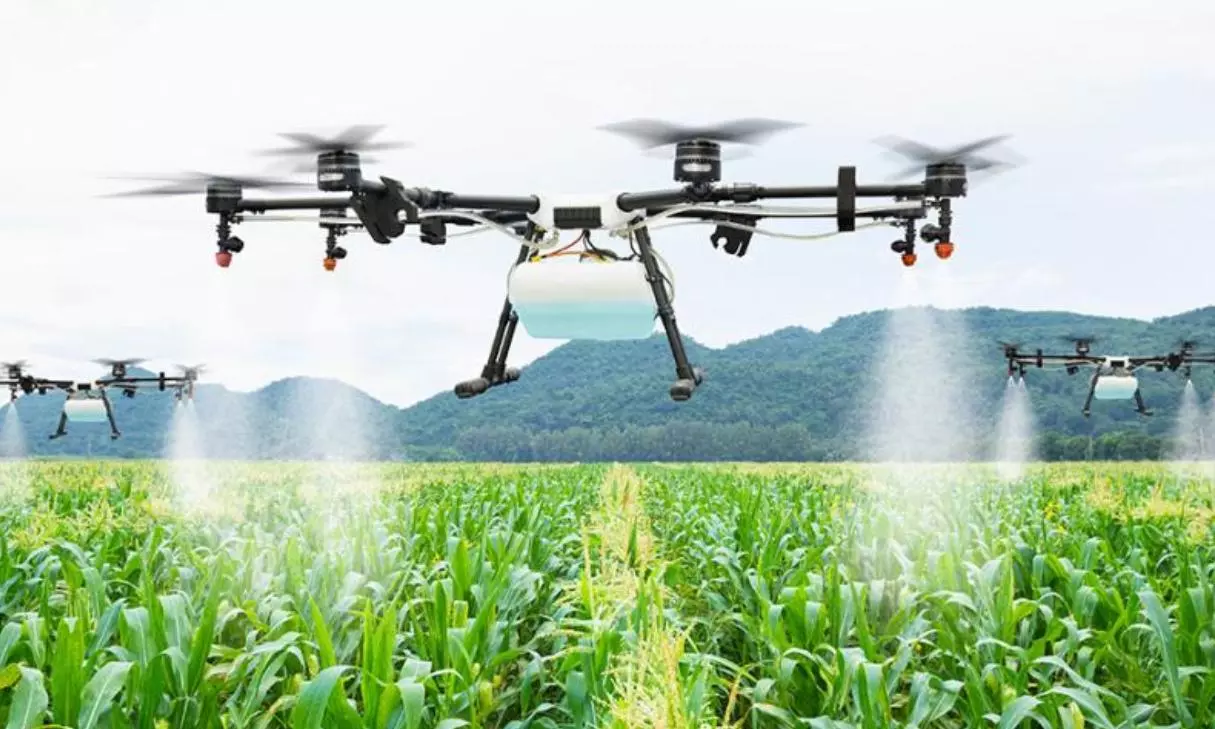
Hyderabad: Niti Aayog has lauded Telangana’s artificial intelligence (AI)-enabled advisory system Saagu Baagu for farmers, describing it as a model for technology-driven agricultural transformation. In its report titled “Reimagining agriculture: A roadmap for frontier technology-led transformation,” released on Monday, NITI Aayog highlighted Telangana’s pilot project as examples of successful digital interventions in agriculture.
The report stated that the state’s AI advisory initiative achieved a 21 per cent rise in crop yields, an 11 per cent improvement in prices, and a 9 per cent reduction in input use within a single cropping season — results it termed “promising and replicable.”
Farmers under the Saagu Baagu initiative, launched in 2021 in Khammam district for chilli cultivation on a pilot basis, also recorded a five per cent decrease in fertilizer consumption, and an 11 per cent price gain due to superior crop quality.
These improvements translated into income increases of about `66,000 per acre per crop cycle, effectively doubling farmers’ earnings. Encouraged by the results, the Telangana government expanded the programme in October 2023, aiming to reach five lakh farmers across ten districts and cover five major crops, further cementing Telangana’s position as a national leader in tech-driven agriculture.
As part of global cooperation, the World Economic Forum’s Artificial Intelligence for Agriculture Innovation (AI4AI) initiative, led by C4IR India, is supporting India’s agricultural transformation.
Supported by the Bill & Melinda Gates Foundation and executed by Digital Green, the project has benefited over 7,000 chilli farmers, improving productivity and profitability through AI-led advisories and better data management.
Highlighting global progress, the report noted that technologies such as CRISPR-based seeds, biostimulants, biofertilisers, biochar, and precision irrigation systems are enhancing yields, improving soil health, and mitigating climate risks.
Similarly, predictive analytics and modified atmosphere packaging are helping reduce input costs and post-harvest losses. Seed innovation, the report said, remains central to this transformation, as high-yielding, pest-resistant, and drought-tolerant seed varieties can significantly enhance productivity and resilience.
Artificial intelligence, according to the report, is emerging as a transformative enabler in Indian agriculture. The Telangana pilot is cited as a key example of how AI-driven precision advisory systems, supported by digital infrastructure, can enhance decision-making for farmers and ensure timely dissemination of information.
The use of AI-powered underwriting tools is also helping underbanked farmers access formal credit, enabling them to adopt new technologies. Drone- and satellite-based data systems are further personalizing agricultural solutions for small and remote farms.
The report pointed out that India’s smallholder farmers continue to face multiple challenges, including erratic weather, climate change, pest infestations, and declining yields. Burdened by limited financial access, many are trapped in cycles of high-interest loans from informal lenders.
Post-harvest problems such as inadequate logistics, crop wastage, and restricted market access further aggravate their condition, leading to nearly 40 per cent produce loss. According to NITI Aayog, frontier technologies can provide sustainable and scalable solutions to these deep-rooted issues.
