Niloufer Hospital Becomes the First in the Country to Introduce a Selfie That Tells You Your Health Status

The Amruth Swasth Bharath, an AI-based diagnostic system that delivers rapid, non-invasive blood test results in under a minute
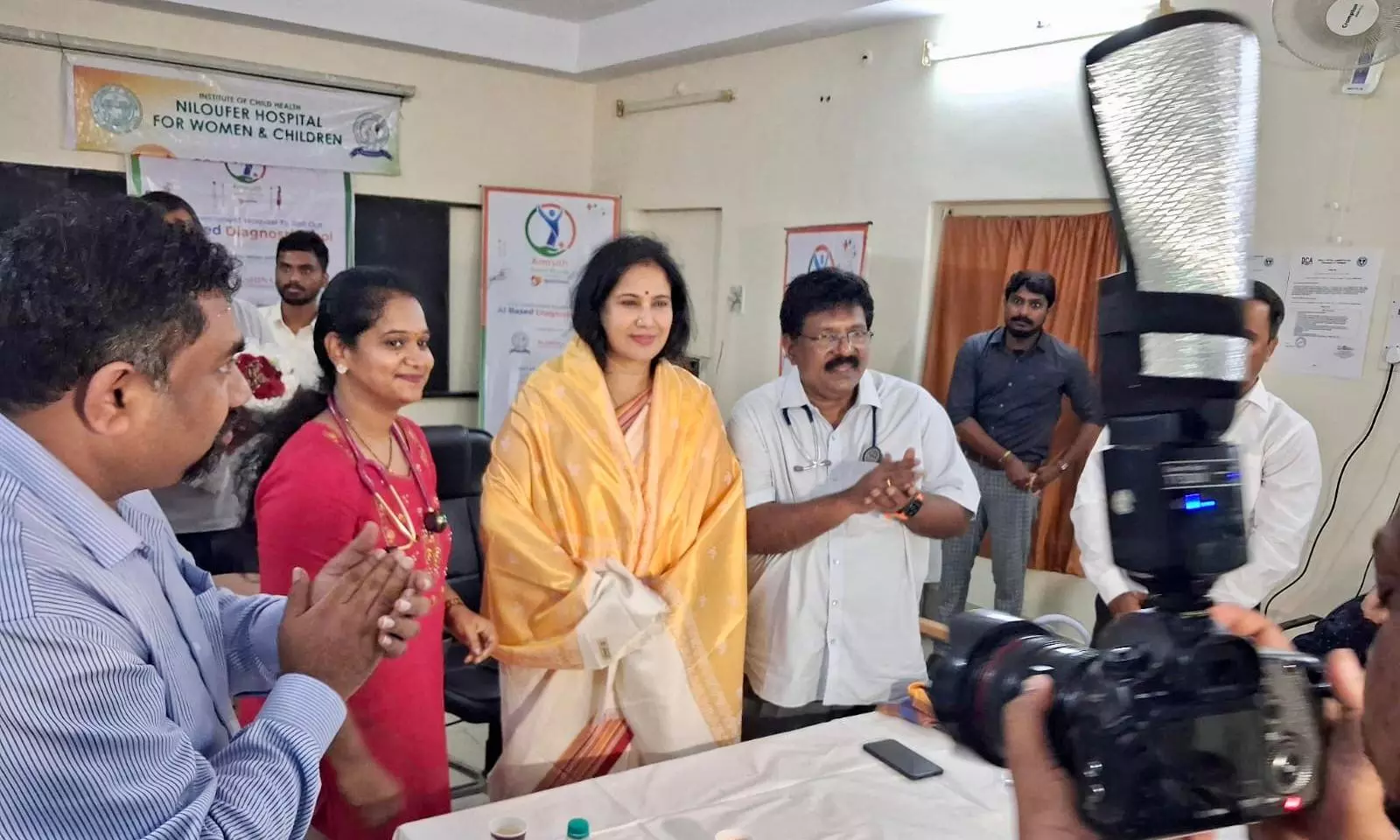
Hyderabad: Niloufer Hospital on Monday became the first in the country to introduce “a selfie that tells you your health status” — the Amruth Swasth Bharath, an AI-based diagnostic system that delivers rapid, non-invasive blood test results in under a minute. The tool, developed by Quick Vitals in collaboration with Sushena Health Foundation and supported by the state government, uses smartphone cameras and deep learning algorithms to read vital health parameters from a user’s face.
Live demonstrations were held at the event, giving doctors and staff hands-on experience with the system's fast processing time and ability to retrieve multiple data points such as blood pressure, oxygen saturation, heart rate variability, and hemoglobin levels in one go.
The launch was attended by healthcare professionals, hospital administrators, and public policy representatives. Among them were Prof. Dr Ravi Kumar, superintendent of Niloufer Hospital, Prof. Dr Santhosh Kumar Kraleti from the National Medical Commission, and Karuna Gopal, BJP national In-charge for Women Policies.
Harish Bisam, creator of Quick Vitals, explained that the tool drew on photoplethysmography, or PPG, to capture light absorption changes linked to blood flow, generating health insights from a simple face scan. “Think of it as a selfie that tells you your health status,” he said. The system offers two options, a contactless spot check using phones or tablets, and another continuous monitoring through wearable sensors.
The platform is designed to support real-time assessments for children and pregnant women, both of whom require consistent but minimally invasive monitoring. Tests take between 20 and 60 seconds, which reduces wait times and removes the discomfort of needles for basic health evaluations.
The hospital, known for maternal and child healthcare, now acts as a test site for this new diagnostic model, which will soon expand to Maharashtra. The developers also stressed data privacy, and stated that all personal health records are securely stored, multi-user access is allowed, and records are only shared with authorised professionals.
Bisam added that the broader vision is to reduce barriers to preventive care, especially in settings where laboratory infrastructure is limited or out of reach. The tool's portability and fast response time, he said, may eventually allow early detection protocols to become part of everyday public health systems.
