The alloys also resisted corrosion in tests using fluids designed to mimic conditions inside the human body.
HYDERABAD: Researchers at the University of Hyderabad (UoH), working with teams from IIT Delhi, IIT Bhubaneswar and CSIR-Central Electrochemical Research Institute (CECRI), Karaikudi, have developed a family of metal alloys that could make medical implants stronger, more durable and safer.
Made from titanium, cobalt and chromium in equal or near-equal proportions, the alloys showed high strength, wear and corrosion resistance, and compatibility with living cells in laboratory tests. Potential applications include artificial hip joints and bone plates.
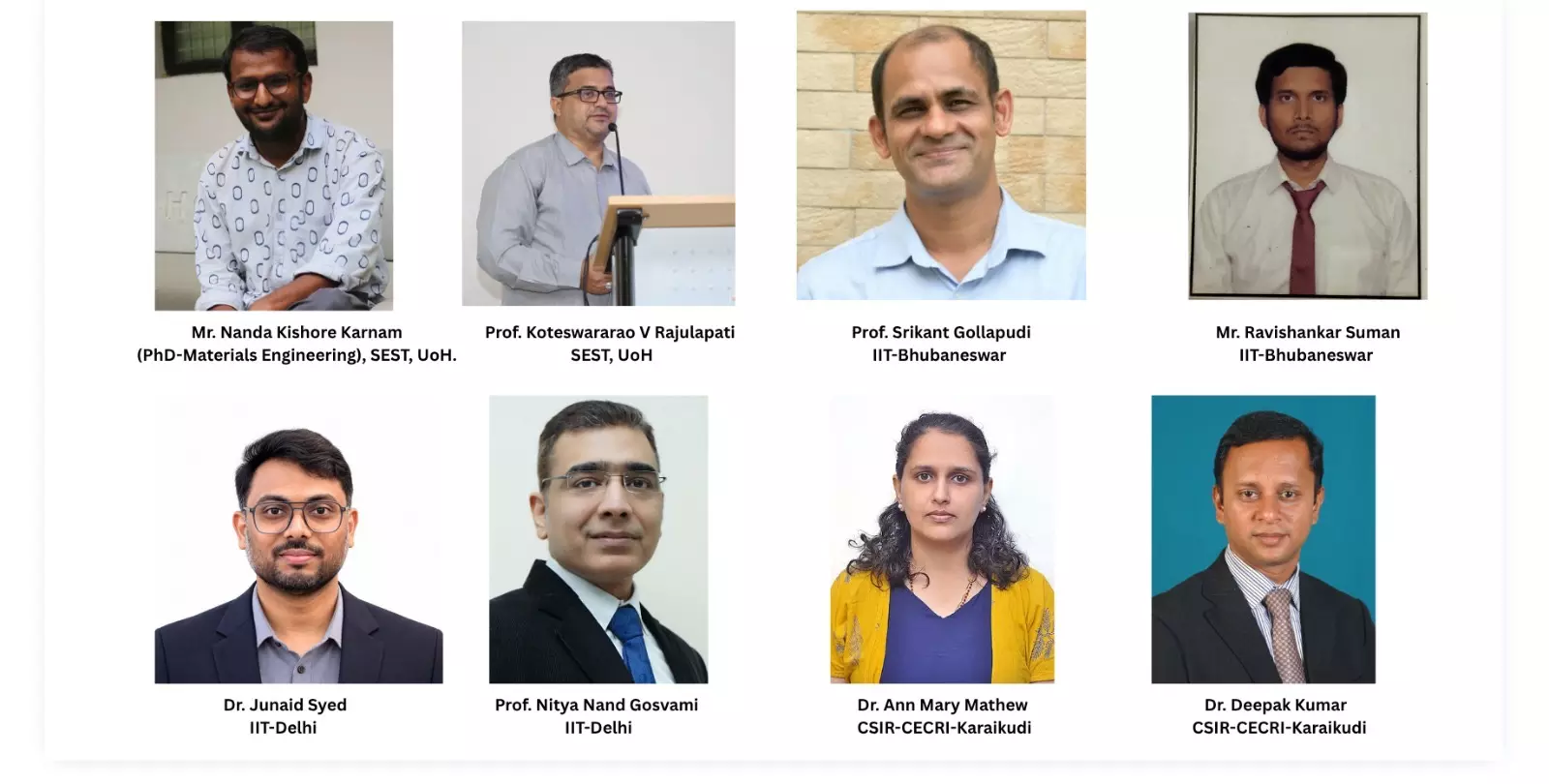
The study formed part of the doctoral research of Nanda Kishore Karnam, supervised by Prof. Koteswararao V. Rajulapati of UoH’s School of Engineering Sciences and Technology. It was published in Advanced Healthcare Materials, a peer-reviewed journal published by Wiley.
The research team also included Dr Junaid Syed and Prof. Nitya Nand Gosvami of IIT Delhi; Ravishankar Suman and Prof. Srikant Gollapudi of IIT Bhubaneswar; and Dr Ann Mary Mathew and Dr Deepak Kumar Pattanayak of CSIR-CECRI, Karaikudi.
Conventional implants generally use alloys in which one metal forms the base. Over time, these materials can wear down or corrode, potentially releasing metal ions into surrounding tissue. Their stiffness, considerably greater than that of natural bone, can also contribute to implant loosening and further surgery, the researchers said.
The team instead combined the three metals in equal or near-equal proportions to create multi-principal element alloys (MPEAs), in which no single metal dominates.
Laboratory tests found that the titanium-cobalt-chromium (TiCoCr) alloys had high strength and wear resistance—important properties for implants such as artificial joints that undergo repeated movement. Their flexibility was closer to that of natural bone than conventional implant metals, potentially reducing the risk of loosening.
The alloys also resisted corrosion in tests using fluids designed to mimic conditions inside the human body. Cell studies found that they supported healthy cell growth without toxic effects, the team said.
The combination of strength, corrosion resistance and biocompatibility makes the alloys promising candidates for future medical implants, the researchers said. However, the findings are based on laboratory tests, and further evaluation is needed before the alloys can be used in patients.