He also took a sporting swipe at the previous BRS government, saying stadiums were routinely used for non-sporting events during its 10-year rule.
Revanth’s goal beyond politics
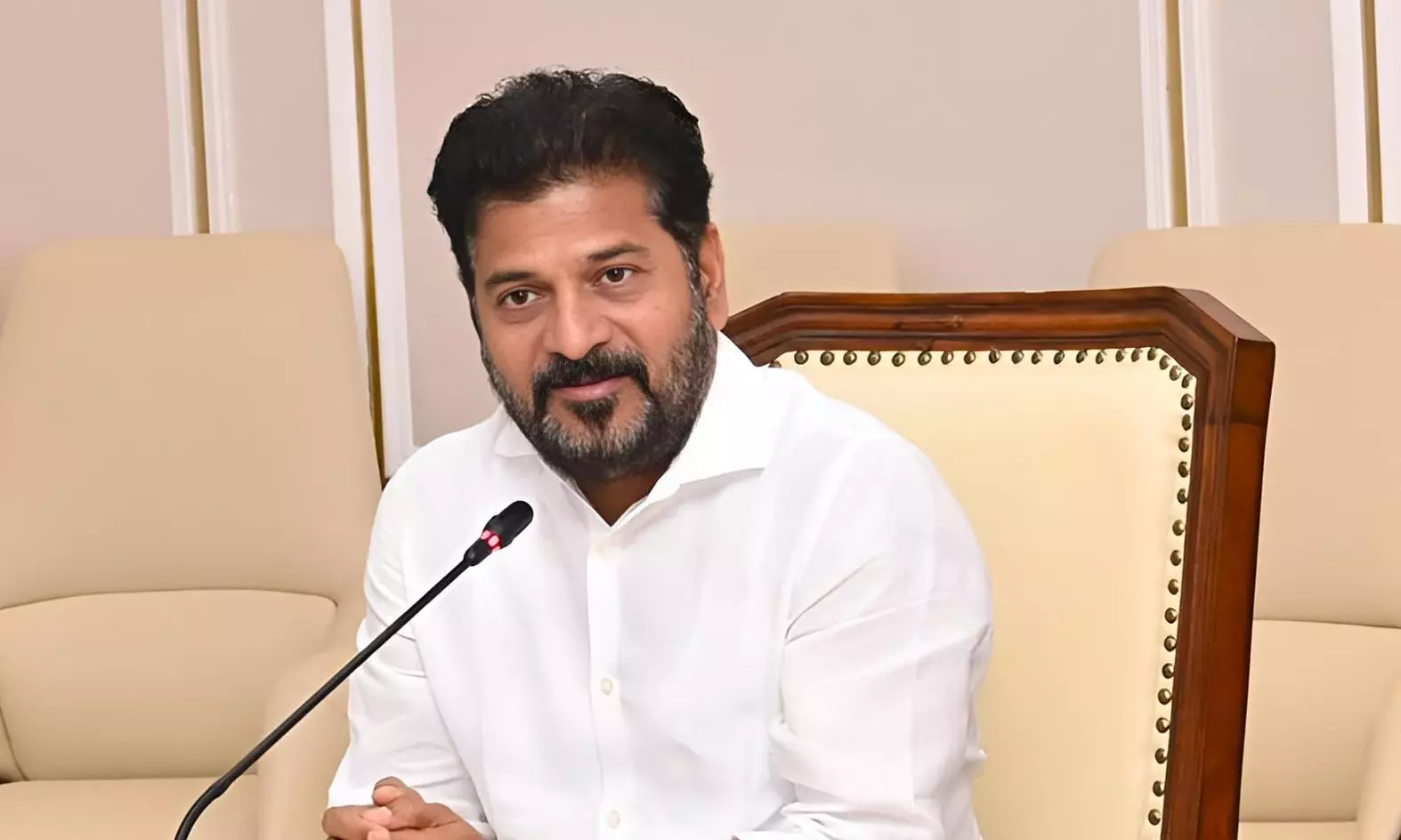
Will Hyderabad’s multiple sports stadiums soon rediscover their original purpose — sports? There seems to be a glimmer of hope after Chief Minister A. Revanth Reddy recently directed officials to ensure that stadiums are not handed over for non-sporting events. Revanth was clear that sporting arenas should not be converted into venues for political rallies, film launches or cultural programmes. He also took a sporting swipe at the previous BRS government, saying stadiums were routinely used for non-sporting events during its 10-year rule. Hyderabad did not host a single national or international sporting event of significance during the decade. Revanth recalled the city’s earlier sporting glory, including the Afro-Asian Games and World Military Games hosted between 1999 and 2007, and criticised the neglect of sports thereafter. Revanth’s aim is to give sports a major push, encourage youngsters to take up sporting activities and keep them away from drugs and other harmful habits. Quite a goal for a footballer.
Raja’s ghost refuses to leave the BJP
The ghost who walks clearly casts a long shadow. And proving this was T. Raja Singh, the man the BJP has found too hot to handle. When the massive crowd that greeted him clearly enthused Union home minister Amit Shah during his recent rally in Hyderabad, much of the muscle came from stormy petrel Raja Singh’s Goshamahal constituency. Raja Singh remains suspended from the party, which has found it difficult to rein in his bursts of energy. The BJP is instead projecting BJYM leader Laddu Yadav as its Goshamahal MLA candidate. But the tall flexis of Raja Singh along the padayatra route, and the men and women in colourful attire — a Raja Singh trademark — who drew considerable attention at the Amit Shah event, told their own story. Raja Singh clearly hopes that the way to the leadership’s heart is through sheer numbers. As the calendar winds down towards the polls, the question is whether Raja Singh will find his place back in the party, or whether Laddu Yadav was merely a cat’s paw in the BJP leadership’s efforts to keep the suspended MLA at bay. The leadership may yet put its foot down and ignore the obvious flirtation.
Rules for thee, exemptions for me
The Congress affirms that it goes by the rulebook. But what if there are two different rulebooks, one for senior leaders and another for those lower down the ranks? The high command had directed its leaders and party faithful to turn up for Rahul Gandhi’s anti-SIR rally in Delhi, with no excuse-making RSVPs. Those who failed to attend were to face the chop. Yet minister D. Sridhar Babu and MLAs C. Vijaya Ramana Rao and Makkan Singh Raj Thakur were nowhere to be seen at the centre of action. They got away cleanly. But the party brought out the other rulebook and suspended Youth Congress leaders and activists who did not make it. Even as the party rank and file wondered whether its much-talked-about discipline came with different clauses, a letter bomb arrived: Peddapalli MP Gaddam Vamshi Krishna’s open letter to his not-so-best friend Sridhar Babu created a flutter. Krishna complained that the minister and the two MLAs had got away scot-free, while a tribal woman leader who had stayed back for a book distribution event was penalised. But, this being the Congress, there was a twist: the book distribution event was organised by the Krishna family-run Vishaka Charitable Trust. Those watching the developments are still trying to navigate the circles within circles.
When Congress culture gets a little too spicy
What is the thin dividing line between internal friction and “Congress culture”? Puzzling over this invisible marker were Congress leaders after a behind-the-scenes bust-up in the national Capital that was clearly spicier than the recent Congress anti-SIR rally. Health minister Damodar Rajanarsimha had a not-so-healthy interaction with Jukkal MLA T. Laxmi Kantha Rao at a Delhi hotel recently, in the presence of several party MPs and MLAs. Rao approached the state Congress leadership, alleging that the minister had used abusive language and threatened him. Damodar turned out to be quite a Congress culture vulture, choosing to say that such exchanges were nothing unusual in the Congress. The leadership was not quite amused. State Congress president B. Mahesh Kumar Goud summoned the duo, who represent adjoining constituencies, to Gandhi Bhavan. Rao turned up, but Damodar did not. Goud waited for hours, only for the minister to say belatedly that he would not be available. The Congress is still waiting. In a party where a straight line runs like a jalebi, party workers were looking through the mythical dictionary to find out what exactly constitutes “Congress culture”.
Old friends, new foes, plenty of fisticuffs
Squabbling politicos usually keep it all in the family. If there is a dispute, grey-haired leaders step in. If there are fisticuffs, perhaps the mini-high command steps in. But things get really serious when friends fall out. The Mancherial constituency Congress feud has clearly crossed the political Rubicon. It all started with a Dasara rumble between the supporters of Congress MLA K. Premsagar Rao and party leader M. Jaganmohan Rao. The latter is backed by minister Gaddam Vivek and his son, Peddapalli MP Vamsi Krishna. Clearly not content with leaving things be or “raising the issue on party forums”, Jaganmohan Rao approached Director General of Police C.V. Anand. The police then formed a special investigation team to probe the clashes. The thing is, Jaganmohan Rao was Premsagar Rao’s ‘right-hand man’. Somewhere along the way, the two fell out, and the Gaddam family stepped in.
KTR’s unearths old embarrassment, gets blowback
What do you call someone who attempts to dig up the past? An archaeologist. Or BRS working president K.T. Rama Rao. The BRS scion, apparently trying his hand at a new interest, is digging into the party’s video archive for fresh ammunition against Chief Minister A. Revanth Reddy and Union minister Bandi Sanjay Kumar. For now, KTR has revived the “Delhi ghulam parties” narrative by circulating an old video showing Revanth Reddy, then TPCC president, being stopped by Priyanka Gandhi’s security personnel at a public meeting in 2023. Another clip shows Sanjay reportedly picking up Union home minister Amit Shah’s footwear in Secunderabad in 2022. The catch? The BRS played both videos extensively during the 2023 Assembly election campaign to push its “Telangana pride” narrative against the Congress and the BJP. The voters, however, delivered their own verdict by voting the Congress to power. Three years later, KTR appears to be ignoring some sound advice: history repeats itself, first as tragedy and then as farce. KTR also faced some blowback from netizens, who advised him that it was better to let sleeping dogs of history lie.
When even informality needs an official note
It takes quite a lot to surprise grizzled reporters who have covered the government beat for years. And yet, even they raised an eyebrow when handed an official note for an “informal Cabinet meeting”. Traditionally, the Chief Secretary issues an official note specifying the date, time and venue of a Cabinet meeting. Once the formal agenda is completed, officials generally leave the hall, allowing the Chief Minister and ministers to discuss political and governance-related issues. That portion is, by convention, considered an informal Cabinet meeting. However, the Revanth Reddy government appears to be giving the informal meeting a formal makeover. Chief Secretary Sanjay Jaju has begun issuing separate official notes for informal Cabinet meetings, followed by the regular Cabinet meeting. On November 5, the government issued two official notes — one announcing the informal meeting and another for the regular Cabinet meeting. An official quipped that the government had perhaps found a new bureaucratic category: a “formal note” for an “informal Cabinet meeting.”
With contributions from L. Venkat Ram Reddy, Md Nizamuddin, Pillalamarri Srinivas, Raghu Pathari