According to customs officials, RGIA in Hyderabad has increasingly become a frontline in India’s efforts to curb the inflow of high-potency hydroponic ganja from Southeast Asia
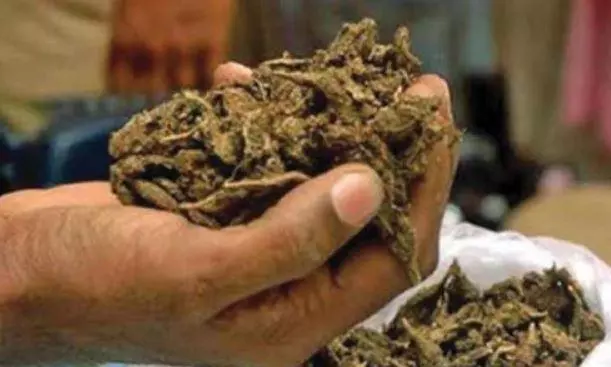
Customs officials at RGIA have arrested a number of smugglers and seized 110 kg ganja smuggling from Thailand worth ₹110 crore in the recent past. (Representational Image)
Hyderabad: Gangsters posing as online recruiters are offering free trips to Thailand to youngsters to attend interviews and are making the naive jobseekers turn into unsuspecting couriers, smuggling ganja concealed in kitchen equipment to India.
Customs officials at the Rajiv Gandhi International Airport (RGIA) have arrested a number of smugglers and seized 110 kg ganja smuggling from Thailand worth ₹110 crore in the recent past.
According to customs officials, RGIA in Hyderabad has increasingly become a frontline in India’s efforts to curb the inflow of high-potency hydroponic ganja from Southeast Asia.
As international travel continues to expand, Indian Customs at Hyderabad has been confronted with a troubling rise in attempts to smuggle cannabis grown in controlled hydroponic setups varieties far stronger and more addictive than traditional forms of marijuana commonly encountered in India.
“Since its decision in 2022 to decriminalise the plant, Thailand has witnessed a rapid proliferation of dispensaries, cafes, and street kiosks selling cannabis products of varying strengths. Lenient regulation, coupled with the publicly visible and widespread availability of cannabis in tourist districts, has unintentionally provided criminal networks with a readily accessible supply channel. The ease of procurement, combined with the possibility of high-profit margins in India’s illicit drug markets, has drawn organised syndicates to exploit India-bound travellers as couriers," the Customs officials told Deccan Chronicle.
The officials further stated that Hyderabad has emerged as a preferred target for such networks. Over the last two financial years, the Customs officials have arrested 21 persons, including two Nepali nationals, involved in smuggling attempts. Many of those arrested were young individuals lured by online recruiters offering free trips, accommodation, and modest financial incentives in exchange for transporting what they were led to believe were innocuous consumer items.
A passenger flying in from Bangkok, for instance, was intercepted with what appeared to be a brand-new water heater. On examination, the device was found to have been professionally dismantled and hollowed out to create a concealed chamber capable of storing narcotic material. Inside this carefully engineered cavity, the Customs officers discovered 84 transparent packets of hydroponic ganja. Each packet had been compressed into a compact brick, wrapped in multiple layers of plastic, and vacuum sealed to suppress the sharp and pungent odour associated with cannabis.
The packets were arranged tightly in layers so as not to create voids that might show up on X-ray scans. Once the concealment was complete, the water heater was reassembled with such precision that neither its weight nor its exterior packaging gave any hint of tampering.
During the questioning by the Customs, the passenger confessed that he had been promised ₹25,000 and an all-expenses-paid trip to Bangkok for carrying what he was told was a household appliance, and had been recruited by an intermediary abroad.
The case underscored a growing phenomenon: criminal networks are increasingly turning to everyday household items — air purifiers, speakers, rice cookers, trolley bags with false bottoms, insulated flasks, and other container-like appliances — to conceal narcotics. These objects are familiar, plausible and easily blend into the baggage of returning travellers," the senior Customs officers explained.
Customs officials
For Customs officers, this combination of olfactory masking and visual camouflage has complicated detection. As a result, interdiction now increasingly relies on intelligence-driven targeting, behavioural analysis, travel-pattern scrutiny and inter-agency coordination.
Officers note that many seizures at RGIA resulted not from technological flags but from subtle cues observed during passenger profiling — hesitation in responses, discrepancies in travel history, or mismatches between a passenger’s declared purpose and their packing patterns.
The department acknowledges that technology, though essential, cannot by itself counter the ingenuity of smuggling syndicates. The success of recent operations at RGIA has hinged on the vigilance, intuition and accumulated experience of frontline officers.
Their work is supported by intelligence inputs from agencies such as the directorate of revenue intelligence and by periodic training designed to sensitise officers to evolving concealment techniques.
Timeline:
Nov. 13: Customs officials seize 4.3 kg of hydroponic weed with a value of ₹4 crore at RGIA.
Sept. 11: 13 kg of ganja being smuggled from Bangkok by a passenger seized at RGIA.
Aug. 12: Passenger arrested at RGIA with 13.3-kg hydroponic ganja worth ₹13.3 crore.
July 31: Passenger was held at the RGIA for carrying 40 kg of ganja from abroad.
March 5: Passenger arrested at RGIA for smuggling weed from Thailand worth ₹5 crore.
( Source : Deccan Chronicle )


Next Story