Mudumal Menhirs Excavations to Aid UNESCO Bid

The site is already on UNESCO’s tentative list, and officials believe the excavation will provide crucial scientific evidence to establish its outstanding universal value, a requirement for final UNESCO recognition.
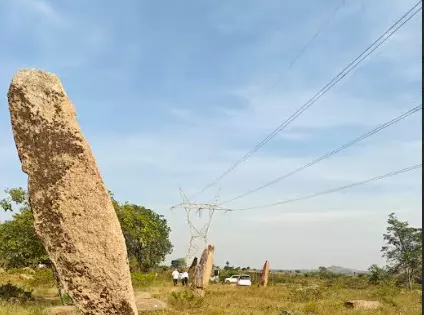
Hyderabad:The department of heritage will begin excavations at the Mudumal Menhirs, a Megalithic site in Narayanpet district, in the second week of April, following approval from the Archaeological Survey of India. The site is already on UNESCO’s tentative list, and officials believe the excavation will provide crucial scientific evidence to establish its outstanding universal value, a requirement for final UNESCO recognition.
The department has sought ₹50 lakh from the state government to fund the project. Experts from the department, along with scientists from the National Geophysical Research Institute (NGRI), will lead the work. NGRI will assist with documentation and thermoluminescence dating, while CCMB Hyderabad and the Birbal Sahni Institute of Paleobotany, Lucknow, will conduct DNA tests. Samples for carbon dating and metal analysis will be sent to Beta Labs in the USA, excavation director P. Nagaraju said.
Prof. K. Arjun Rao, director of the department of heritage, noted that this marks the first detailed scientific study of the site. Excavation is expected to last 60 days.
Locally known as Niluralla Thimappa, the site reflects the culture, traditions and astronomical knowledge of communities that lived there around 3,000 years ago. It contains about 80 menhirs, each 3–5 metres tall, alongside thousands of alignment stones measuring 1–1.5 metres. Originally spread across 80 acres, the site also features megalithic stone circles.
Some menhirs and boulders are arranged in precise rows aligned with the rising and setting sun during solstices and equinoxes. Cup marks on stones depict constellations such as Ursa Major (Saptarshi Mandala) and Leo, considered among the earliest representations of the night sky in South Asia. Scholars suggest the site may be one of the region’s oldest astronomical observatories.
