Mosquito Menace Rises As Hyacinth Heaps Await Disposal At Saroornagar Lake

Cleared water hyacinth piles up at Saroornagar Lake, with residents reporting rising mosquito menace and foul smell.
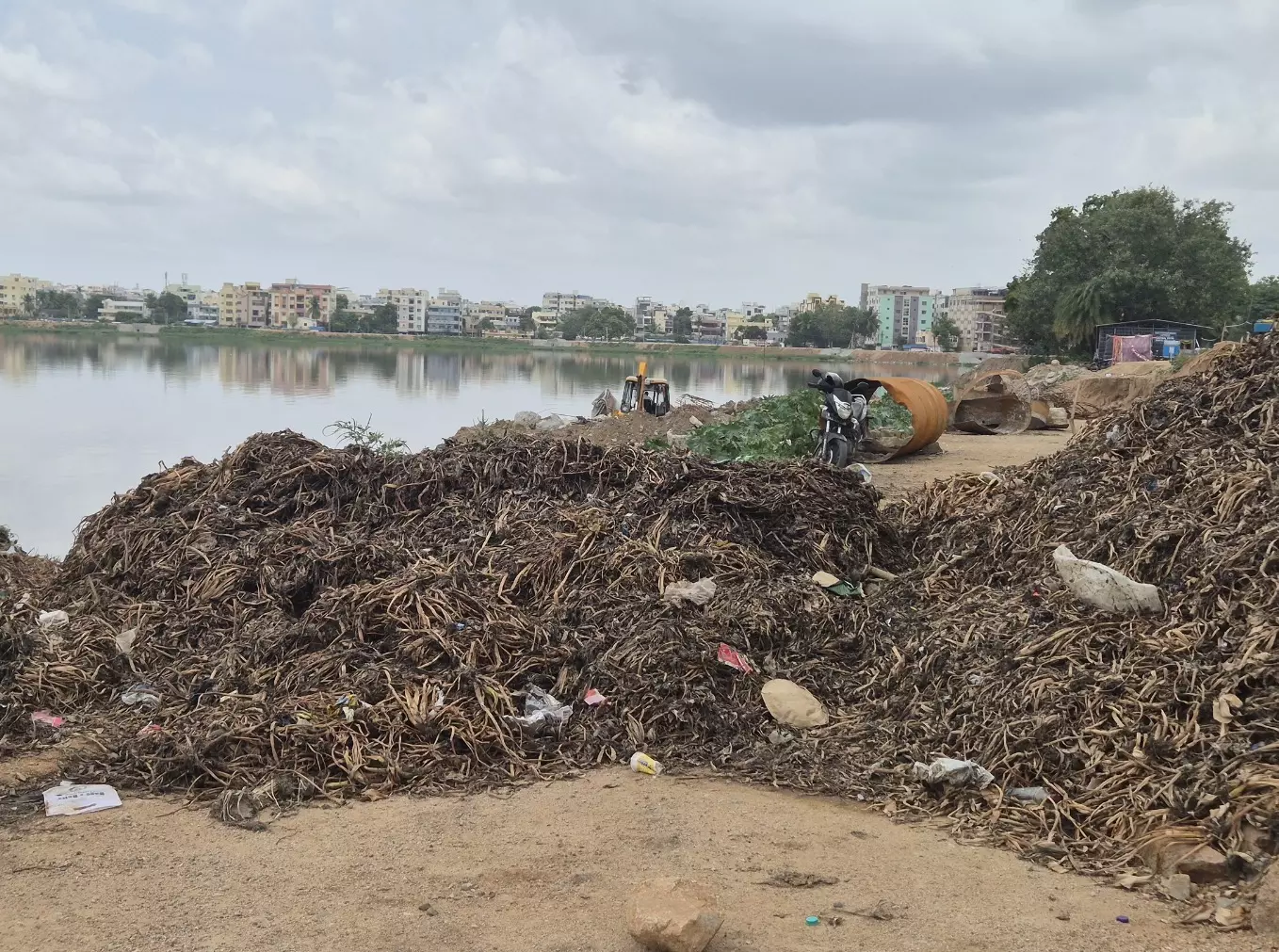
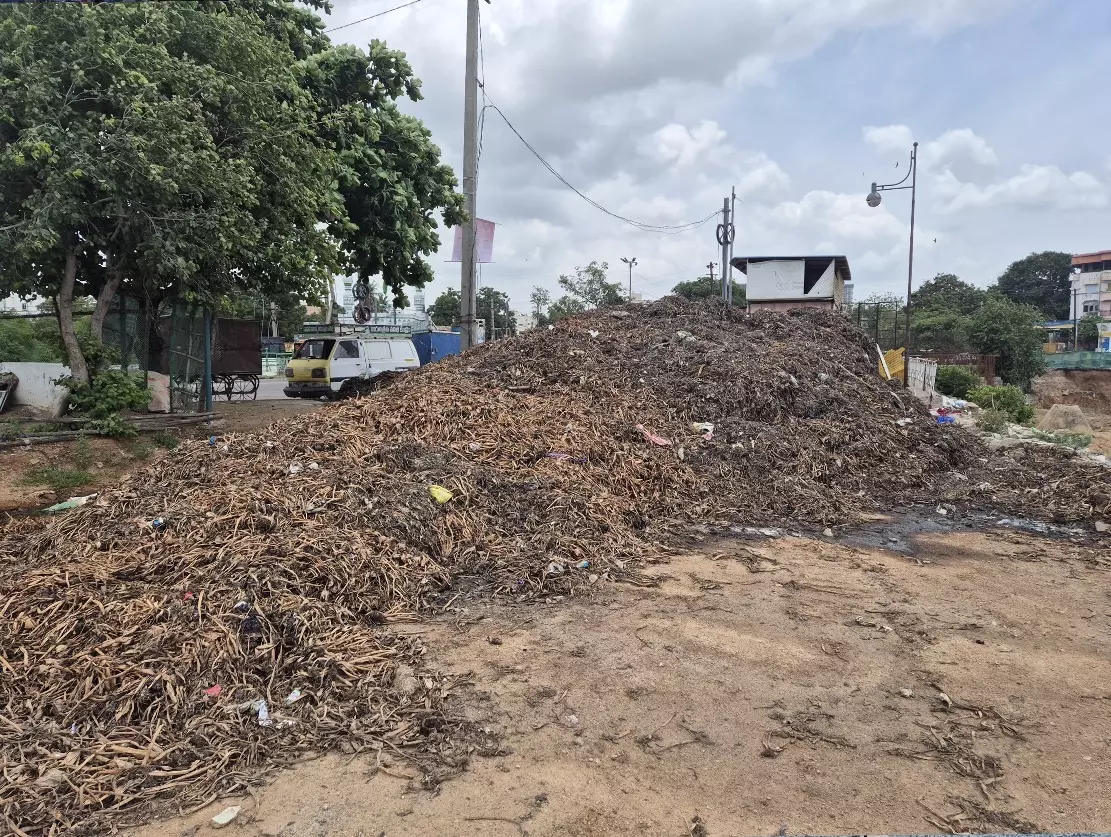
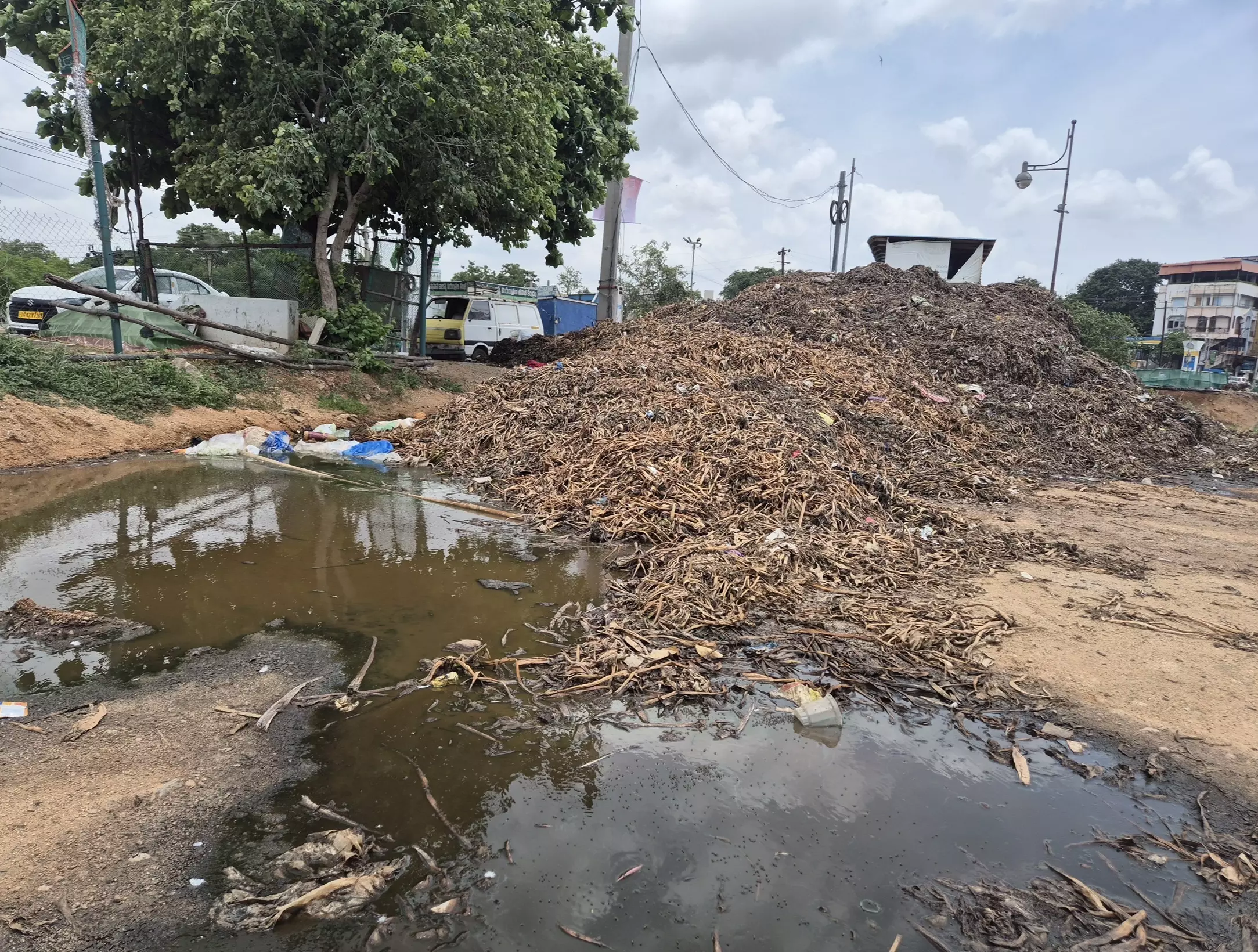
Heaps of cleared water hyacinth seen around Saroornagar Lake, with residents and hawkers complaining of a rise in mosquitoes and foul smell from the vegetation lying at the site.
GVH Pratyush, a resident, said the heaps of cleared water hyacinth had not been transported from the site and had remained there for more than 10 days. “You visit the site around 7 pm and sit anywhere within a 1-km radius, and you can feel the mosquito menace. It is the corporation’s responsibility to lift the cleared hyacinth immediately after removing it from the lake,” he said.
“Officers just visit, inspect and leave, and I am concerned about mosquito-borne diseases such as malaria and chikungunya,” he added. Another resident, G. Srinivas, said, “The mosquito menace is being seen within a 1-km radius of the lake.”
A hawker selling furniture items near the lake said, “By evening, the mosquito menace grows. To keep them away from biting, we light a fire, and the mosquitoes go away due to the smoke,” he added. An autorickshaw driver also said he had observed a rise in the mosquito menace in the area, adding that it had become problematic for residents to have a good night's sleep.
However, LB Nagar zonal commissioner Vikas Mahato said the removal of hyacinth had gathered pace, with nearly half of the weed-infested area cleared so far. “The heaps are getting cleared immediately. However, due to some logistical issues at Jawaharnagar dumpyard, the carting away of removed hyacinth is slowed down,” Mahato said, adding that the issue was expected to be sorted out within a few days.
He said freshly removed hyacinth also takes some time to dry before it can be transported. Responding to complaints about foul smell and mosquitoes, Mahato said no significant foul-smell issue had been reported. He added that anti-larval operations were being carried out using manual sprayers and drones, while fogging was being undertaken to control adult mosquitoes.
Sewage inflow has been identified as the key reason for the recurring growth of hyacinth. A ₹5.90-crore sewage diversion pipeline has been sanctioned to prevent sewage from entering the lake, the officer added.
The existing sewage treatment plant at Priyadarshini Park, adjacent to the lake, is also being upgraded to 10 million litres a day by the HMWS&SB. Once completed, the diversion pipeline will be connected to the STP, preventing sewage from flowing into the lake, the zonal commissioner said. He also said the sewage diversion project and regular maintenance are expected to provide a long-term solution to the recurring hyacinth problem.