Monsoon May Be Over, But El Nino Is Not Done With India Yet

El Nino may persist until early 2027, raising concerns about its potential impact on India’s next monsoon and hopes for a positive Indian Ocean Dipole.
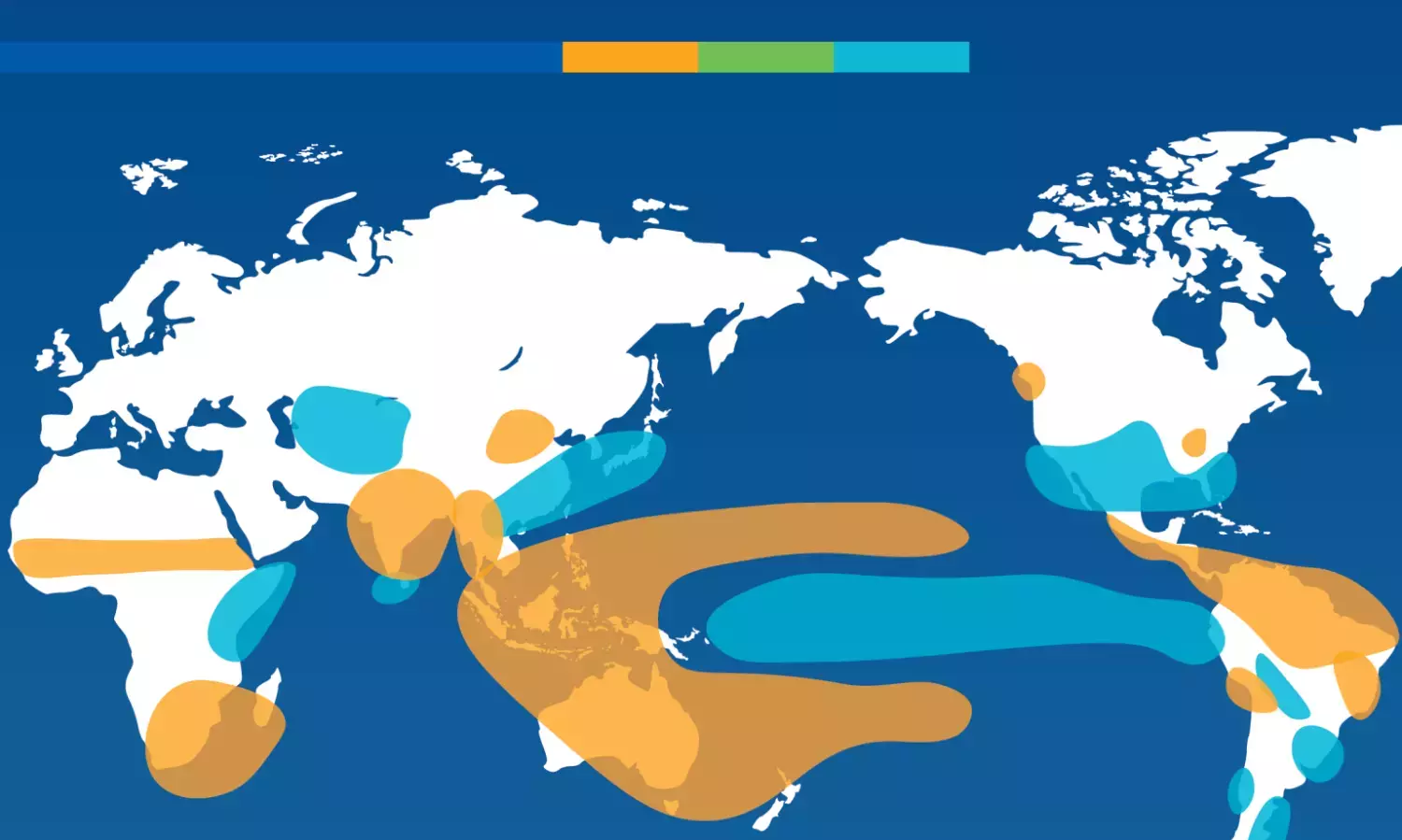
This year’s El Nino, which played havoc with the southwest monsoon season and pushed several states including Telangana into serious drought-like conditions, may not be done yet.
With all forecasts, global or Indian, pointing to the El Nino peaking sometime in December, and the Pacific Ocean, where the phenomenon occurs, expected to record the highest-ever recorded temperatures, there are fears that its impact could linger on well into the first half of the next year. That these lingering effects might even have an adverse impact on next year’s monsoon.
At present, the ocean surface temperature in what is called the ‘El Nino 3.4 index zone’ in the Pacific, which in a non- El Nino year averages between 24 and 27 degrees Centigrade, has already hit the 30-degree mark. “The 3.4 index zone is a huge vast area. We are talking about something in the range of 61 lakh square kilometres. That is a lot of heat reserve in the water and this will take time to dissipate and return to its normal state. We are in uncharted territory as such temperatures were never recorded. So we do not really know how quickly or how slowly the cooling down will happen. This may have an impact on what happens in India in the first half of next year,” a weather scientist explained.
Once the El Nino peaks, which it is still yet to, it will have to stabilise at that stage and then start cooling down. It is already predicted that the El Nino will linger till February, or even later. “If it takes a couple of months to stabilise, and then a couple more months pass for the Pacific Ocean to reach its normal state, we are looking at a May-June timeline for the phenomenon to disappear. If this scenario plays out, then what it could mean for next year’s monsoon for India is up in the air,” the scientist said.
If the fears turn out to be true, then India’s hopes for a good monsoon next year will rest on a positive Indian Ocean Dipole (IOD) condition, something which saved the country in 1997 despite that being an El Nino year. “A positive IOD typically negates El Nino impact and the country can receive normal to near normal rains. A positive IOD also played a role in 2015. This year, the IOD was a no-show,” a meteorological research scientist said.
A positive IOD – the Arabian Sea getting warmer than the Bay of Bengal in the simplest of terms – was expected to form this year. “Overall, everybody was banking on the IOD but this did not happen. The normal period for a positive IOD to develop is sometime in July-August. We might see this happen next year. But that, as with what the monsoon will be like in 2027, is difficult to say at this point of time. The Pacific can cool down quickly, return to neutral conditions, and next year, there are hopes that the El Nino will give way to La Nina, which normally means a good rain year for the country,” the scientist said.
